
Binary stars are two stars bound by gravity that orbit their shared center of mass. They can be widely separated or so close that ordinary telescopes cannot resolve them as two points. Many stars belong to binary or larger multiple systems. A pair that merely appears close together in the sky is an optical double; distance and motion measurements are needed to show whether the stars really form a system.

Both stars move around a common center
It is convenient to say that one star orbits another, but both actually move around their common center of mass. The more massive star follows the smaller path, while the less massive companion follows the larger one. The center can lie inside one star or in the space between them, depending on their masses and separation. Orbital periods range enormously. A close binary may complete an orbit in hours or days, while a wide pair can take centuries or longer. Seeing two stars together once does not reveal the whole orbit.
Three ways to discover a companion
A visual binary is resolved into two separate sources, and observations over time can reveal orbital motion. In a spectroscopic binary, shifts in spectral lines reveal stars moving toward and away from us. An eclipsing binary is aligned so that one star periodically crosses in front of the other, producing dips in the system's measured brightness. These categories can overlap: the same system may be both spectroscopic and eclipsing. A single dimming event is not enough to prove a binary, because planets, spots and instrumental problems can also affect measurements.

Why binaries matter for weighing stars
Gravity links the period and size of an orbit to the mass of the system. If astronomers can measure the orbit and its orientation, they can estimate stellar masses rather than inferring them only from brightness. Knowing how the stars share their motion helps separate their individual masses. These measurements test models of stellar structure and evolution. The work requires careful distance measurements and a clear understanding of viewing angle. An orbit seen nearly face-on produces little toward-and-away velocity even when the stars are moving rapidly around each other.
Close companions can exchange material
When an aging star expands, some of its outer gas may flow toward its companion. Accretion can form a hot disk and change the evolution of both stars. A white dwarf in a binary may accumulate material and experience a nova, while other configurations can lead to a supernova. These outcomes depend on masses, orbital separation and the way material moves; not every binary becomes explosive. The Sun has no known stellar companion. Familiar pictures showing two stars nearly touching represent only one part of a very wide variety of binary arrangements.

A practical way to observe double stars
Start with a published observing guide and a pair well within your telescope's resolution, rather than choosing the tightest separation on a list. Let the telescope settle to outdoor temperature and use moderate magnification before increasing it. Record the date, approximate orientation, apparent separation and any color contrast. Atmospheric seeing can blur a close pair into one moving patch. A wide double can be rewarding in a small telescope, but your observation alone will not establish gravitational binding. The guide's classification and measured orbital history provide that context.
What the photographs can and cannot show
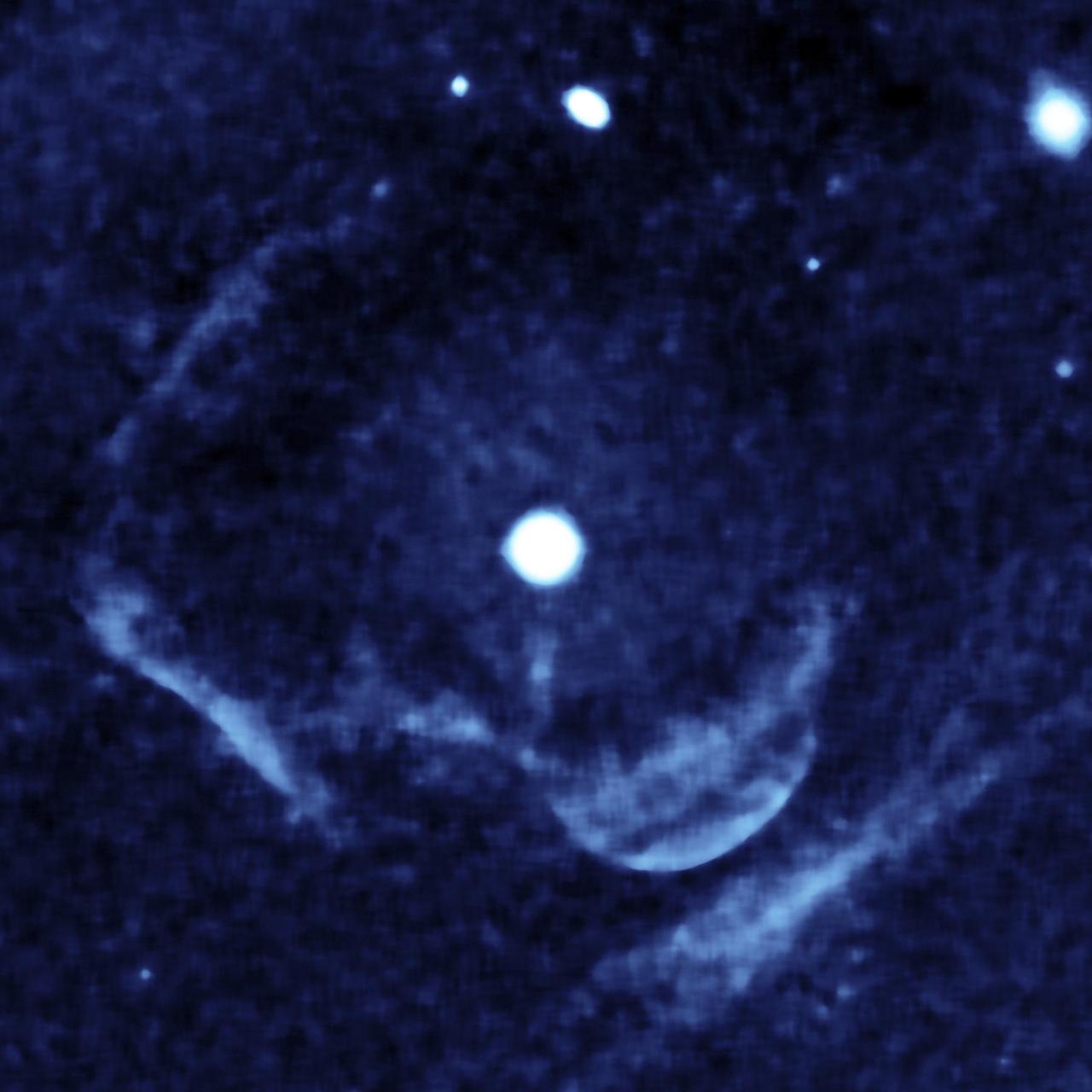
Some binary systems are represented by their surrounding gas rather than by two clearly separated stellar disks. The Twin Jet Nebula, for example, shows an outflow shaped around a central system, while ultraviolet observations of Z Camelopardalis reveal surrounding material associated with past activity. These are observational images, not pictures of two enormous suns photographed close up. Composite and false-color presentations can isolate faint gas. Read the source captions to understand which object is being resolved and which physical interpretation comes from spectroscopy, brightness changes or other measurements beyond the image itself.
Plan your next observation
For a realistic first session, use our beginner stargazing guide. For the force behind stellar systems and their orbits, read how gravity works.
Sources and image notes
Scientific background: NASA: stars and their life cycles. Each photograph links to its original observation record. Telescope images may combine exposures or assign visible colors to other wavelengths, as identified in the captions. NASA, ESA and the image contributors do not endorse this article or the shopping link below.
Advertisement space reserved. No active advertisement is displayed in this placeholder.
Optional reading and observing supplies
Browse double star observing guide on Amazon. This is a product-search link, not a tested-product recommendation; compare suitability and current seller details. No affiliate tag is included.
Leave a Reply