
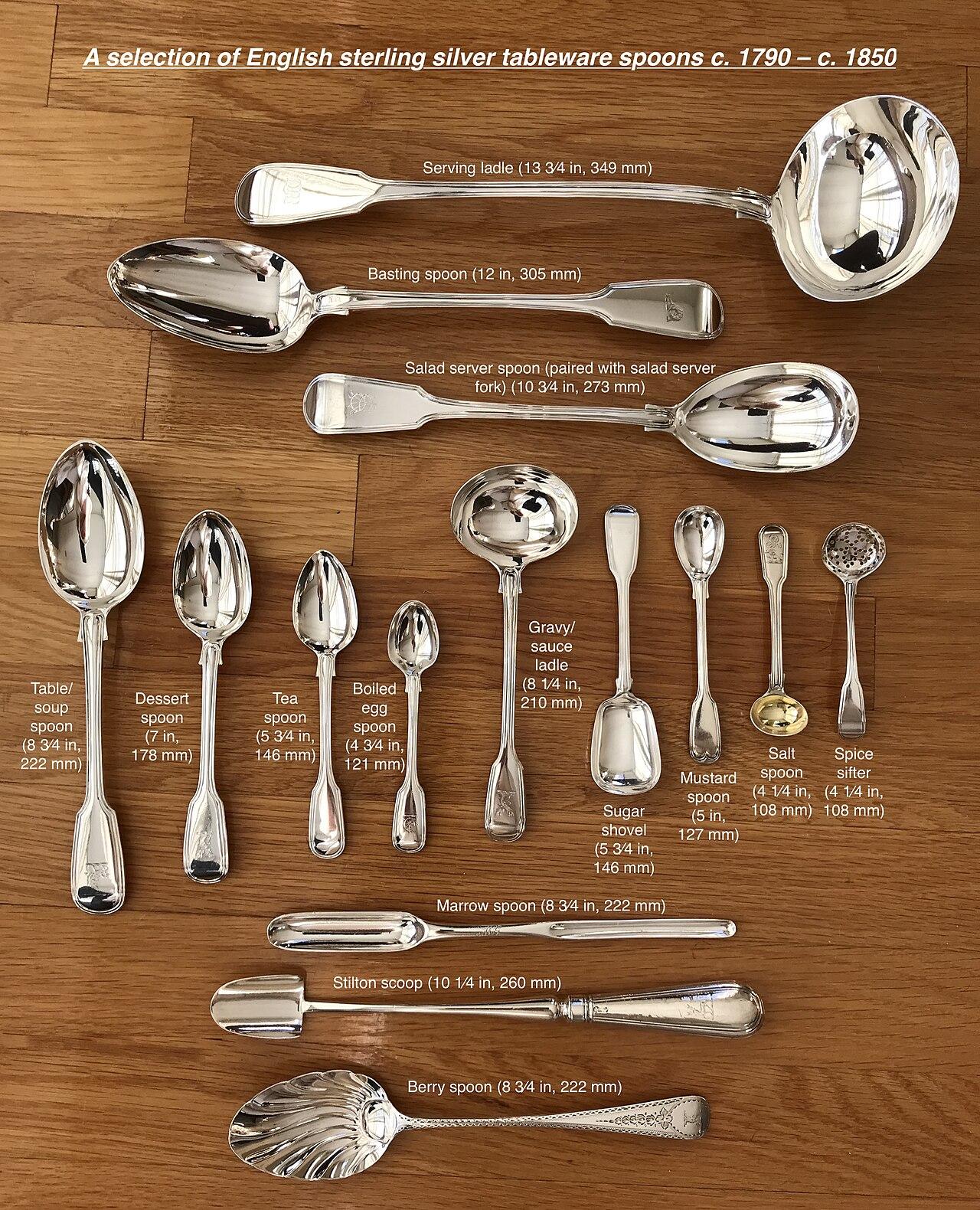
To clean silver, first identify what the object is made from and whether it has fragile attachments. For sound, ordinary silver tableware, gentle washing and careful drying may be all that is needed. Tarnish removal is a separate decision: polishing changes the surface, so more shine is not automatically better care.
A spoon used at breakfast and a nineteenth-century teapot do not necessarily need the same treatment. This guide starts with the least invasive option and explains when to stop. The photographs illustrate different constructions and finishes; they are not before-and-after demonstrations of a cleaning recipe.


First decide whether the surface needs cleaning or polishing
Food residue, loose dust and tarnish are different problems. Remove ordinary dirt before deciding whether the darker surface actually needs attention. The Canadian Conservation Institute explains that tarnish is largely silver sulphide and that removing it can also remove some underlying silver. That makes repeated polishing a wear process, not a harmless reset.
Look at the whole object in good light before opening a cleaner. Note worn edges, loose parts, cracks and darker decorative areas. A quick photograph gives you something to compare against if you are unsure whether a mark was already present. For a valuable or unfamiliar piece, identification should come before treatment.


Check for plating, handles and decorative finishes
The Institute of Conservation’s silver guidance distinguishes sterling silver, an alloy containing 92.5 percent silver, from other silver-colored materials. Appearance alone is not enough to identify a piece. “German silver,” for example, is not simply another name for sterling.
Look for marks underneath or on a less visible section, but do not treat one number as a complete authentication. Record the mark and investigate it alongside the object’s construction. Plating is a thin surface layer, and aggressive cleaning can expose a different metal beneath it. A worn area will not become intact plating again through additional rubbing.
Check handles, feet, liners, stones and joined sections. The Canadian Conservation Institute warns against immersion when construction could trap liquid, including hollow parts and certain joined objects. Wooden, horn or other nonmetal components need separate consideration. If you cannot confidently establish that the entire object can get wet, do not put it in a bath.


Begin with gentle care for sound everyday pieces
For silver used in dining, the National Trust recommends washing separately in a plastic bowl, rinsing with clean warm water and drying immediately. Work with one piece at a time so utensils are not scraping against each other. A padded, uncluttered work area also reduces the chance of dropping something.
Use a mild product suitable for the piece and follow its care instructions. Do not improvise a mixture of cleaners. Keep the object supported rather than holding a heavy vessel by a small handle. After rinsing an appropriate washable item, use a clean soft cloth and inspect recesses for remaining moisture or residue.
If the result is clean enough for your purpose, stop there. Washing and polishing need not be paired automatically. A light surface change can be acceptable on an older object, especially when making it uniformly bright would require working hard on raised decoration.


If tarnish remains, keep the treatment controlled
For light tarnish, Winterthur Museum’s conservation guidance describes gentle buffing with an appropriate soft cloth. For more substantial treatment, it discusses a controlled calcium-carbonate preparation and emphasizes light pressure. That advice should not be interpreted as permission to substitute any abrasive white powder from the kitchen.
If using a silver-care product on an appropriate everyday item, confirm that the label permits your material and finish. Test a small inconspicuous area, use the minimum pressure needed and inspect the result before continuing. A polishing cloth may itself contain a treatment, so read its instructions rather than treating every cloth as plain fabric.
Do not chase a perfectly clean-looking cloth by endlessly rubbing the object. The cloth changing color does not establish that all remaining color is removable dirt. Stop if the finish changes unexpectedly, if another metal becomes visible or if a decorated area starts losing contrast. Keep aggressive equipment away from delicate domestic pieces.


Why a universal foil-and-baking-soda recipe is the wrong starting point
A recipe that seems successful on a plain spoon may be unsuitable for a hollow candlestick, a glued ornament or a teapot with a wooden handle. Before asking how quickly a method works, ask whether it requires immersion, heat or chemicals that the entire object can tolerate. The construction problem still exists even when a method is advertised as natural.
This guide therefore does not prescribe a universal boiling-water bath, toothpaste scrub or chemical dip. If a manufacturer gives specific instructions for a modern item, use those. If the object has historical significance, decorative patina, worn plating or unknown materials, get advice from a qualified metals conservator before stripping the surface.
Do not attempt to correct deep scratches or dents by simply polishing harder. Cleaning is not a substitute for repair. Keeping the original shape, markings and finish may matter more than making the object look newly manufactured.


Dry carefully and improve storage
Return silver to storage only when it is thoroughly dry. Keep pieces from rubbing together, and avoid overcrowding a drawer so that getting one spoon requires dragging it across the rest. The National Trust recommends specialist tarnish-reducing bags or jewelry pouches and cautions against wrapping silver in newspaper or trapping moisture in unsuitable packaging.
Make the storage system easy to use. A pouch that is too small or a box that requires forcing the lid shut creates another opportunity for damage. Label compartments if that helps household members return pieces without stacking them. Store the care instructions with the collection so the next person does not have to guess.
A brief inspection before an occasion is more useful than a rushed, vigorous cleaning immediately before guests arrive. Give yourself time to notice a loose handle or uncertain finish and choose a different serving piece. For table planning, our lemonade guide is a separate kitchen project; keep food preparation and cleaning chemicals in separate work areas.


When to ask a conservator
Seek specialist advice for valuable antiques, significant green corrosion, unstable attachments, gilded decoration, unknown coatings or badly worn plating. The Institute of Conservation specifically identifies extensive green corrosion as a reason for specialist treatment. Coins and medals also need their own conservation approach; do not treat them as ordinary flatware.
Bring clear photographs, any known history and the names of products already used. Those details are more useful than trying another cleaner before the appointment. The practical goal is a stable, usable or displayable object with its important features preserved—not the brightest possible result at any cost.
Tools and supplies for this guide
As an Amazon Associate I earn from qualifying purchases.
Selvyt Polishing Cloth
A dedicated cloth is a convenient option for light polishing on suitable silver. Check the cloth instructions and your object’s finish before use, especially with plated or antique pieces.
View Selvyt Polishing Cloth on Amazon (paid link).
Leave a Reply