
A lenticular picture changes with viewpoint because its surface lenses direct different parts of an underlying image toward your eyes.
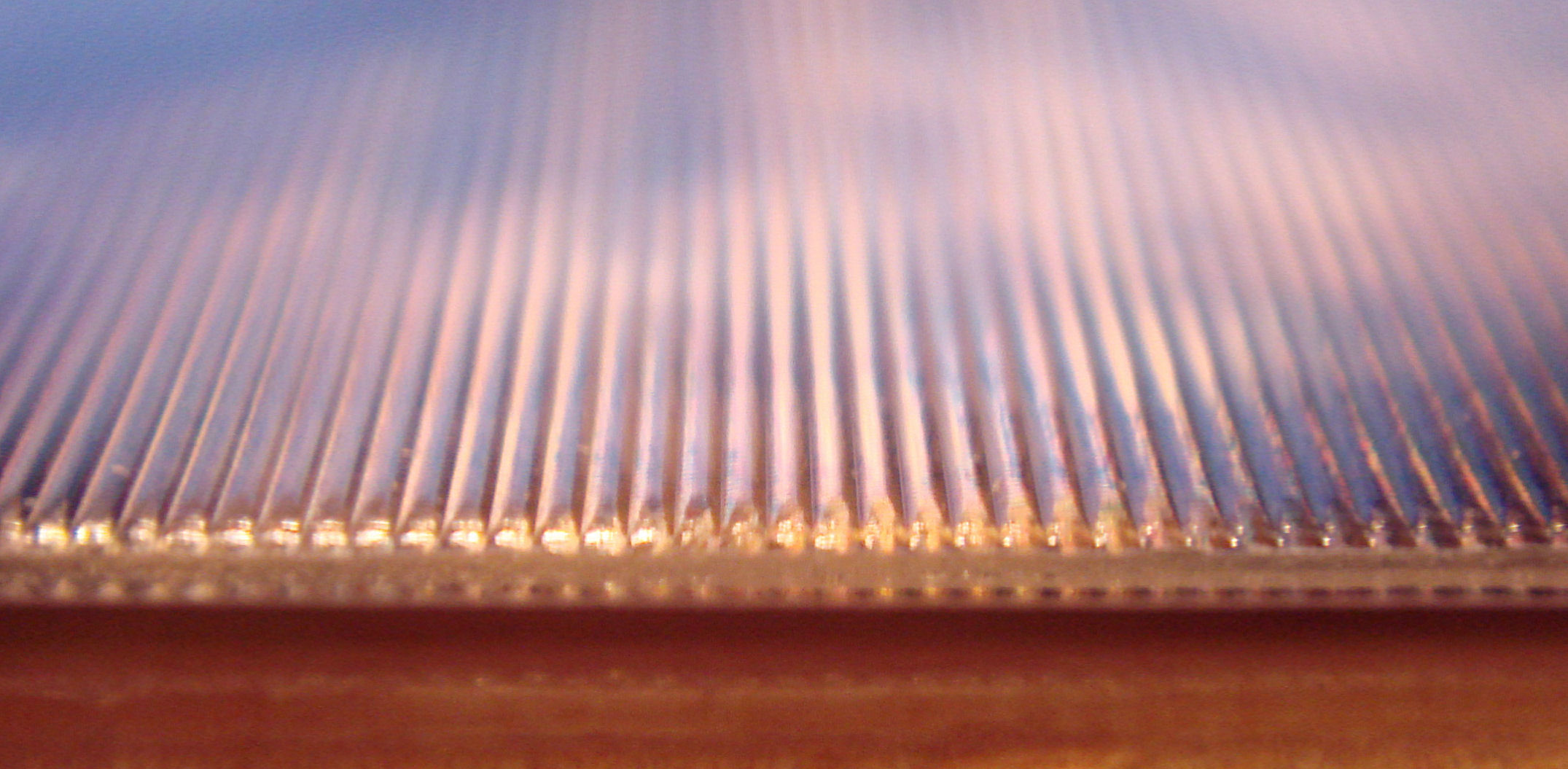
Lenses select the view
In 2013 experiments, researchers printed lens arrays adapted to particular scenes rather than repeating one lens size. Their separate simulated-image comparisons generally favored the adaptive designs, but some scenes showed distracting streaks. Physical prototypes demonstrated the arrangement; they did not match the quality of molded commercial lenses. Fitting more viewing directions into a print competes with preserving fine image detail.

Curves add constraints
A 2021 study extended the idea to curved objects, printing lenses and colored patterns together. Microscopic inspection showed that undersized printed color spots lost definition. In one small case, the fabricated view differed from its rendering because the printer could not reproduce the intended pattern. Lens size and printing orientation therefore matter, not just the artwork underneath.
Unlike moiré bands, this effect deliberately routes images through lenses.
Leave a Reply