
Shatter cones are striated fracture surfaces, not necessarily complete cones. Their branching patterns record intense rock breakage, but the detailed fracture mechanism remains debated.
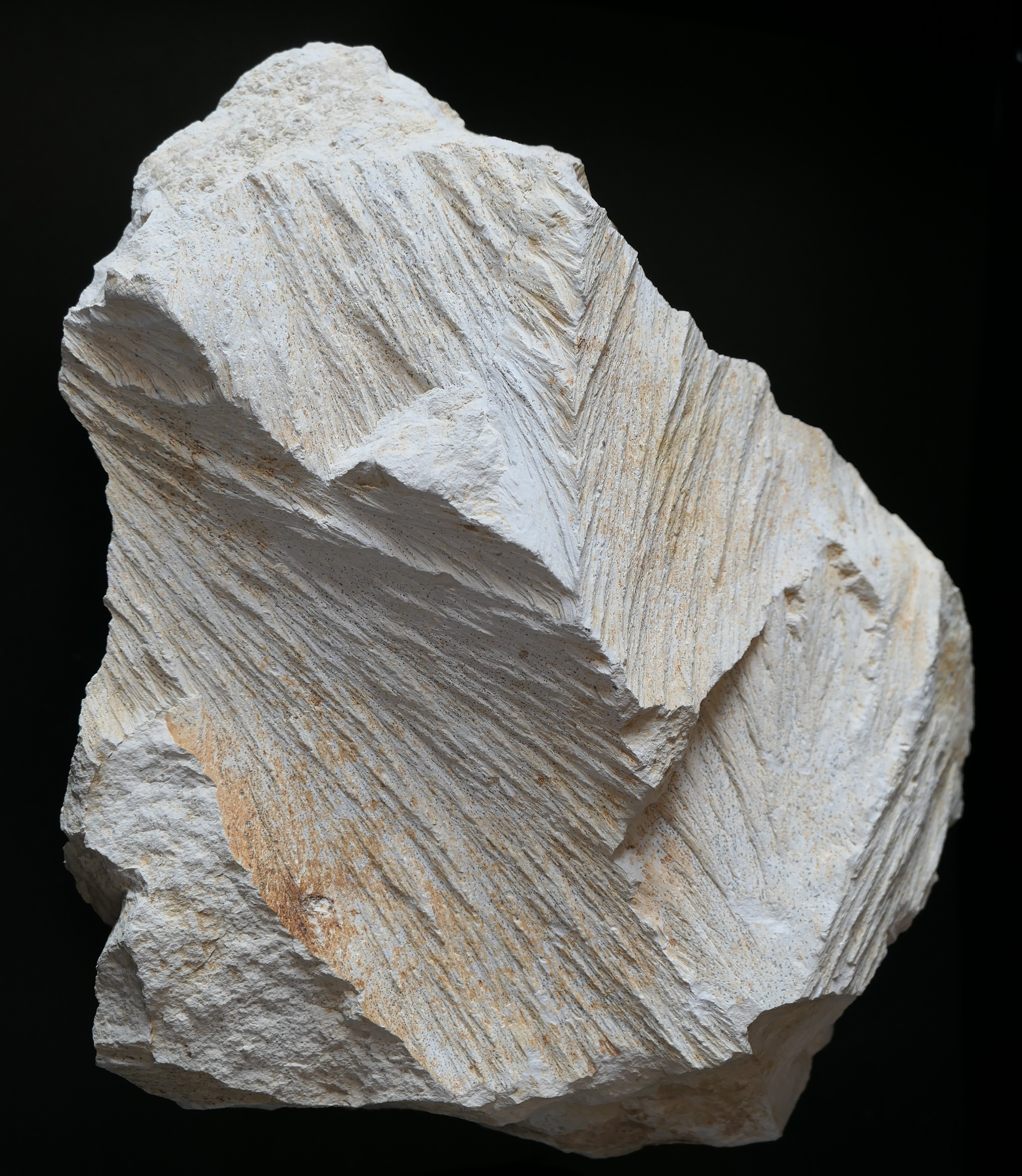
A 2004 field study at Kentland and Vredefort found networks of curved, branching fractures. The researchers proposed that rapidly opening cracks produced the shapes, with disturbances traveling along crack fronts leaving paired, V-shaped tracks. Their fracture-speed estimates came from that interpretation, not recordings of cracks moving during an impact.
A 2016 study of impact experiments recovered miniature shatter-cone fragments from ejected sandstone, quartzite and limestone. Microscopy revealed melt films and polished areas. The authors interpreted these textures as evidence for both opening and sliding, rather than opening alone. They found no clear dependence of cone formation on rock type, porosity or water saturation within their experiments.

Compare these fractures with Tycho’s impact-ejecta rays, which are surface deposits rather than cracks.
Leave a Reply