
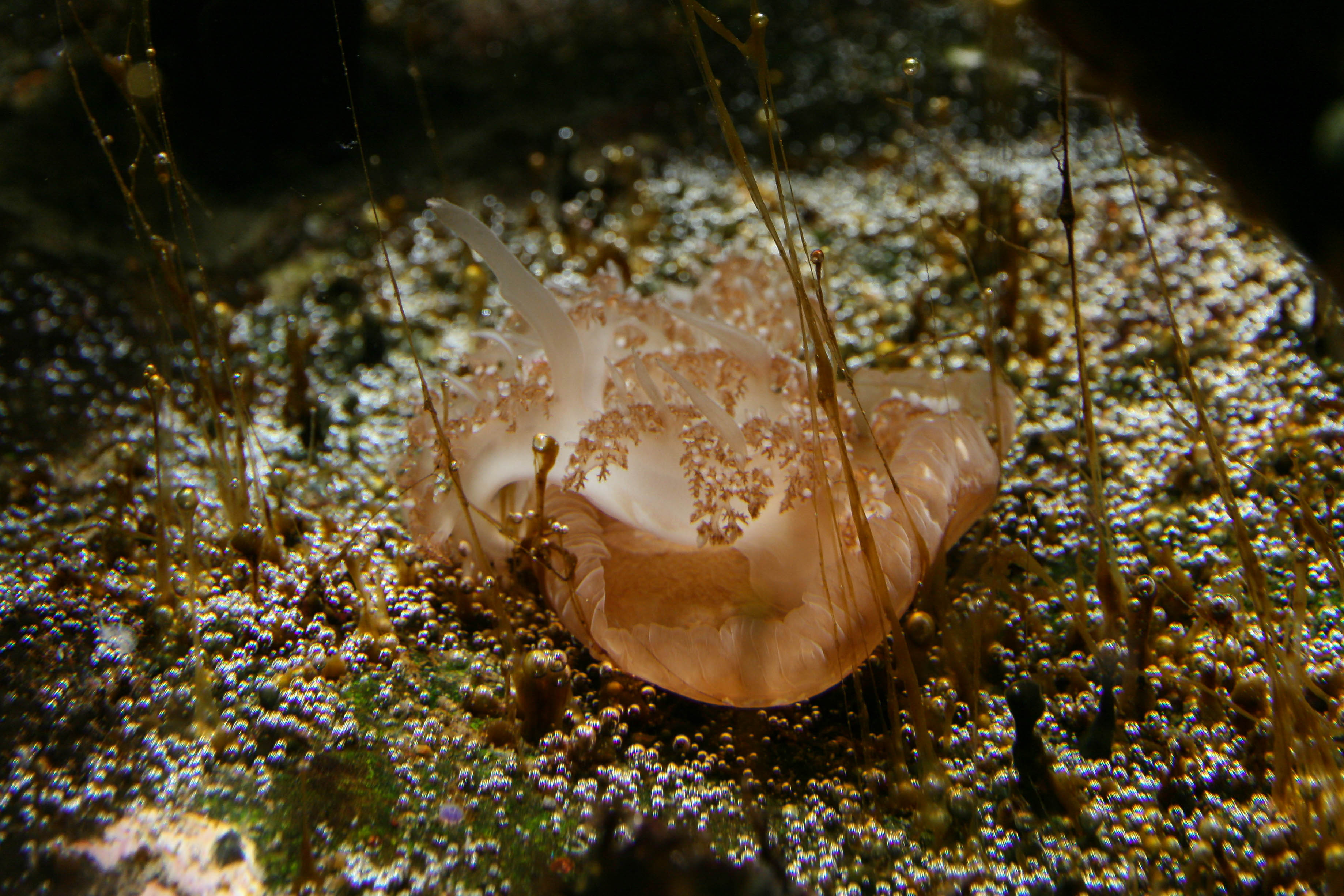
An upside-down jellyfish can keep pulsing while asleep. In Cassiopea, researchers recognize sleep through changes in activity and responsiveness, not a motionless pose.
Testing the quiet state
In a 2017 study, jellyfish pulsed less at night and responded more slowly when released into the water column. Repeating the disturbance quickly restored responsiveness: the quiet state was reversible.
Disrupting nighttime rest with water pulses also reduced activity the following day. Applying those disturbances during daytime did not produce the same rebound, helping distinguish lost sleep from muscular fatigue.
Probing the regulation
A 2025 experiment examined Cassiopea xamachana. Reducing expression of the receptor-like gene chrnal-E increased daytime sleep and decreased nighttime sleep, supporting a wake-promoting role.
The gene is not a complete sleep switch: its reduction did not cause constant sleep. The researchers also cautioned that the relevant natural neurotransmitter remains unconfirmed. A distributed nervous system can regulate sleep without settling every molecular detail.

Compare the different evidence used to recognize active sleep in octopuses.
Leave a Reply