
Two eyes can supply depth information without processing a scene the way human eyes do. Experiments tested prey-catching responses, not whether mantises have universally better vision.
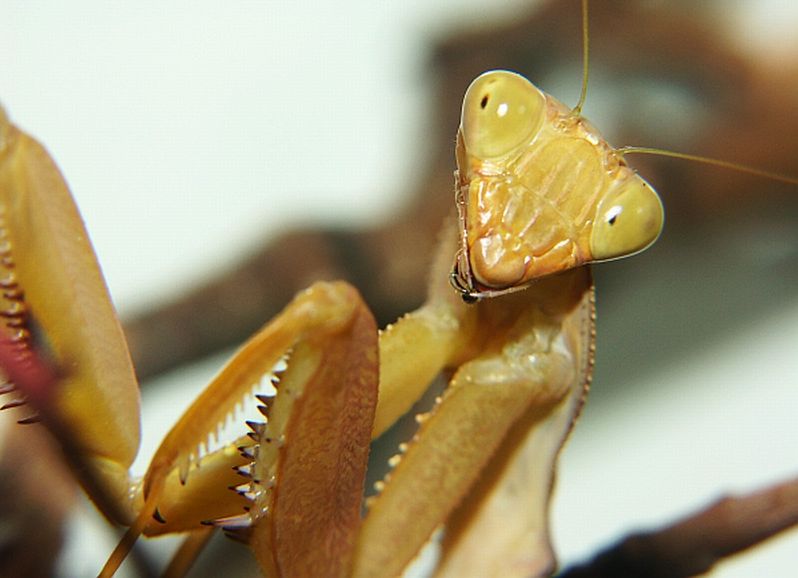
A virtual target within reach
In 2016 experiments, adult female Sphodromantis lineola wore blue and green filters that separated the images reaching each eye. The screen stood beyond catching distance. When the two images simulated a nearby target, mantises struck much more often than when those images were aligned on the screen or swapped. The contrast supported depth judgments from the difference between the eyes’ views, rather than simply responding to a particular screen position.
Changing dots, rather than matching pictures
A 2018 study used the same species and moving patches of random dots. Mantises still selected the simulated nearby target when the eyes received unrelated dot patterns. They also responded when stationary dots merely changed brightness as a target region passed. The results supported comparison of where brightness changes over time, not obligatory matching of static patterns. This was behavioral evidence about a specialized hunting response, not a complete account of every visual task.

Another life stage: mantis egg cases.
Leave a Reply