
Catching an evasive copepod requires more than a fast mouth. A seahorse first approaches closely, then rapidly turns its head and draws water inward.

A quieter approach
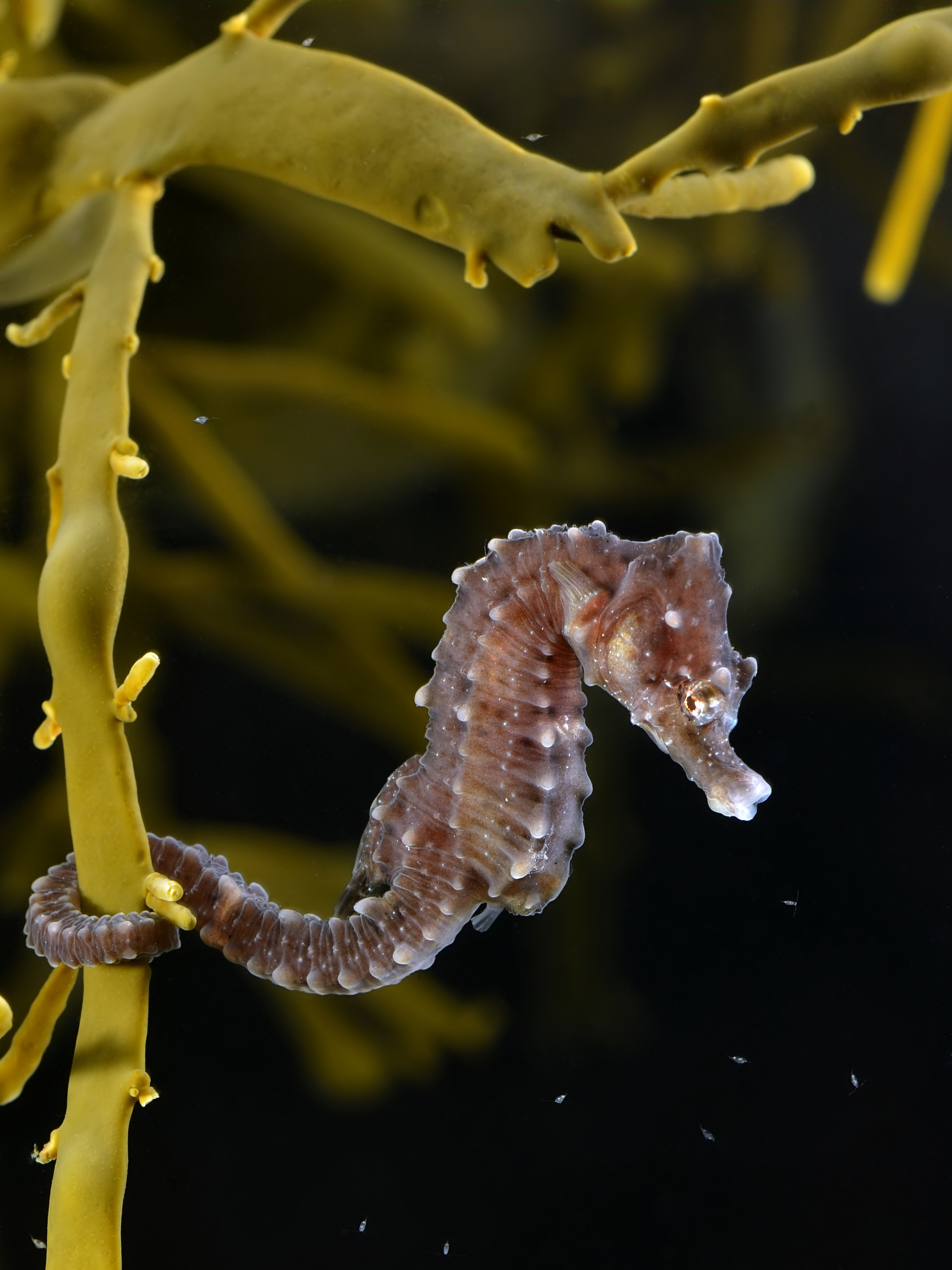
A 2013 study tracked living dwarf seahorses and water movement around them. The region above the snout, where prey could be struck, experienced less disturbance than neighboring water. That could help a predator approach prey sensitive to water motion.
Tests with preserved specimens in controlled flow separated head shape from swimming behavior. Both shape and posture mattered. This was reduced disturbance within a small region, not an invisible fish or completely motionless water.
Stored energy for suction
A 2023 investigation measured feeding movements and surrounding flow in three seahorse species. Estimated suction power exceeded what muscle alone could supply at that speed, supporting release of previously stored elastic energy.
The researchers identified a tendon mechanism associated with suction alongside the elastic system driving head rotation. Coordinated energy release helps explain the rapid strike. Their energy estimates and mechanical model do not establish every detail of the latch that releases it.
This feeding mechanism is distinct from the mechanics of a seahorse’s armored tail.
Leave a Reply