
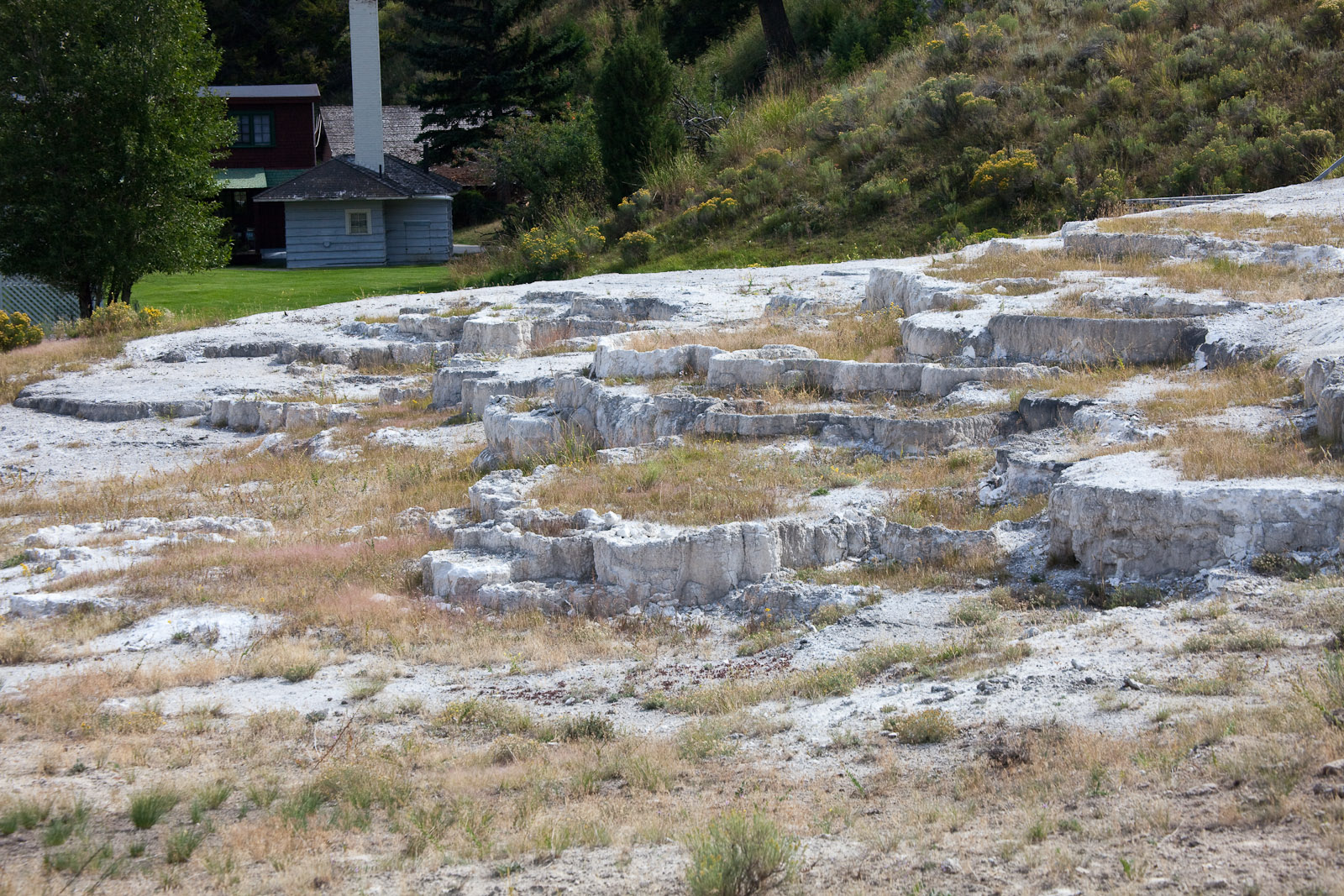
At carbonate hot springs, flowing water can build steps instead of simply wearing them away. Travertine is calcium carbonate deposited from that water.

Flow and growth reshape each other
A 2006 model coupled water movement, carbon-dioxide loss and mineral precipitation. Deposits changed the flow, which changed where further material accumulated. Small irregularities could develop into dams and ponds. This explained large-scale pattern formation without resolving every microbial or crystal-growth process.
Ponds can merge by drowning
In a 2008 investigation, time-lapse photographs at Canary Springs showed downstream pond lips growing high enough to inundate upstream neighbors. Two ponds became one, matching a simulated mechanism. Statistical comparisons used small photographed terraces; they did not establish an exact universal growth law for every spring.
Compare carbonate growth in cave dripstone.
Leave a Reply