
Curving iron-rich bands can develop inside existing stone, rather than being layers deposited with the original sediment.
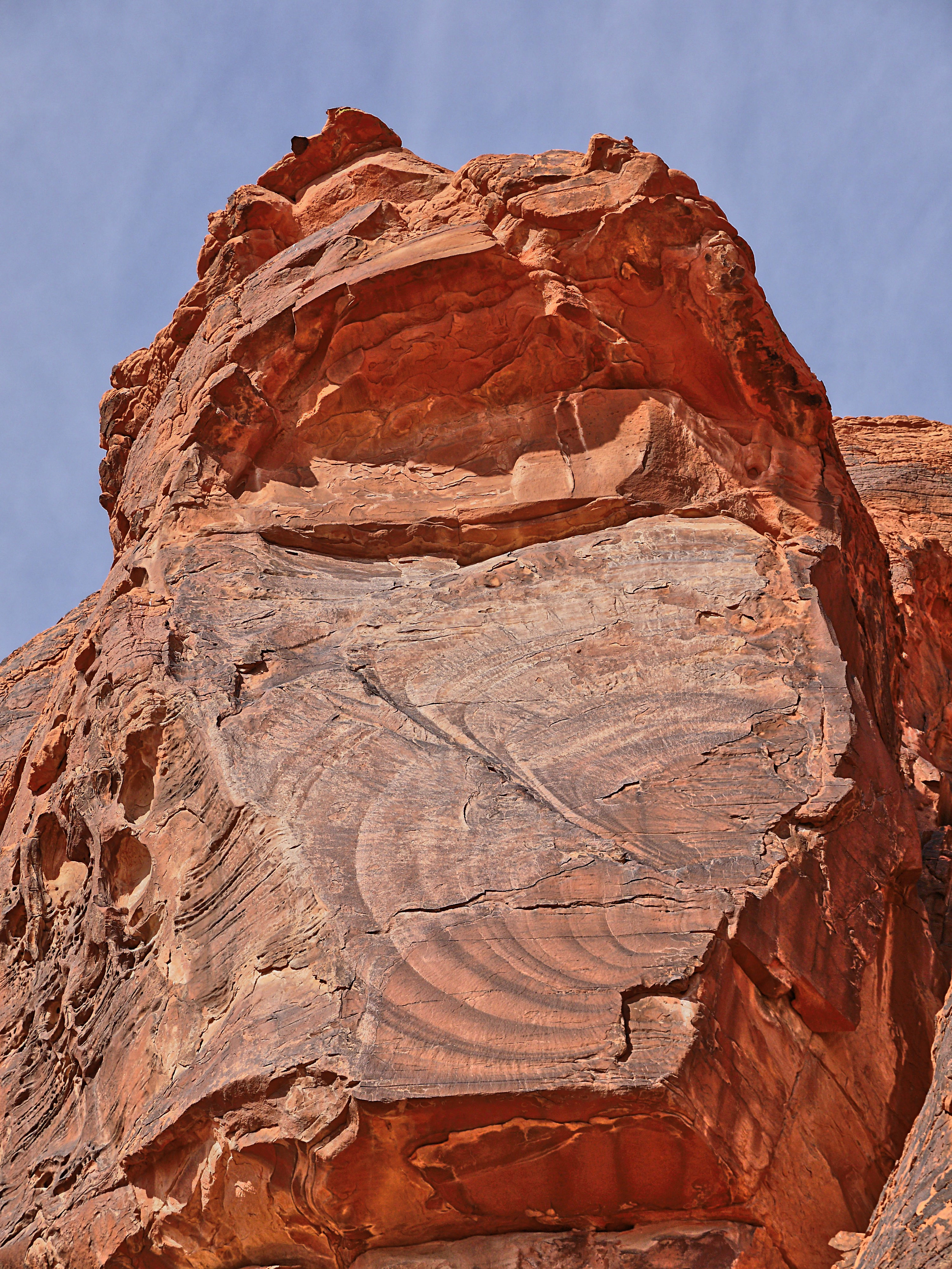
A 2015 field study distinguished thin stains coating sand grains from thicker cement filling pores in Kanab Wonderstone. The stains followed the increasing spacing expected of Liesegang bands. The cement generally did not. Microscopic twisted filaments supported the authors’ interpretation of bacterial involvement in cement formation, not a claim that every striped rock has the same origin.
A separate laboratory study produced iron-rich rings in humid Lecce limestone beside corroding iron. Its reaction-and-diffusion model reproduced ring-like deposits by allowing dissolved material to spread, react and precipitate. But the parameters were adjusted to obtain rings, not rigorously calibrated against measurements. These experiments do not establish the history of every natural band.

Chemical patterning differs from the erosion that creates sandstone honeycombs.
Leave a Reply