
The resurrection spikemoss Selaginella lepidophylla spreads outward when hydrated and curls into a compact ball as it dries. Its movement has a physical explanation: different parts of its stems change shape differently as they lose water.

Not every stem makes the same curl
Ahmad Rafsanjani and colleagues filmed isolated stems in a 2015 study. Older outer stems bent into approximately circular rings comparatively quickly during drying. Inner stems curled more slowly into spirals, with tighter curvature toward their tips.
The researchers combined these observations with tissue staining and mechanical models. Unequal shrinkage across a stem produces bending; variation along its length can make that bend progressively tighter. A simple strip with identical properties everywhere would not reproduce both patterns. The plant’s compact shape emerges from differently structured stems, not from every branch performing one identical movement.
The differences reach down to individual cells
A 2019 investigation led by Véronique Brulé combined mechanical tests, microscopy and three-dimensional imaging. The side facing inward was less stiff than the opposite side. Differences in cell size, orientation and tissue porosity helped explain that asymmetry.
Chemical patterns also varied from stem tip to base. Inner stems showed cell-wall composition gradients that outer stems lacked. The team proposed that these patterns help explain tighter inner spirals, but some components’ precise roles remained unresolved.
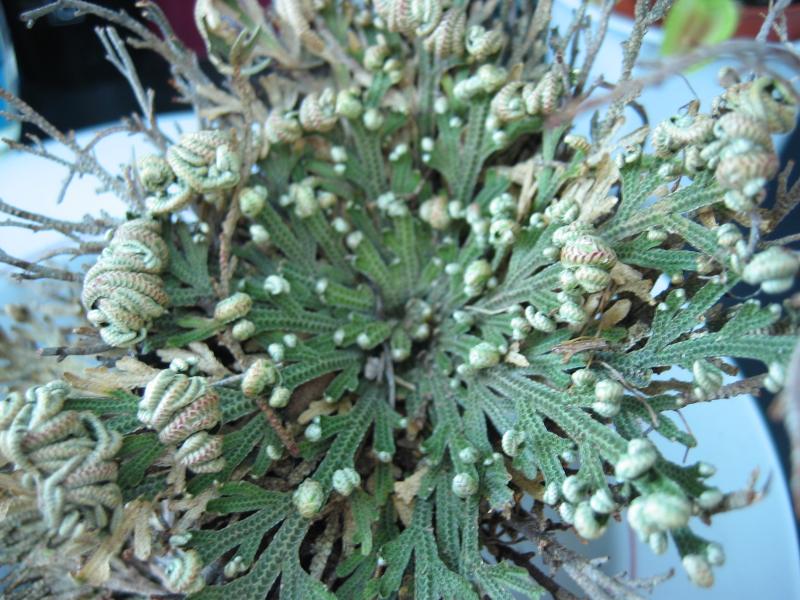
Both living and dead tissues deform. Like horsetail spore movements, this requires no muscles. Uncurling does not prove survival.
What does curling protect?
Jefferson Lebkuecher and William Eickmeier tested the benefit in a 1993 field experiment in west Texas. Plants dried either freely or restrained against curling, and either shaded or exposed to full light. After drying, they were rehydrated in the laboratory.
Plants kept flat and unshaded recovered poorer photosynthetic performance than those in the other treatments. The authors concluded that curling protects against strong light, heat, or their combined effects. Their experiment did not isolate one universal cause of damage.
Opening is a mechanical response to water; recovering photosynthesis is a separate biological outcome. Uncurling should not be mistaken for resurrection from death.
Leave a Reply