
A wet fingertip circling the rim of a wine glass can produce a clear, sustained note. Nothing is being blown into the glass, and there is no speaker hidden underneath. The glass itself is vibrating.
This familiar party trick is also a small acoustics experiment. With careful handling, one glass and plain water are enough to explore how friction, vibration, and pitch work together.
The finger does not slide smoothly
The Royal Institution’s activity guide explains that a wet finger repeatedly catches on the rim and then slips. These rapid stick-and-slide movements feed energy into the glass. Its tiny motions disturb the surrounding air, producing the sound that reaches your ears.
The motion can be difficult to see even when the note is easy to hear. A loud-looking movement is not required for an audible vibration. Rubbing continuously supplies energy, which is why the note can continue as the finger travels around the rim.
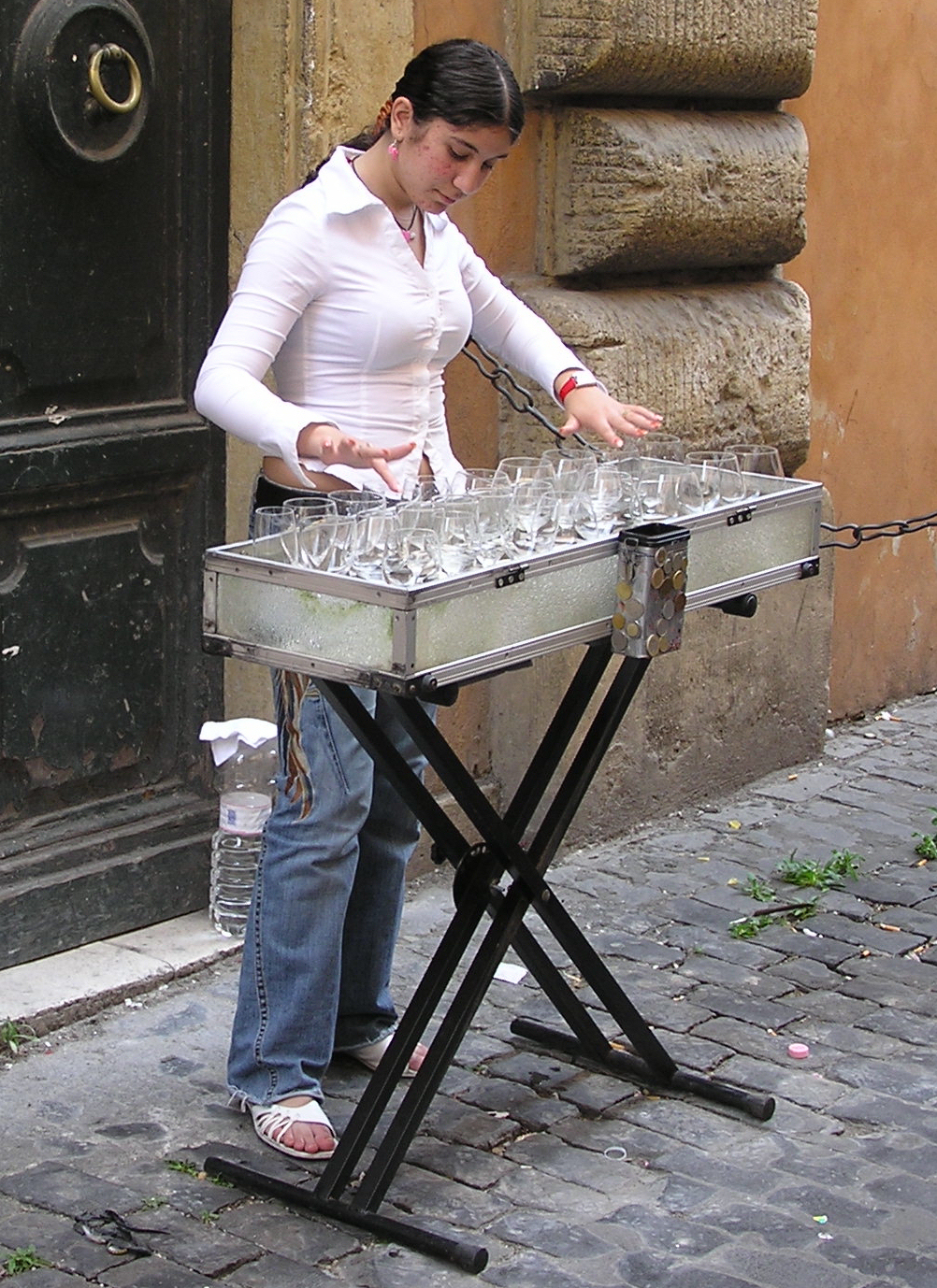
Why does one glass favor a particular note?
An object does not vibrate equally readily at every frequency. The Acoustical Society of America’s wine-glass activity describes the glass resonating at a particular pitch. Its dimensions and shape help determine the notes it can produce.
That is why two glasses can sound different even when the same person plays them in the same way. Your finger supplies the repeated disturbance, but it is not choosing the note in the same way that a singer chooses a vocal pitch.
Adding water lowers the note
Water changes the vibrating system. The glass and liquid move together, and adding water generally lowers the frequency of the familiar singing tone. This measured effect is also the subject of Yih-Yuh Chen’s research on wine-glass pitch. A lower frequency means fewer vibrations each second and a lower-sounding note.
For a useful comparison, keep the glass the same and change only its water level. Comparing an empty narrow glass with a full broad one changes two things at once, making the result harder to interpret.

Try a gentle, controlled comparison
The University of Toronto’s demonstration recommends clean hands and gentle rubbing. An adult should select a sound, ordinary stemmed glass without chips or cracks, avoiding delicate, very thin, or valuable glassware. Set it on a stable table and keep a towel nearby.
Add some room-temperature water. Hold the base steady, wet a fingertip, and move it gently around the rim. If nothing happens, rewet the finger and try a steadier motion rather than pressing harder. Stop if the glass shifts or feels unsafe. This is not a glass-breaking experiment.
Once a note is reliable, add a little more water and listen again. Pacific Science Center’s activity suggests comparing water levels and ordering the resulting sounds from low to high. Record what changed instead of trying to force a louder result.
Not the same instrument as a bottle
A rubbed glass and a blown bottle may both make musical tones, but they do not work identically. In our bottle-note experiment, the air is central to the resonator. Here, the vibrating glass and its liquid load are the important combination.
That is the useful lesson behind the ringing note: before explaining a sound, first ask what is actually vibrating.
Leave a Reply