
A fish can hang in midwater without swimming hard toward the surface. In many bony fishes, a gas-filled organ helps make that possible: the swim bladder. It changes the animal’s average density, reducing the tendency to sink. This organ is not present in every fish.

Changing density without growing a bigger skeleton
A gas-filled space adds volume with relatively little mass. Combined with denser tissues, it can bring a fish’s overall density close to that of the surrounding water. At neutral buoyancy, the upward buoyant force balances its weight. That does not mean the fish stops moving its fins or that currents stop pushing it around.
The University of Hawaiʻi’s fish-anatomy guide describes two broad routes for adjusting gas content. Some fishes retain a connection to the digestive tract and can swallow or release air. Others regulate gas through specialized tissues and blood vessels instead. A generic balloon analogy helps with volume, but it hides this important biological difference.
A real organ, not an empty space
The Australian Museum’s anatomical account places the flexible-walled sac toward the back of the body cavity. Much of its wall resists gas leakage. In some species, the organ also contributes to hearing, so its role is not exhausted by the question of floating.
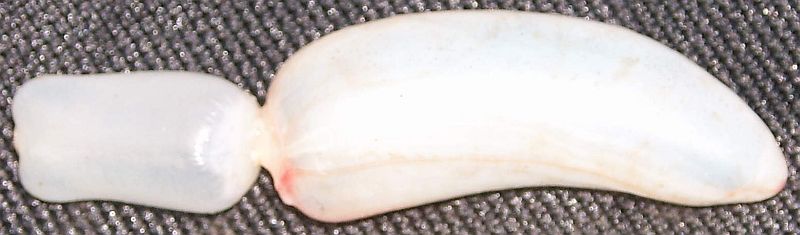
How can blood fill a gas chamber?
Gas-secreting swim bladders use a gas gland and a closely packed network of blood vessels called the rete mirabile. Blood flowing in opposite directions allows gases to become concentrated. The system is not simply a hose from the mouth, and the gland does not manufacture oxygen from nothing.
Kuhn and Marti’s 1966 physiological analysis modeled this countercurrent concentrating system. It linked acid production in the gland with the conditions that favor gas secretion, and calculated how repeated exchange along the vessel network could build high gas pressures. The paper compared those calculations with existing experimental measurements. This was a mechanistic model, not a demonstration that every species uses an identical arrangement.
Depth changes faster than gas regulation
Deeper water exerts greater pressure, compressing the gas space. Rising toward shallower water reduces pressure and lets it expand. Maintaining the same bladder volume therefore requires adding gas during descent and removing it during ascent. Without compensation, a bladder that was appropriate at one depth may not provide the same balance at another.
Physiologist Bernd Pelster’s 2021 review of swim-bladder function emphasizes a limitation often missing from the balloon picture: secretion and reabsorption take time. The organ cannot fully compensate for rapid depth changes. It is especially useful when a fish remains at a depth for a longer period, while active swimming can contribute during movement through the water column.
Watch aquarium fish without chasing them or changing water conditions to test the mechanism. A brief pause in midwater does not reveal the entire internal process. For a different use of internal gas spaces, our article on sea-turtle breathing and diving explains animals that carry air in lungs rather than using a fish’s swim bladder.
Leave a Reply