
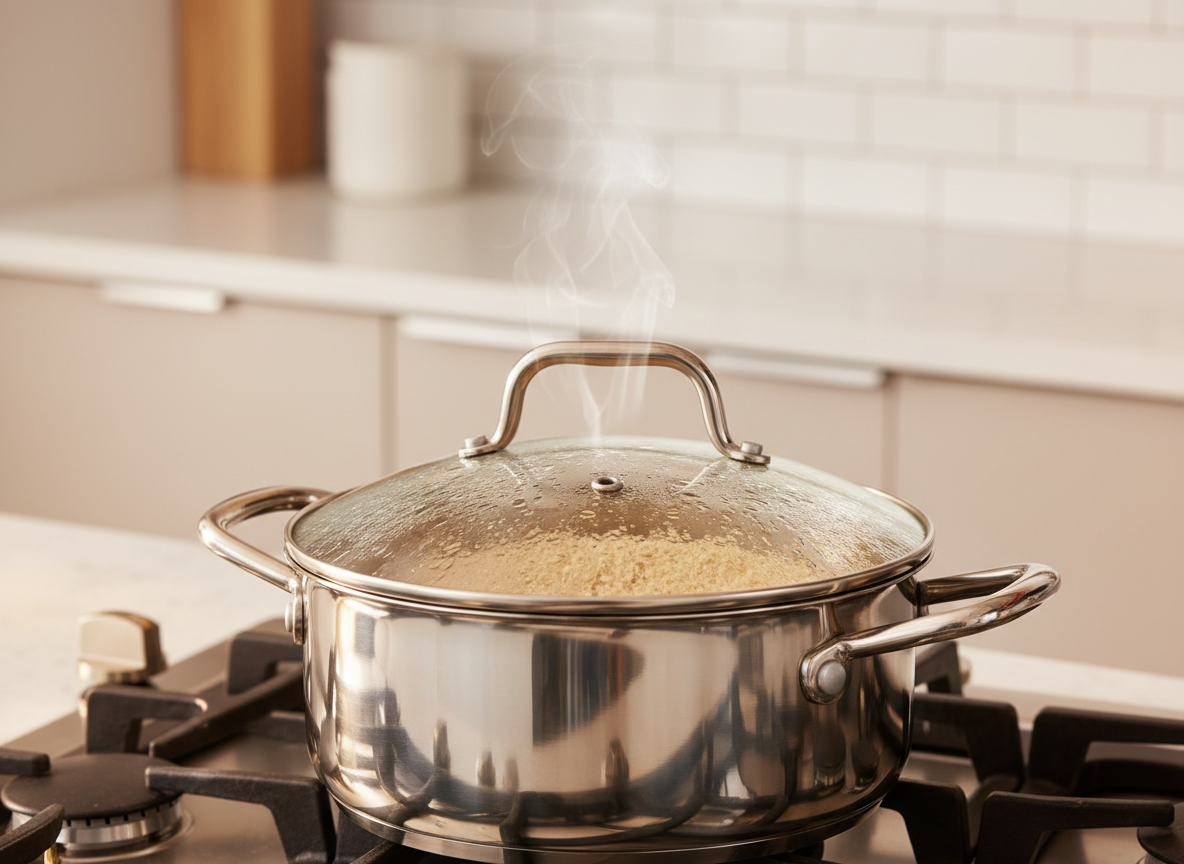
To keep quinoa from sticking to the pot, rinse and drain it, use the water amount recommended for your quinoa, lower the heat as soon as it reaches a gentle simmer, and let it rest covered after cooking. Most scorching happens because a burner stays too hot after the water has been absorbed.
Start with the right pot and amount of water
A medium saucepan with a heavy, flat base is easier to control than a thin pan with hot spots. A lid that fits well prevents rapid evaporation. For many white-quinoa recipes, roughly 1¾ to 2 cups of water for each cup of dry quinoa is a practical range; follow the particular package if it recommends something different. Measured broth can replace water, but watch added salt.
Rinse the dry quinoa in a fine-mesh strainer, moving the grains gently to remove surface saponins that can taste bitter. Let the strainer drain well before adding quinoa to the saucepan. The goal is a predictable starting liquid ratio, not extra water left trapped in the strainer.
Bring it up to heat, then immediately turn it down
Combine the drained quinoa and measured water. Bring to a boil, stir once, then reduce to a very gentle simmer and cover. You should see little movement, not a rolling boil that rapidly empties the pot. If your stove tends to run hot, move to the smallest suitable burner. Resist repeated lid lifting, which releases steam and can extend cooking.

Do not scrape or keep stirring as it cooks
Quinoa releases starch into its cooking liquid. Constant stirring can make the grains more compact and paste-like, while scraping a drying pot may mix burnt bits throughout. Check near the end of the package’s cooking time—often around 12–15 minutes for white quinoa, but longer for some varieties. When most water is absorbed, turn the heat off instead of trying to dry the pan over a strong flame.
Rest, then fluff gently
Leave the covered pot off the heat for about five minutes so the remaining steam can finish hydrating the grains. Remove the lid and fluff with a fork. Cooked quinoa commonly shows a little pale spiral germ around each seed; this is normal, not a sign of spoilage. If the center is still hard and there is no water, add a small splash, cover and warm over very low heat briefly.

What if quinoa is already stuck?
Turn off the burner and transfer the loose, unburned portion to another bowl without scraping the dark layer. If the bottom smells burnt, do not stir that layer into the good quinoa. Soak the cooled pan in warm water and wash according to its material and finish. Next time, use lower heat, a heavier pan, or slightly more liquid if the packet’s ratio and your stove require it.
Troubleshooting by symptom
Dry and crunchy: Not enough water, too much evaporation, or too short a cook; add a little water and finish covered. Wet and mushy: Excess water or overcooking; drain any free liquid and avoid hard stirring. Brown at the bottom but pale above: Excessive burner heat or a thin saucepan; reduce heat promptly on the next batch. Bitter flavor: Rinse more thoroughly before cooking, rather than covering the bitterness with salt.
Frequently asked questions
Should I add oil to prevent sticking? A little oil may change the texture, but correct heat and water matter more. Is quinoa supposed to toast while simmering? No; toasting dry quinoa is a separate optional step before adding water. Can I use a rice cooker? Many models work well; follow the cooker’s recommendations and compare our quinoa rice-cooker guide. Can I store leftovers? Refrigerate cooked quinoa promptly in shallow covered containers and use within standard cooked-grain storage guidance.
Related: how to rinse quinoa without losing the grains and how to cook fluffy quinoa.
Leave a Reply