
Long, increasingly empty spaces between pothos leaves often mean the plant is stretching for light. The plant may survive in a dim room but produce longer, thinner stem segments rather than tightly spaced foliage. This is leggy growth. More suitable indirect light encourages more compact new growth, but it will not shorten the old bare sections.
What is the space between two pothos leaves?
Each leaf joins the vine at a node; the section of stem between nodes is called an internode. Pothos naturally trails or climbs, so some exposed stems are normal. What matters is whether the newest growth suddenly looks noticeably more stretched than the older growth under similar care. A leafless section may result from fallen older leaves, a damaged stem, or an earlier period of poor light.
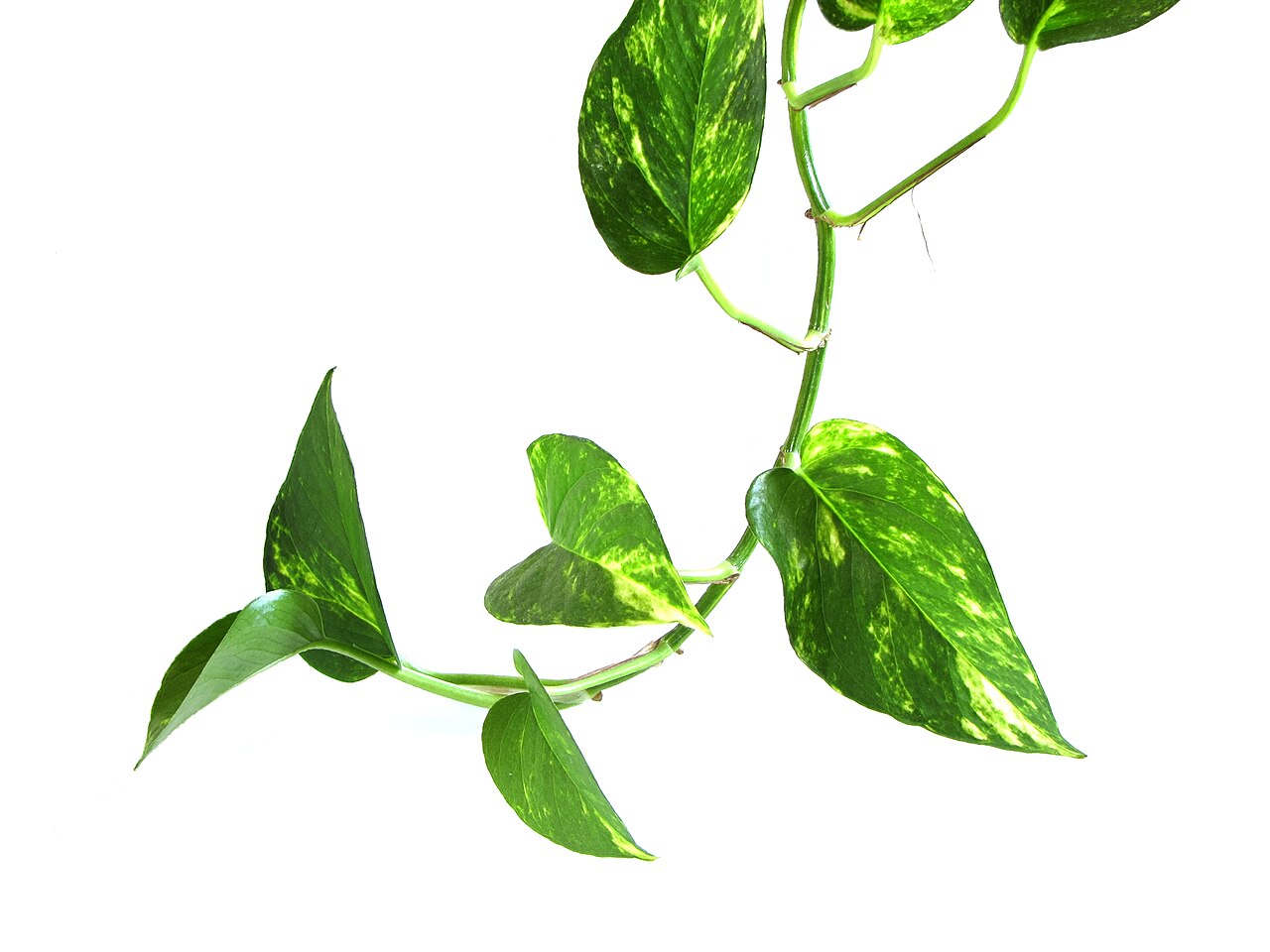
How do you tell low light from a naturally long vine?
Inspect the last six to ten inches of the vine. Are newer leaves smaller, farther apart, and angled sharply toward the nearest window? Has the plant produced little foliage even though stems are extending? Those clues point toward light as a limiting factor. If stems are mushy, leaves yellow rapidly, or soil stays wet, examine watering and roots as well; not every sparse vine has a light problem.
Where should a leggy pothos go?
Move it closer to useful daylight without suddenly exposing tender leaves to scorching afternoon sun. An unobstructed east-facing window or a bright north-facing window can be suitable. Distance from the glass, overhanging porches, and season all affect the actual light. Increase exposure gradually over several days and watch new leaves rather than judging success from old stems.
University of Minnesota Extension explains that inadequate light can lengthen internodes and that low-light plants use water more slowly. See its indoor plant lighting guide for the underlying signs.
Will old gaps ever fill with new leaves?
Usually existing stem segments do not shorten. A living node may produce a new shoot after pruning or changed growing conditions, but an old leaf scar is not guaranteed to regrow the same leaf. The realistic goal is a fuller future plant. Growing several rooted cuttings in one pot can create the appearance of denser foliage while the original stem remains visible.
How to prune without damaging the plant
Use clean sharp scissors to remove an excessively long section just above a healthy node on the mother plant. Keep enough healthy leaves on the remaining vine. For propagation, make a separate cutting containing at least one stem node; a detached leaf by itself is not a reliable pothos cutting. Root cuttings in water or another appropriate medium and transplant when they have developed adequate roots.
Should you use a grow light in a dark room?
If the room lacks a useful window, a plant-rated light may be more effective than shifting the pot among dim corners. Follow the light manufacturer’s instructions for height, duration, and electrical safety, and observe the resulting leaf spacing over several weeks. A lamp across a room may be far too weak at leaf level. Avoid permanent harsh direct exposure that bleaches or scorches foliage.
Don’t try to fix leggy growth by watering more
Photosynthesis is limited by light. Extra water or fertilizer cannot replace it. Check the potting mix before watering; in low light it often dries more slowly than it does beside a brighter window. A pot with blocked drainage or persistently wet roots can cause leaf loss and complicate diagnosis.
Frequently asked questions
Does rotating help? Rotation can reduce one-sided leaning but cannot make a very dark room bright. See how to rotate low-light houseplants.
Should I repot a long vine? Not solely for stem length. Inspect roots and soil condition first; a larger wet pot may worsen a watering problem.
Will pruning make the plant bushier? Pruning can encourage branching near viable nodes. Results depend on plant health, light, and care.
For more clues, compare our guide to seven signs a houseplant lacks light. Pothos also contains irritating calcium oxalate crystals, so keep it away from children or pets inclined to chew plants.
Leave a Reply