
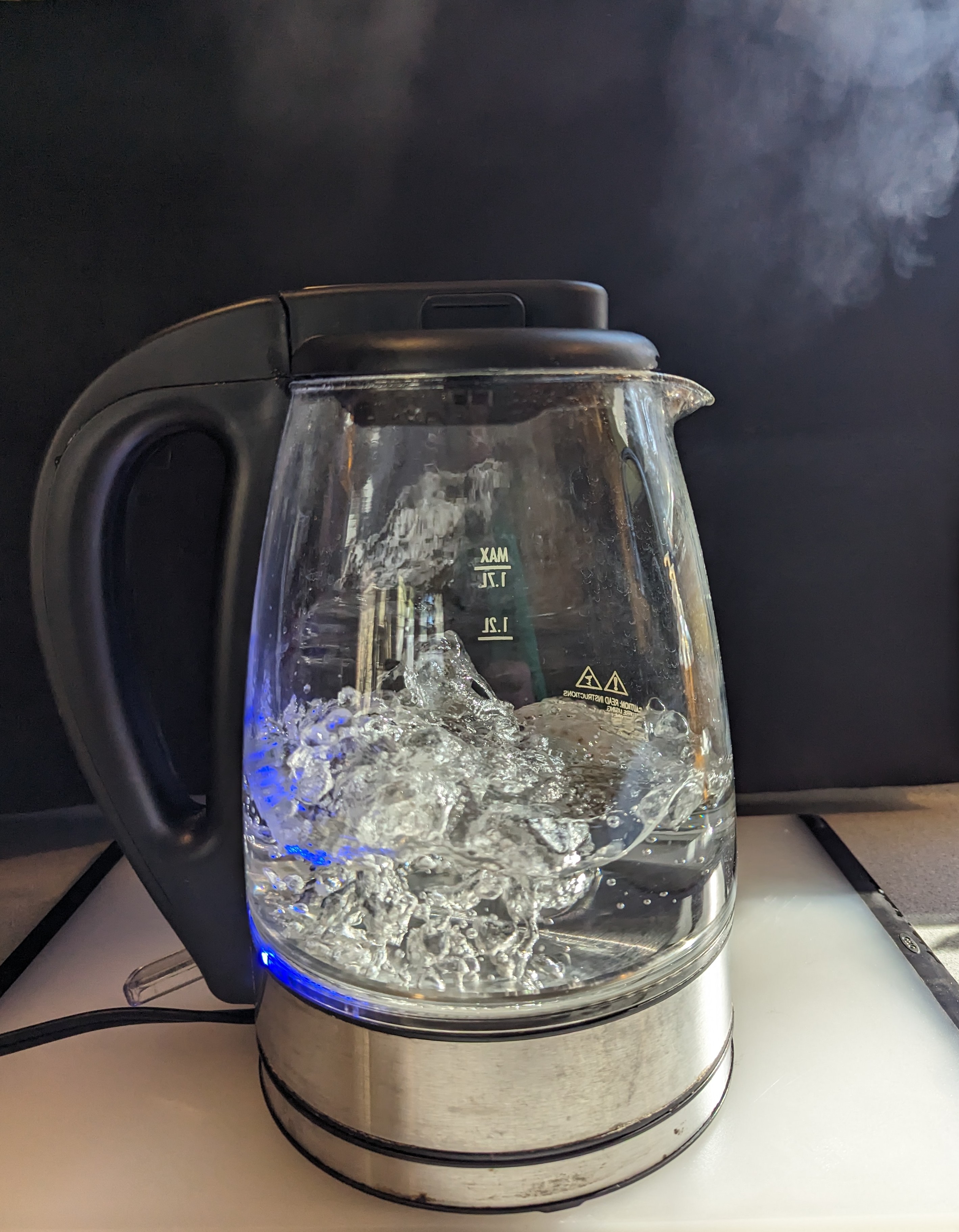
That loud rush or roar during kettle heating usually comes from small vapor bubbles forming near the hot element and collapsing as they encounter cooler water. A kettle can be loud before it reaches a full rolling boil, then sound quieter shortly before it switches off. The sound is a normal part of heating, but unusual electrical noises or signs of damage need different attention.
What makes the roaring sound?
An electric kettle’s element or heated base can be substantially hotter than the surrounding water. Tiny pockets of vapor form at the heated surface—often around microscopic imperfections that act as nucleation sites. As these bubbles rise into cooler water, some condense and collapse. Many small pressure disturbances together create the hiss, rattle or roar that you hear through the kettle’s body.
Why does the sound often soften near a full boil?
Early in the heating cycle, the water farther from the element is cooler, so vapor bubbles are more likely to collapse before reaching the top. As the whole kettle warms toward its local boiling temperature, more bubbles survive long enough to break at the surface. Their changed behavior can make the distinctive pre-boil roar subside even as vigorous visible boiling begins. The precise sound pattern varies with the kettle, fill level, mineral deposits and room acoustics.
Can sound tell you the exact water temperature?
No. Hearing a change can be a useful clue, but it is not a reliable thermometer. Water does not always boil at exactly 100°C (212°F): lower air pressure at higher elevations reduces the boiling temperature, and specific kettle designs heat differently. If a beverage needs a particular temperature, use an adjustable-temperature kettle or a suitable thermometer rather than listening for a noise.
When is kettle noise a warning sign?
A normal heating hiss is different from arcing, sparking, a persistent burning smell, smoke, damaged wiring or a kettle that continues heating after the expected automatic shutoff. If any of those happen, unplug it safely and stop using it; don’t open the electrical housing. New rattling may also reflect limescale buildup or parts touching the base, so follow the manufacturer’s cleaning and inspection instructions.
Frequently asked questions
Is the roar caused by the electric motor?
Most electric kettles do not use a motor to heat water. Their main heating noise comes from the water and, sometimes, the expanding casing and switching components.
Why does a kettle sometimes click at the end?
The click is often the automatic switch disconnecting the heating element. This is distinct from the earlier bubble-related roar.
Does a half-full kettle sound different?
It can. Water depth, the amount of water being heated and the design of the vessel influence how bubbles form and how sound travels through the casing.
For more on the end-of-cycle sound, see why an electric kettle clicks. Scientific explanation: The Naked Scientists on kettle noise.
Leave a Reply