
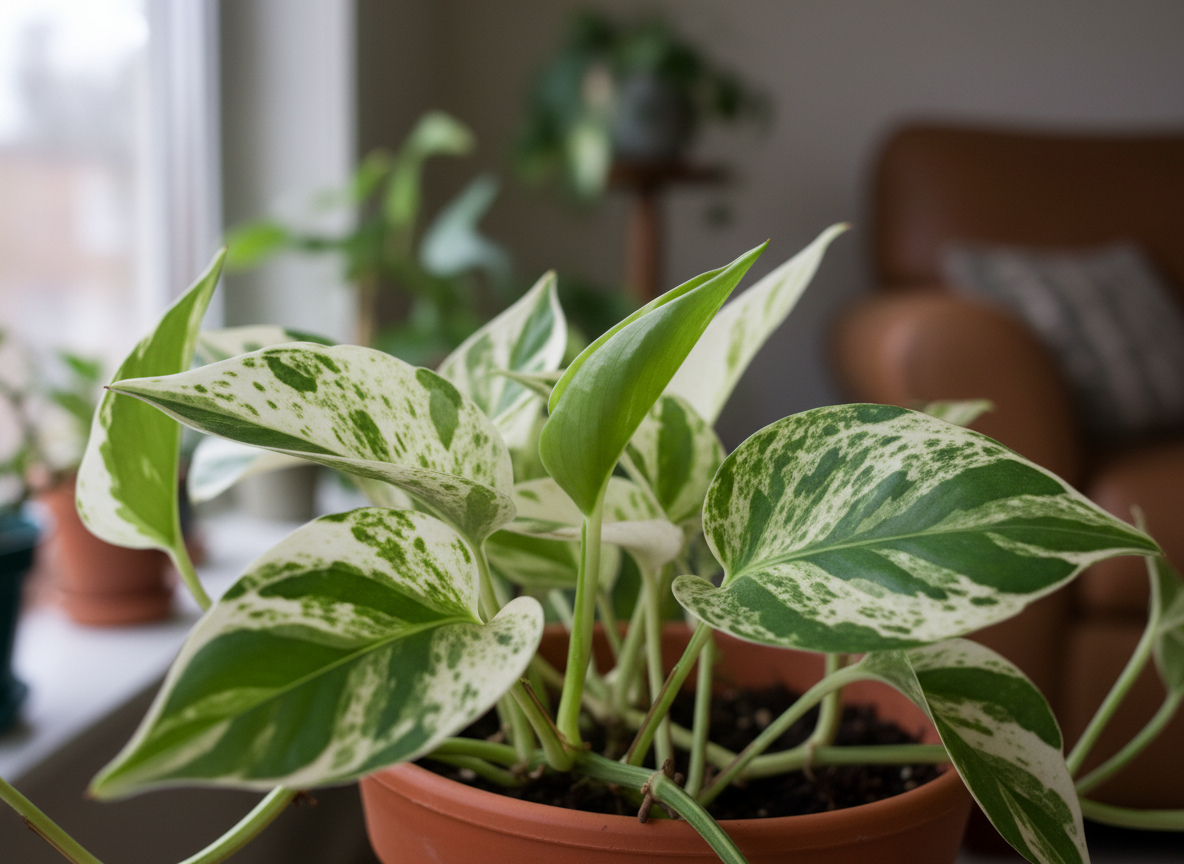
A variegated plant can produce plain-green leaves because one growing shoot has reverted to greener tissue, or because its coloring responds to growing conditions. Variegation means leaves have two or more colors; white and cream areas often have less chlorophyll than green tissue. The reason for a change depends on the species and the kind of variegation.

First, identify what changed
Look at the pattern of new leaves, not just one older leaf. If an entire branch begins producing solid-green leaves, that may be a reverted shoot. If the whole plant gradually looks less patterned after moving to a dim corner, light may be contributing. Some varieties naturally vary from leaf to leaf, and not every green leaf is a problem.
What is reversion?
Reversion is when part of a variegated plant returns to an all-green appearance. Green tissue usually contains more chlorophyll and can photosynthesize more efficiently than very pale tissue under similar conditions. On certain plants, a vigorous green shoot can grow faster than the patterned shoots, gradually taking over the display.
Can changing the light bring variegation back?
Sometimes better light helps maintain a plant’s visible coloring, but it is not a universal cure and it does not reliably reverse a genetically reverted stem. Try bright filtered light appropriate for the species rather than sudden direct sun. Too much sun can burn pale areas, which are often more sensitive.
Should you prune the all-green shoot?
If the variety is prone to stable green reversion and you want to preserve the pattern, the Royal Horticultural Society advises removing reverted shoots before they dominate. Make a clean cut back to a healthy node or branch junction where variegated growth remains. Do not remove a large amount of foliage from a weak or struggling plant.

For a pothos, locate the green shoot’s origin before cutting and leave other healthy leaves intact. For a woody shrub, pruning technique and season may differ. If the entire plant is now green, repotting or fertilizer cannot guarantee that the original pattern will return.
What not to do
- Do not place a shade-grown plant directly in harsh midday sun just to force more variegation.
- Do not use leaf-shine products or fertilizer as a substitute for correct growing conditions.
- Do not cut every ordinary green leaf if the cultivar naturally makes mixed patterns.
- Do not confuse yellowing from root trouble with stable pale variegation.
Frequently asked questions
Can a reverted shoot become variegated again?
It depends on the plant and the tissue at its growing point. Some branches remain green; new patterned growth is more likely if a healthy variegated node is still present.
Is a green leaf healthier than a white leaf?
Green portions generally contain more photosynthetic chlorophyll, but a healthy variegated plant can thrive with the right light and care. White patches are not automatically disease.
Does a grow light restore variegation?
Supplemental light can improve growth in a too-dark spot, but it cannot guarantee that a genetically reverted branch will regain its original pattern.
Reference: Royal Horticultural Society guide to variegated foliage and reversion.
Leave a Reply