
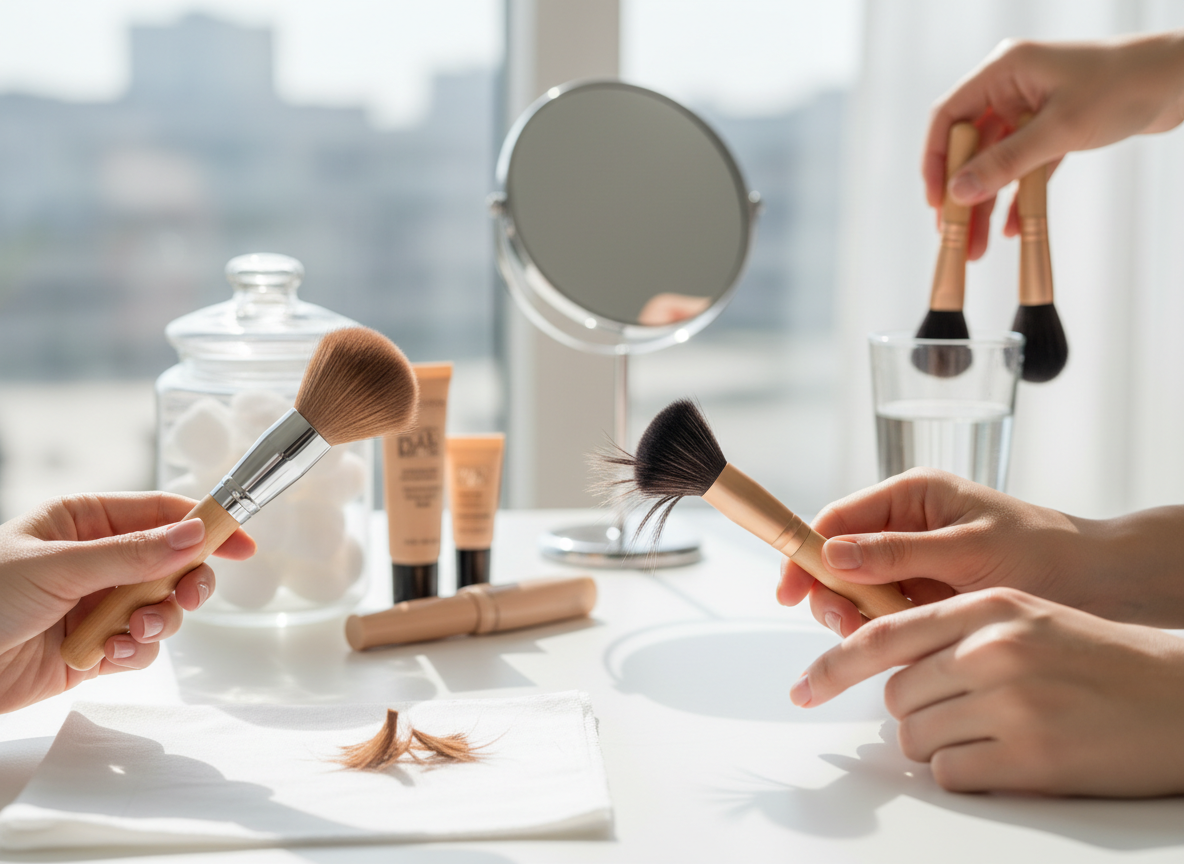
A few loose hairs on a new brush can be normal, but ongoing shedding after washing often points to damaged glue, rough cleaning, or a worn ferrule—the metal part that holds the bristles.

What usually causes shedding
A brush is assembled with bristles secured inside a ferrule. Submerging the entire brush head or leaving it standing upright while wet allows water to reach that joint. Over time it can loosen the adhesive. Strong pulling, hot water and vigorous scrubbing can also damage individual bristles.
How to wash a shedding brush
Hold the brush with the bristles downward and wet only the tips in lukewarm water. Work in a small quantity of gentle shampoo, massage gently, rinse completely, and press excess water out with a clean towel. Reshape the brush head and lay it horizontally with the tips over the counter edge to dry.
Check whether the brush is still usable
Lightly sweep the dry brush over a clean hand or tissue. A few stray hairs are less concerning than clumps coming out, a loose metal collar, or sharp broken fibers. If the ferrule moves or the shape cannot be restored, replacement is usually more sensible than attempting to glue bristles yourself.
Prevent repeated damage
Avoid soaking, twisting, using high-heat dryers, or storing brushes damp. Keep them out of tightly packed bags until completely dry and give delicate natural-hair brushes particularly gentle treatment.
Frequently asked questions
Does a new brush always shed? No. Some do release a few stray hairs initially, but continued shedding suggests a quality or care issue.
Can I fix loose brush glue? Home repairs around bristles can leave adhesive where it contacts skin. Consider replacing a brush with a detached ferrule.
Source: American Academy of Dermatology — how to wash and dry brushes.
Leave a Reply