
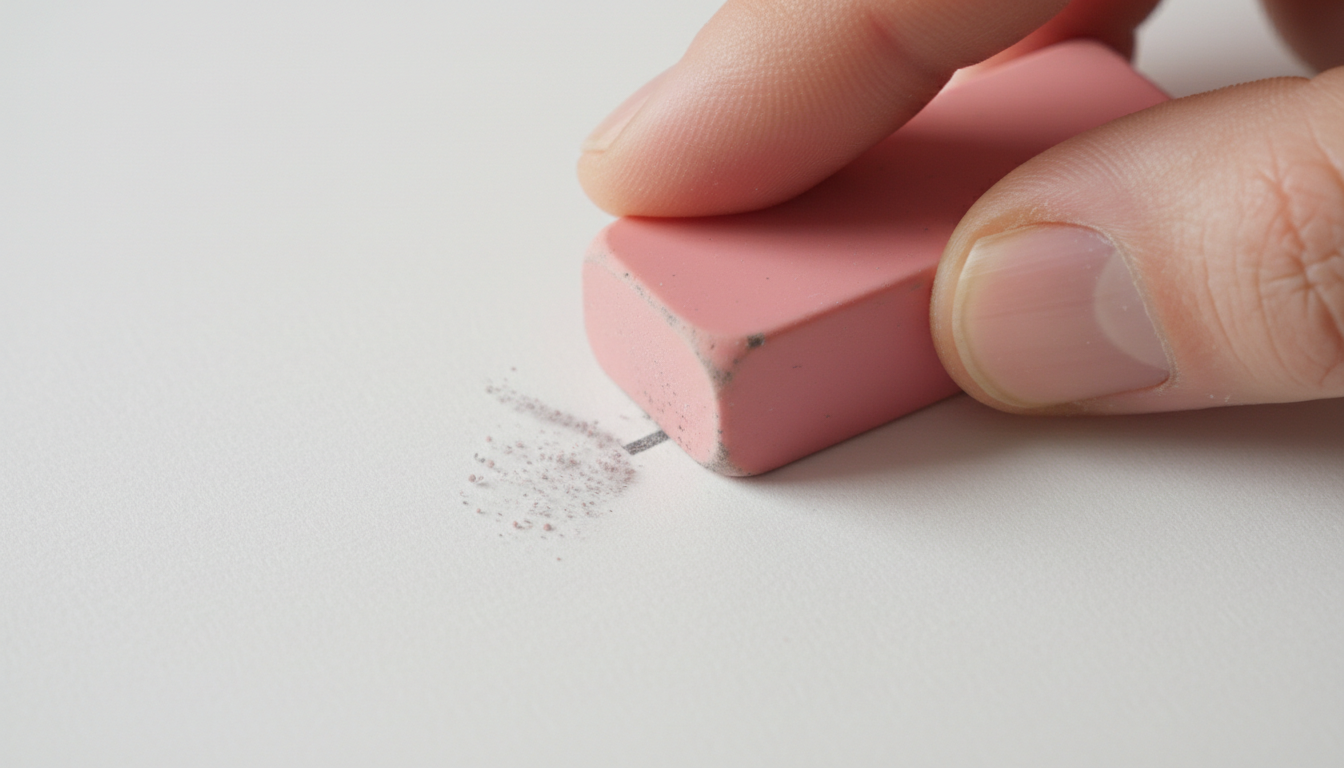
Erasers leave crumbs because their material wears away as you rub, carrying removed graphite particles with it. A pencil’s graphite adheres weakly to paper; the eraser’s flexible material can grab and lift some of those particles. Friction is part of the rubbing action, but the eraser does not need to melt in order to work.

What happens when you write with a pencil?
A pencil core contains graphite mixed with binders such as clay. Moving the tip across paper deposits tiny particles onto and among the paper fibers. These particles stay in place because of mechanical contact and molecular attractions, but the bonds are not permanent.
How an eraser removes graphite
- Contact: the eraser’s relatively compliant surface touches the graphite-coated paper.
- Rubbing: motion and pressure disturb the graphite’s attachment to paper.
- Pickup: particles transfer onto or into the rubber as the eraser passes.
- Wear: small bits of rubber break off, carrying some of the graphite away as visible crumbs.
- Removal: brushing crumbs away with a clean hand or soft brush exposes the cleaner paper beneath.

Is friction the whole explanation?
No. Friction helps bring the surfaces together and disrupt the mark, while adhesion and the physical properties of the eraser help transfer graphite. Some explanations claim the rubber must get hot enough to melt or become sticky; that is unnecessary for ordinary erasing. The mechanism is more nuanced than ‘friction makes heat, heat removes the mark.’
For a discussion of graphite adhesion and why erasers lift it, see Popular Science’s explanation of eraser chemistry.
Why do some erasers crumble more than others?
- Material formulation: some erasers are designed to shed material readily to expose a fresh surface.
- Age and storage: an old or degraded eraser may become brittle or smear rather than lifting a mark cleanly.
- Paper texture: rougher paper can abrade the eraser more quickly.
- Pressure: aggressive rubbing increases wear and risks tearing the paper.
- Mark type: heavy graphite deposits and hard pressed grooves are more difficult to remove than a light sketch.
How to erase without damaging a page
- Support the page on a flat dry surface.
- Use light short strokes rather than grinding hard on one spot.
- Brush loose crumbs aside before making another pass.
- If the paper begins to roughen, stop; more pressure is likely to create damage.
- Try a clean vinyl or kneaded eraser suited to the paper and art medium if ordinary rubber smears.
Where else does friction help?
Friction also gives shoes grip, lets you hold objects and helps brakes slow moving wheels. Sometimes friction creates wear; sometimes that same contact is useful. Learn how friction helps you walk and the difference between static and sliding friction.
Frequently asked questions
Are eraser crumbs dangerous?
Ordinary pencil-eraser crumbs are not meant to be eaten. Brush them into a bin, keep them away from small children who might put them in their mouths, and wash your hands after messy work.
Why does an eraser smear pencil instead of removing it?
It may be dirty, too hard, degraded or unsuitable for the medium. Clean the eraser surface and try lighter strokes.
Can you erase pen ink with a normal eraser?
Not usually. Many inks penetrate paper fibers or bind differently; ordinary graphite erasers are designed principally for pencil marks.
Why does my paper get shiny after erasing?
Strong pressure can flatten or polish paper fibers. That surface damage may remain even after the graphite is removed.
Leave a Reply