
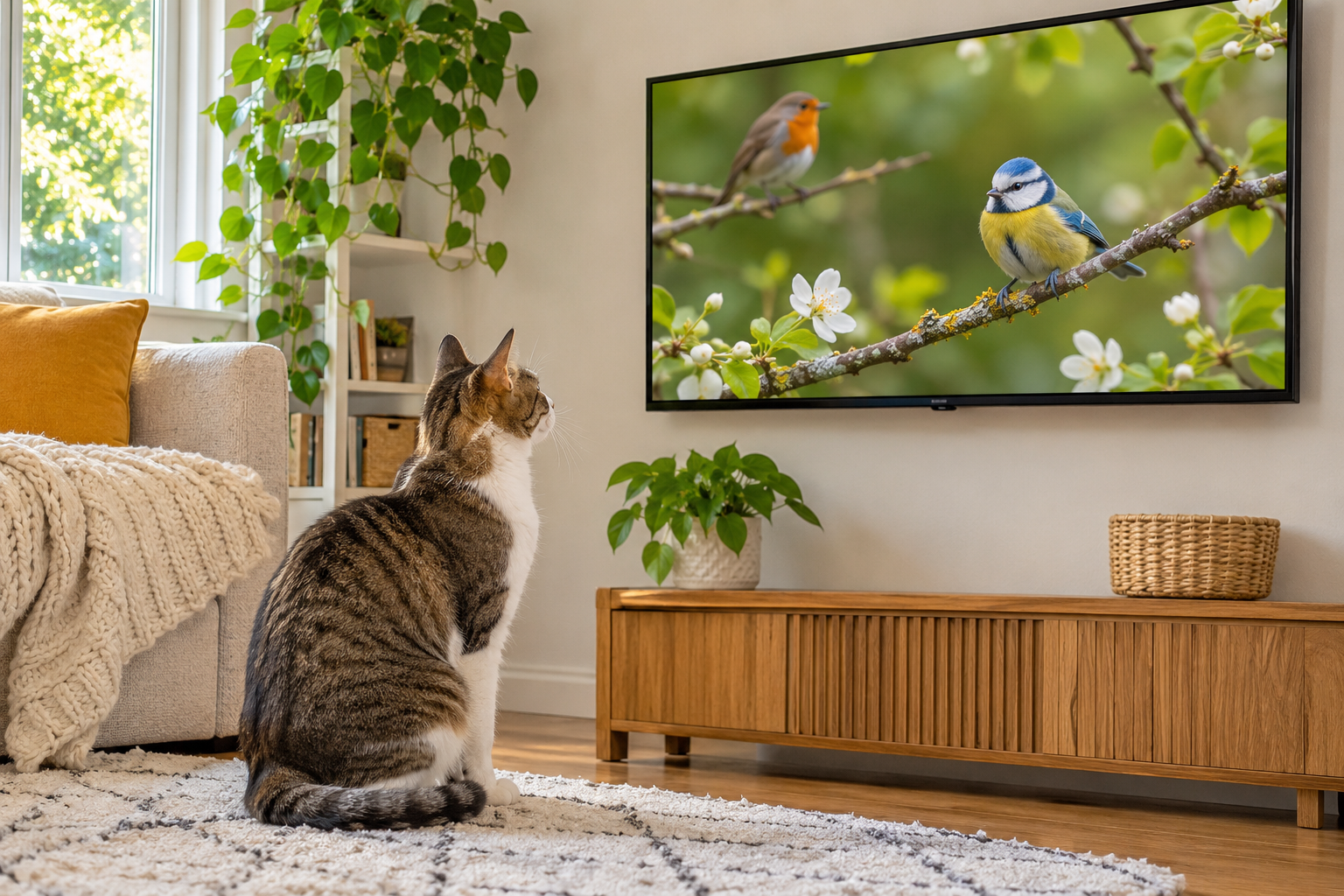
If television makes a cat frantic, repeatedly lunge, growl or remain agitated after it stops, end the session. Screen viewing should be optional enrichment rather than a stressful challenge.
Watch for escalating behavior
An interested cat may simply focus and swish its tail. Repeated violent leaps, flattened ears, persistent vocal distress or rapid pacing can suggest the activity has gone too far.

Stop the trigger
Turn off the video, lower the volume and allow the cat to move to a quiet place. Avoid grabbing or punishing an agitated animal. Remove access to equipment if a fall is possible.
Replace with calming activities
Offer a familiar resting spot, slow toy play or a predictable food puzzle when appropriate. If unusual agitation occurs without television too, discuss it with a veterinarian.

Frequently asked questions
Should I force a cat to watch until it gets used to TV?
No. Cats should be able to turn away or leave, and some will never find screens rewarding.
Related: why do cats watch television.
Leave a Reply