
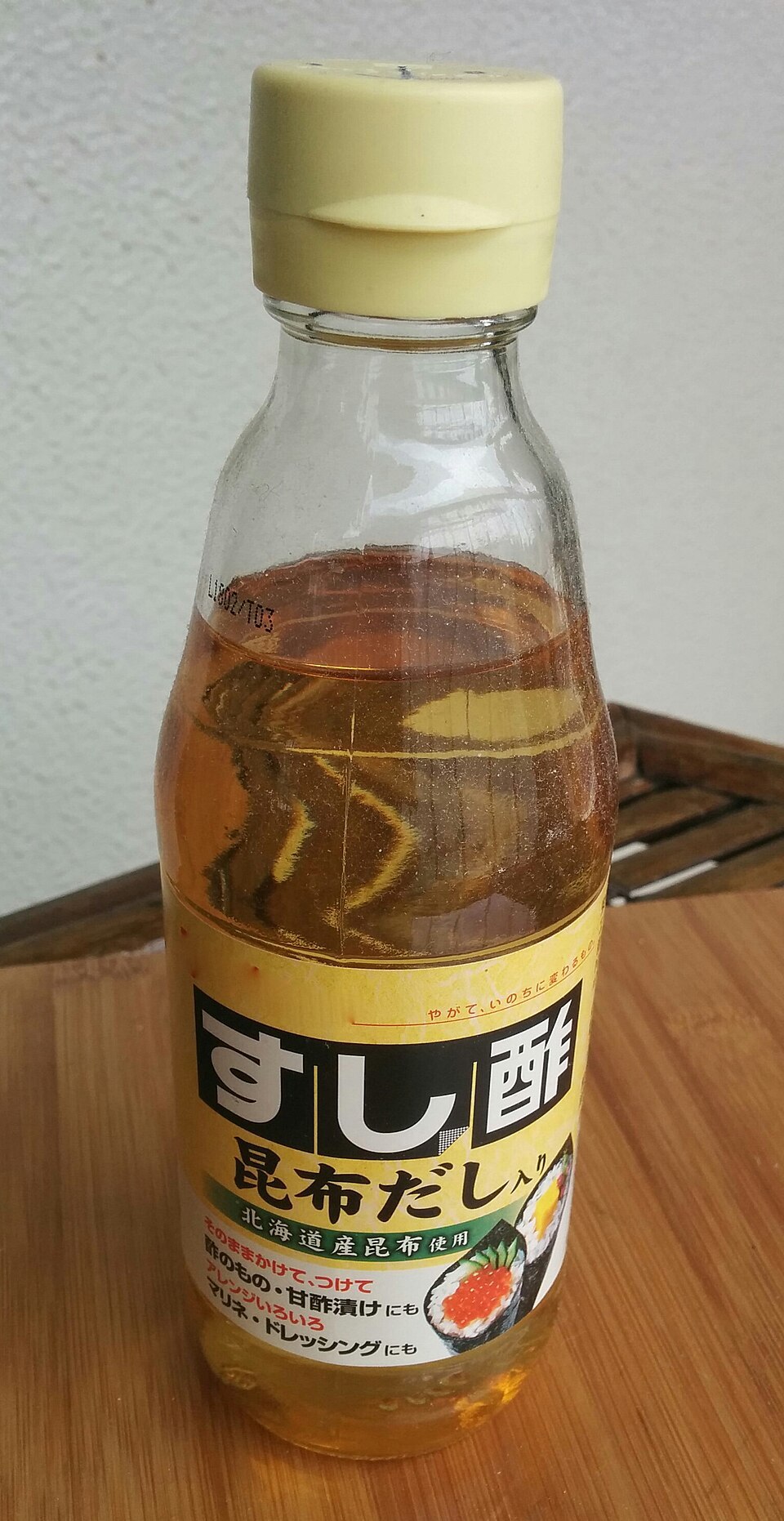
Unseasoned rice vinegar generally contains vinegar without added sugar or salt, while seasoned sushi vinegar already includes some seasoning. Read the label before adding extra sugar and salt.
Why the distinction matters
A recipe that directs you to combine rice vinegar, sugar and salt usually assumes unseasoned vinegar. Pouring the same amounts into pre-seasoned vinegar can make the rice noticeably sweeter or saltier than intended.

Adjust by tasting the mixture
Before combining with rice, taste a small amount of diluted or prepared seasoning. If it is already sweet and salty, begin with less added sugar or salt and follow any guidance provided by the vinegar maker.
Fold evenly through warm rice
Spread the rice in a wide bowl and distribute the seasoning in stages. The finished grains should be glossy, cohesive and lightly tangy, not submerged in vinegar.

Frequently asked questions
Can you use ordinary white vinegar instead?
It has a sharper flavor than rice vinegar, so direct substitution changes the result. A tested recipe is preferable to guessing.
Leave a Reply