
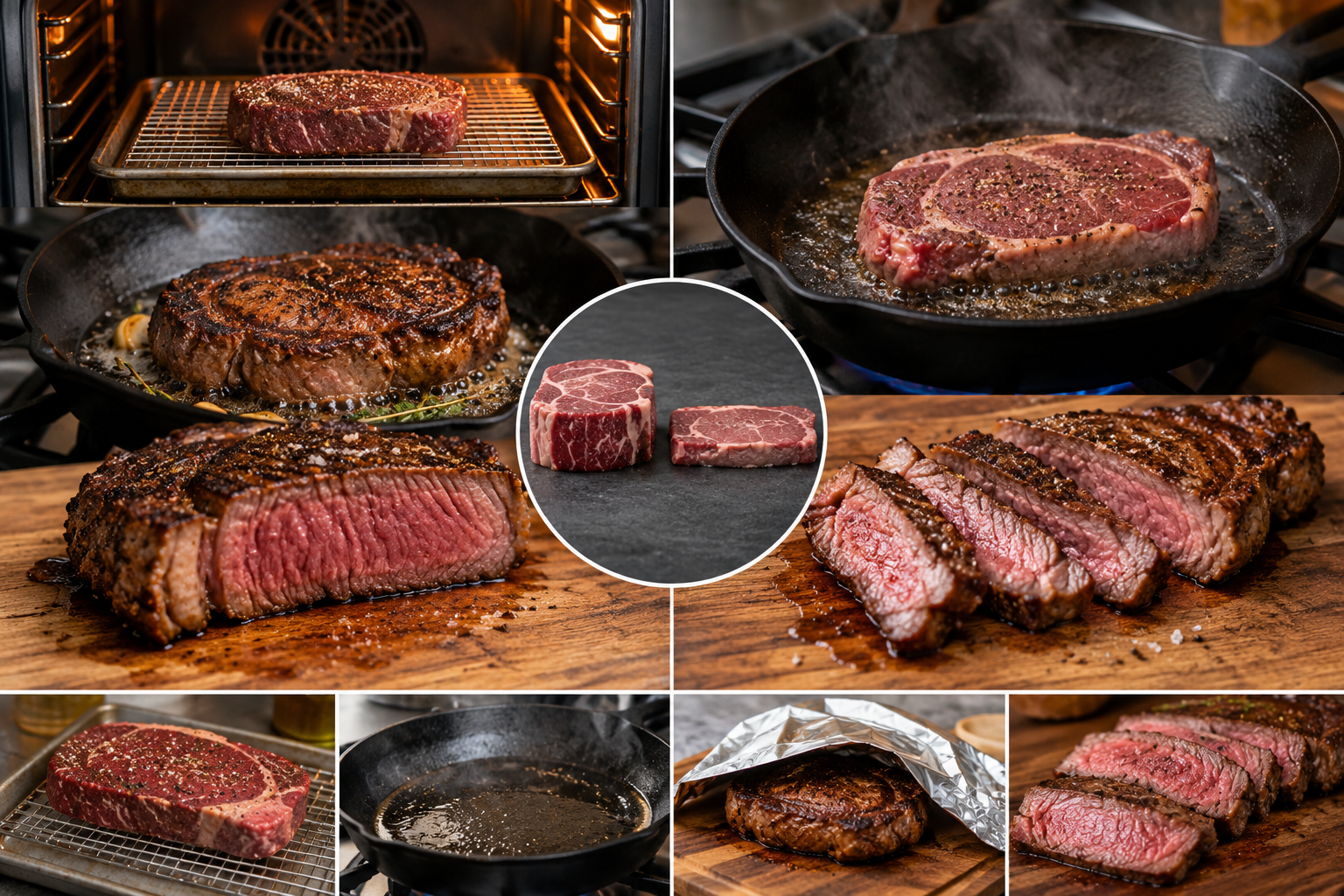
Quick answer: Reverse searing means cooking a thick steak gently first, then finishing with high heat for a crust. Traditional pan searing begins with the hot skillet.

What to know

Reverse searing can make it easier to achieve even doneness in thick cuts, while direct pan searing is quick and practical for thinner steaks.
Practical tips
Whichever method you choose, rely on an internal thermometer and proper food-safety guidance.
Frequently asked question
Is reverse searing worth it for a thin steak?
Usually not. Thin steaks can cook through too quickly during a two-stage process.
Leave a Reply