
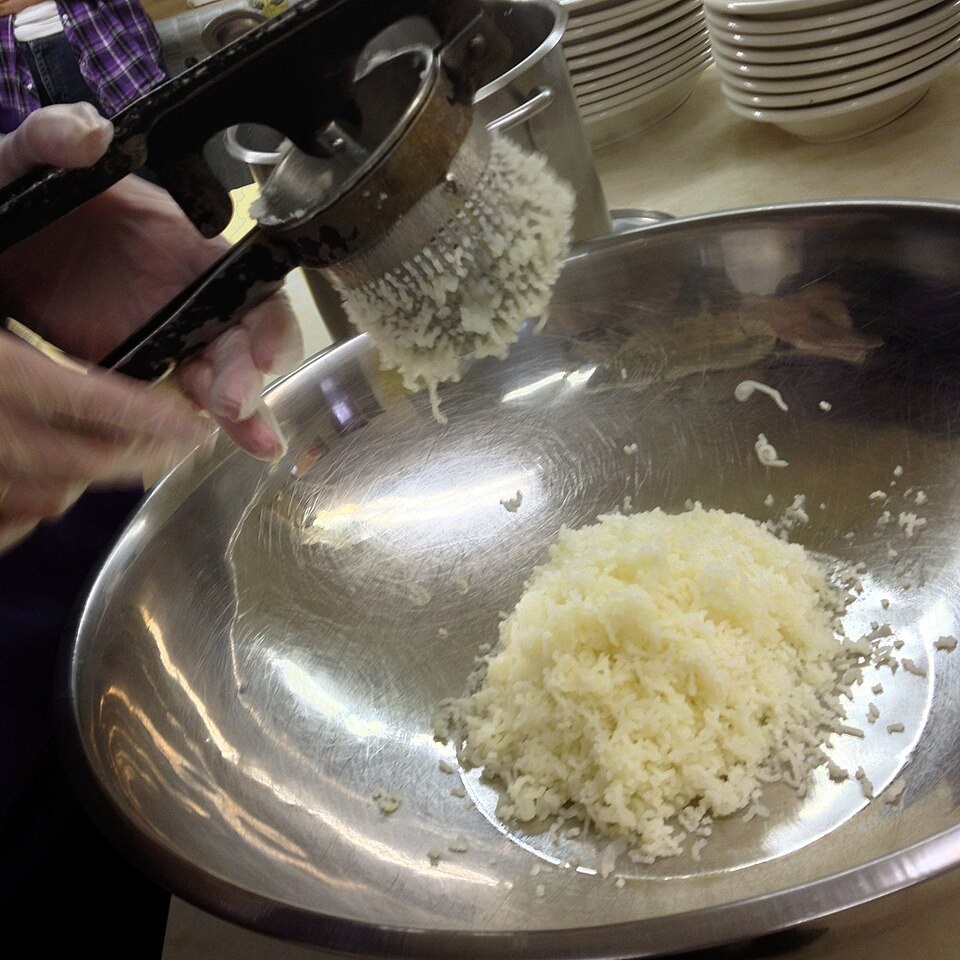
A potato ricer gives a finer, more uniform texture; a hand masher is faster for a rustic, slightly chunky result. Both generally avoid the gummy texture that a food processor can create.

What a ricer does
A ricer presses cooked potatoes through small holes, making fine strands that are easy to combine with warm butter and milk. It works well for peeled russets and very smooth holiday mash. It takes up more counter space and may require several batches.
What a hand masher does
A masher works directly in the pot, saves dishes and leaves the cook in control of how much texture remains. It is useful for Yukon Gold potatoes and skin-on mashed potatoes. Mash just until there are no large undercooked chunks; tiny lumps are not necessarily a problem.

Why a blender is different
High-speed blades break potato cells aggressively. The released starch can create a sticky, elastic paste. A ricer or masher breaks the potatoes more gently, especially when you stop as soon as the desired texture is achieved.
Choose for your kitchen
If you make mashed potatoes once a year, a hand masher may be all you need. If you routinely make large batches or want restaurant-style smoothness, a ricer is useful. Either way, fully cook the potatoes first and drain thoroughly.
Frequently asked questions
Can you rice potatoes with skin on? Some ricers trap skins in the basket, but this varies by design. Check the tool instructions.
Does a ricer remove the need for butter? No. It changes the texture of the potato, not the seasoning or richness.
Further reading: Food Network — choosing potatoes for mashing.
Leave a Reply