
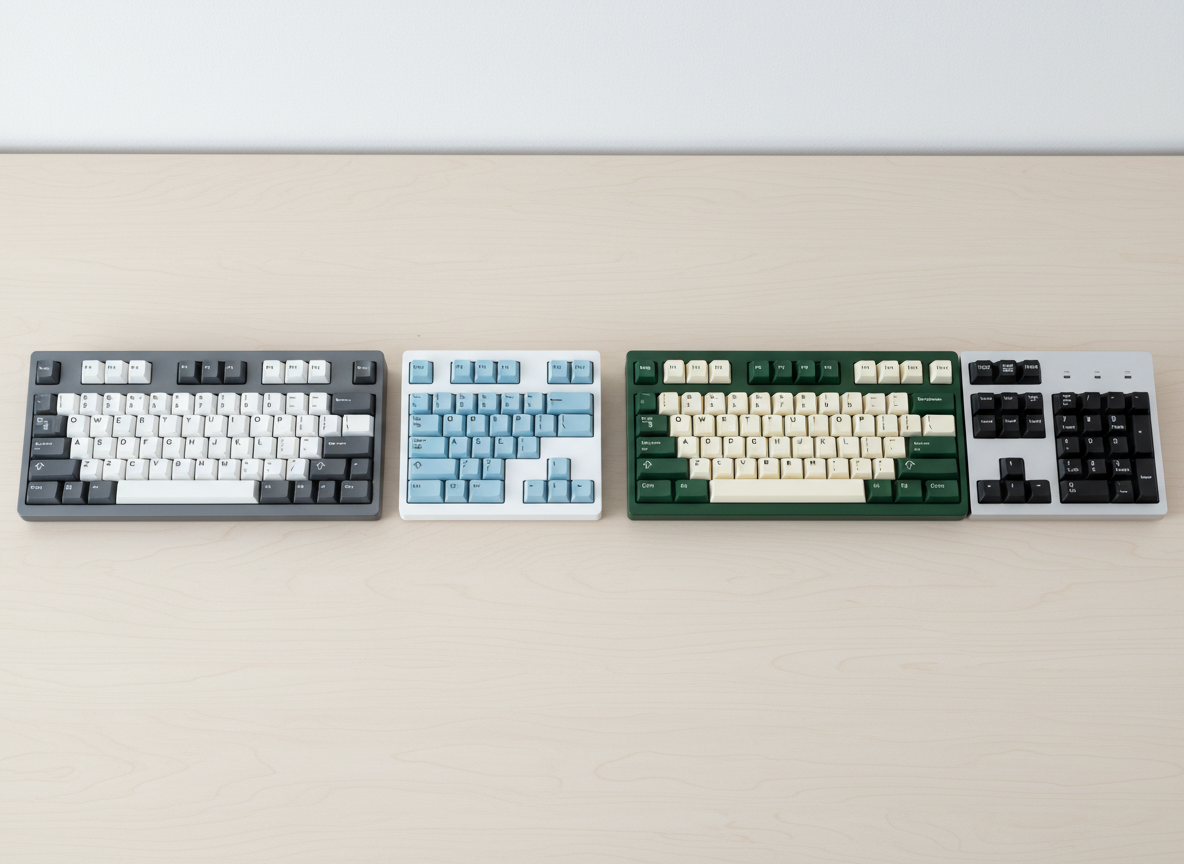
Quick answer: Keyboard percentages describe approximate size and key selection, not a literal percentage of physical width. The main trade-off is desk space versus dedicated keys.
60 percent
Usually retains letters, numbers and modifiers but omits a dedicated function row, navigation cluster and number pad.
65 percent
Often adds arrow keys and a compact set of navigation keys, making it useful for people who need arrows but want a small board.
75 percent
Usually includes a function row and arrows in a compressed arrangement with fewer gaps between groups.
TKL

Tenkeyless removes the number pad but usually preserves function keys, arrows and a navigation cluster.
Full size
Adds a number pad and conventional key grouping, useful for frequent numeric entry.
The bottom line
Keyboard percentages describe approximate size and key selection, not a literal percentage of physical width. The main trade-off is desk space versus dedicated keys.
Leave a Reply