
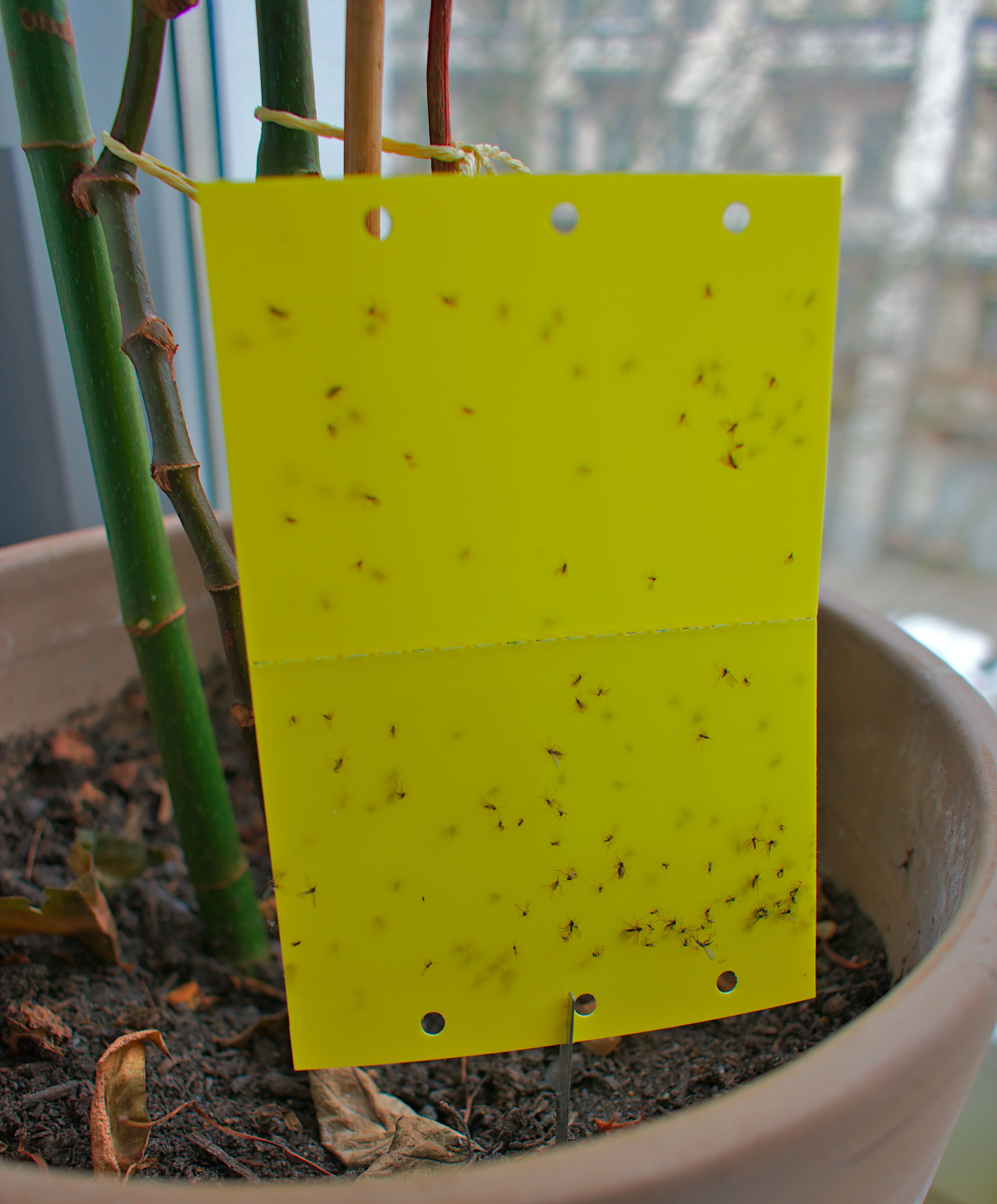
Checking moisture below the surface before watering can reduce the consistently damp conditions that fungus gnats favor. No single watering interval works for every houseplant.

A better watering check
- Read the plant’s species-specific watering needs.
- Gently test soil moisture with a finger or suitable moisture tool at the depth relevant to the plant.
- Check whether the pot is unexpectedly heavy and whether water drains freely.
- Water only when the plant and soil conditions indicate it is needed.
- Empty excess water from saucers and monitor adult gnats with sticky cards.
Why this approach helps
Larvae develop in moist organic growing medium, so controlling chronic excess moisture is central to prevention. However, some plants need more consistent moisture, and larvae can persist even if the top appears dry.

What to avoid
Low-cost moisture meters vary in accuracy and may not work equally well in every potting mix. Don’t let drought-sensitive plants dry out merely to discourage pests.
Frequently asked questions
Does one dry day eliminate gnat larvae?
No. A sustained reduction in excessive moisture and source control may take time, depending on the infestation.
For more detail, read the related Wondelique guide.
Leave a Reply