
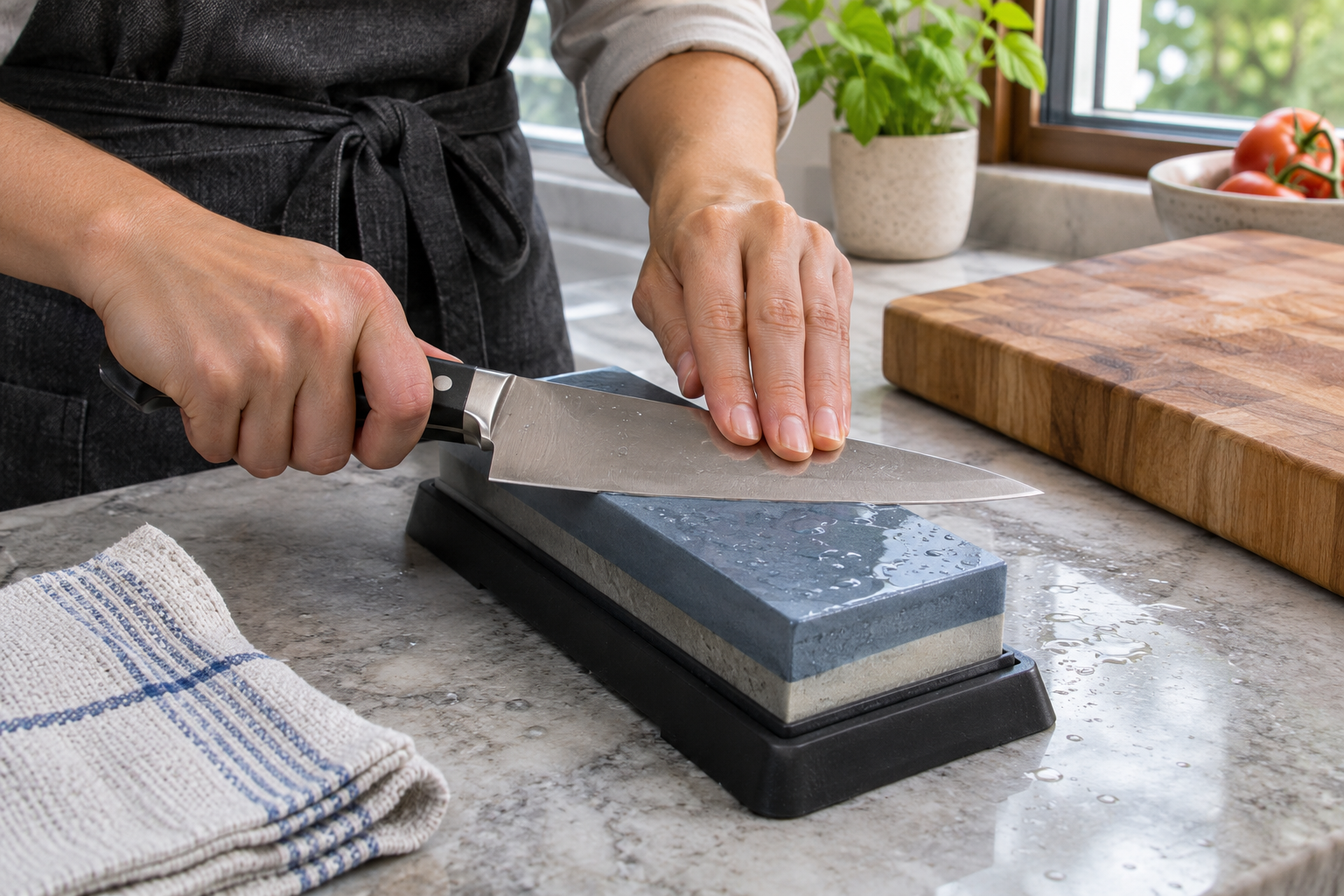
A burr is a very thin ridge of metal formed during sharpening. Remove it with careful, light finishing strokes on a suitable stone rather than scraping it with your fingers.

Finish a standard double-bevel blade
- Set an appropriate stone on a nonslip base and follow the stone’s preparation instructions.
- After sharpening, significantly reduce pressure.
- Make a few controlled alternating strokes on both bevels while maintaining the angle.
- Wash away residue and dry the knife safely.
- Check cutting performance on paper or soft produce with the edge directed away from your body.
Why this works
Finishing too aggressively can fold the burr back and forth or remove more metal than needed. Consistency and gentle pressure matter more than working rapidly.

What to avoid
Never test the blade by running a finger along the edge. Serrated and specialty single-bevel knives need different sharpening methods.
Frequently asked questions
Why might a sharpened edge dull rapidly?
An unremoved wire burr can appear sharp briefly before it bends or breaks away.
Leave a Reply