
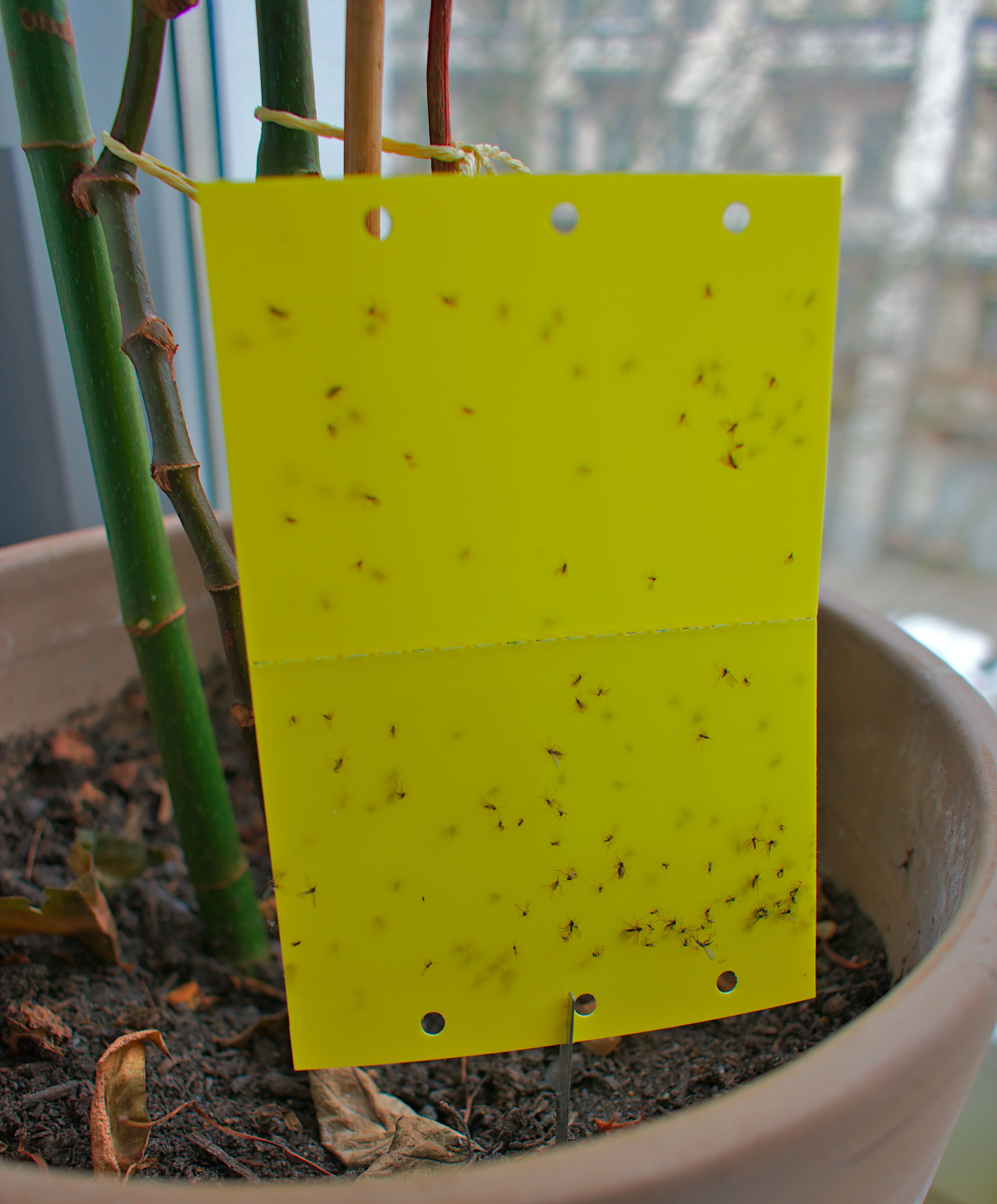
Bottom-watering may reduce fungus gnat activity by keeping the surface of potting mix drier. However, it does not kill existing larvae or solve poor drainage in an overwatered pot.

Try bottom-watering safely
- Check that the plant tolerates bottom-watering and the pot has drainage holes.
- Set the pot in a shallow tray of water for a limited time.
- Let moisture wick into the mix, then remove the pot from the tray.
- Drain all excess water rather than letting the pot stand in it.
- Monitor soil moisture and use yellow sticky cards to see whether adult fly numbers decline.
Why this works
Fungus gnat larvae thrive in constantly damp organic potting materials. A drier upper layer makes some areas less favorable, but larvae may persist in wet lower layers. Watering habits and drainage matter more than one method.

Mistakes to avoid
Never let plants with special moisture needs become dangerously dry. Bottom-watering can be uneven in hydrophobic soils, and sticky cards catch adults without eliminating larvae.
Frequently asked questions
Does bottom-watering kill gnat eggs?
No. It modifies moisture conditions, so persistent infestations may require other plant-safe control measures.
Related: Wondelique’s related guide.
Leave a Reply