
To read bass clef notes on piano, start at the bottom line of the staff: G, B, D, F and A are the five line notes going upward. The four spaces, from bottom to top, are A, C, E and G. The bass clef is often used for the lower notes played by the left hand, although either hand can play notes written in either clef.
What does the bass clef look like?
The bass clef resembles a curved comma followed by two dots. Those dots sit above and below the F line, the second line from the top. For that reason, the symbol is also called the F clef. It shows you where F3 sits on the staff; all other pitches follow in alphabetical order.

Memorize the five bass-clef lines
Read upward from the lowest staff line: G2, B2, D3, F3, A3. One common memory sentence is “Good Boys Do Fine Always,” although direct recognition is more useful than reciting a sentence for every note. Practice identifying each line in a random order, not only from bottom to top.
Remember the four spaces
From the lowest space to the highest, the notes are A2, C3, E3, G3. They fall between the five line notes and fit the musical alphabet. Try alternating a line note and its neighboring space note—for example, G2 then A2—before jumping to more distant notes.
Where is middle C in the bass clef?
Middle C, or C4, is on one short ledger line above the bass staff. It is not the top line of the bass clef: that top line is A3. The space immediately above the top line is B3; the next ledger line holds C4. On a standard 88-key piano, middle C is the C nearest the center of the keyboard.
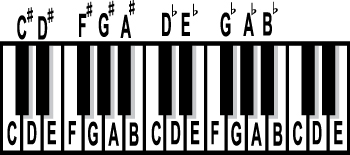
A simple five-minute left-hand practice
- Find the C below middle C on your keyboard. This is C3.
- With your left-hand third finger, play C3 gently. Keep the wrist relaxed and avoid pressing more firmly than necessary.
- Locate D3 and E3 just to the right. On the bass staff, D3 is the middle line and E3 is the space above it.
- Now find F3 on the next line, and G3 on the space above that line.
- Point to one of those five notes on a printed bass-clef staff, name it aloud, and then play its key. Shuffle the order until you recognize them without counting upward.
Common beginner mistakes
Do not use treble-clef letter names for the bass staff: the same physical line position means a different pitch in the two clefs. Also, the notes are not assigned permanently to the left hand; written clefs indicate pitches, not which fingers must play them. Finally, distinguish note names from octaves: the letter C repeats many times, but C3 and C4 are one octave apart.
Frequently asked questions
Is the bass clef only for the left hand?
No. It is commonly used for left-hand piano music because the left hand often plays lower notes, but hand assignment depends on the composition.
What note does the bass clef identify?
The two dots surround the line for F3, so bass clef is also called the F clef.
What is the fastest way to learn?
Memorize a few anchor notes—G2, D3, F3, A3 and middle C4—and identify the nearby spaces by stepping one letter at a time. Short, varied daily practice beats guessing from a memorized phrase.
Next, compare these notes with the first five treble-clef notes, and build a simple 15-minute beginner practice routine.
Leave a Reply