
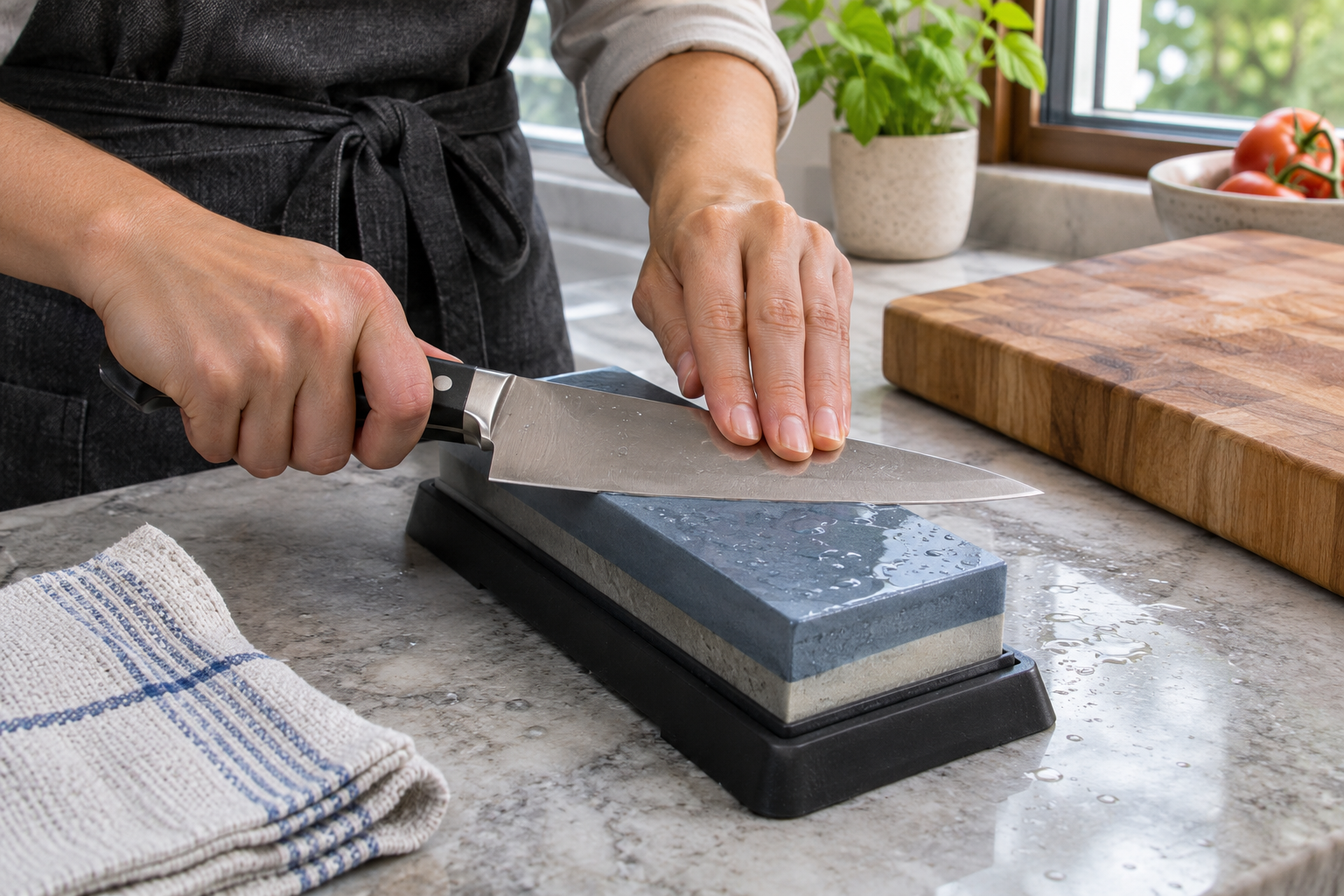
Honing maintains some knife edges between sharpenings, but cannot fully restore a truly dull blade. Use a honing tool approved for your knife, light pressure and slow controlled strokes.
Identify the rod
Smooth honing steels mainly realign an edge, whereas abrasive ceramic and diamond rods can remove metal. Hard, thin or brittle blades may not tolerate aggressive steel honing; consult manufacturer guidance.

Keep the rod stable
If the instructions allow, hold it upright with the tip resting on a secure, non-slip surface. Move the knife at the recommended edge angle using gentle alternating strokes. Keep your fingers behind the guard and outside the blade path.
Check the knife on food, not skin
Wash and dry the blade, then try slicing a tomato on a stable board. Never run a thumb along the edge. If it still slips or crushes the food, sharpen on a suitable stone, use a guided system or contact a professional.

Frequently asked questions
How often should I hone?
It depends on steel, edge geometry and use. Some knives need occasional light honing, while others should receive less frequent sharpening instead.
Leave a Reply