
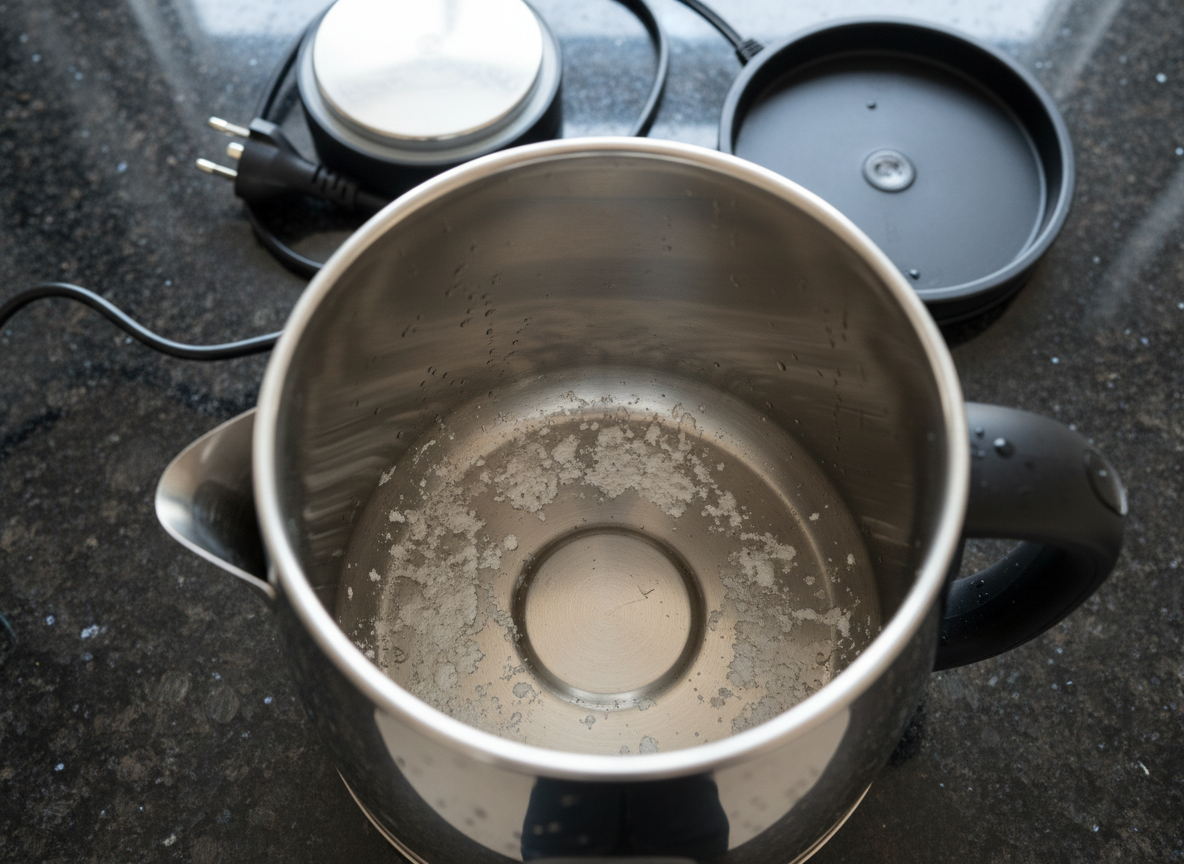
To descale an electric kettle, unplug it, let it cool and follow the cleaning method approved in its owner’s manual. Many models permit a manufacturer-recommended descaler or a dilute food-safe acid solution; afterward, rinse thoroughly and keep the electrical base, cord and connection point dry. Do not assume every kettle can be cleaned the same way.
What are the white flakes in my kettle?
Hard water contains dissolved minerals, especially calcium and magnesium. When water is heated, chalky mineral deposits can accumulate on the metal heating surface or inner walls. These are commonly called limescale. They can look like a white film, spots or flakes, and they may make the kettle less pleasant to use.

A removable scale filter may catch particles near the spout, but a filter does not necessarily prevent mineral buildup in the bottom. Discoloration that looks like rust can sometimes be mineral deposits. If the surface is damaged, corroded or peeling, consult the manufacturer rather than assuming all marks are harmless.
Safe step-by-step cleaning
- Check your exact model’s manual. Confirm whether it approves vinegar, citric acid or a commercial kettle descaler and any limits on concentration.
- Unplug and cool. Remove the kettle from its base. Never reach inside while the kettle is hot or energized.
- Use only the recommended solution. Keep within the minimum and maximum fill markings when a method calls for adding liquid.
- Follow the manual’s timing. Some solutions soak; others require a brief heat cycle. Never boil a cleaning solution unless the manual explicitly directs it.
- Empty and rinse repeatedly. Refill with clean water and discard the rinse water until no cleaning odor remains. Follow any extra rinse-boil steps the manual requires.
- Wipe the outside only with a damp cloth. Dry the plug, connector and power base; never immerse them.

Should you use white vinegar or citric acid?
Both can dissolve mineral scale, but compatibility is the key. Some brands explicitly recommend a certain acid concentration; other manuals advise a proprietary descaler or prohibit particular chemicals. Do not improvise very strong solutions or mix cleaning chemicals. If you have no manual, search the manufacturer’s support page using the exact model number.
For examples of manufacturer-specific precautions, compare a Cuisinart electric kettle instruction excerpt with the method supplied for your own model. The essential rule is not to immerse a kettle’s electric contacts or its power base.
How often should you descale?
There is no single interval that fits every household. If you heat hard water many times each day, deposits may reappear quickly. With softer filtered water and lighter use, visible buildup may take much longer. Inspect the interior periodically and descale when you see a layer forming or notice performance changing.
What not to do
- Never immerse the kettle or powered base in a sink full of water.
- Do not attack the metal with steel wool, sharp scrapers or harsh abrasives.
- Do not mix bleach with vinegar or acidic products.
- Never operate the kettle below its minimum fill line or beyond its maximum line.
- Do not continue using a unit with frayed wiring, exposed components, leaking seams or a damaged plug.
See Electric Kettle: Capacity, Temperature Control and Safe Care for a separate guide to filling, boiling and handling a kettle safely.
Frequently asked questions
Is limescale dangerous? Ordinary mineral scale is usually a water-hardness issue, but unusual corrosion, foreign material or equipment damage deserves closer inspection.
Can I put my electric kettle in the dishwasher? Not unless the specific manufacturer expressly says the removable part is dishwasher-safe. The powered kettle and base generally must not be immersed.
Will a water filter prevent all scale? Not necessarily; filter performance varies, and some filters do not remove the hardness minerals responsible.
What if the descaling smell remains? Continue the manufacturer’s rinse procedure with fresh water. If the smell or malfunction persists, stop using the device and contact the maker.
Leave a Reply