
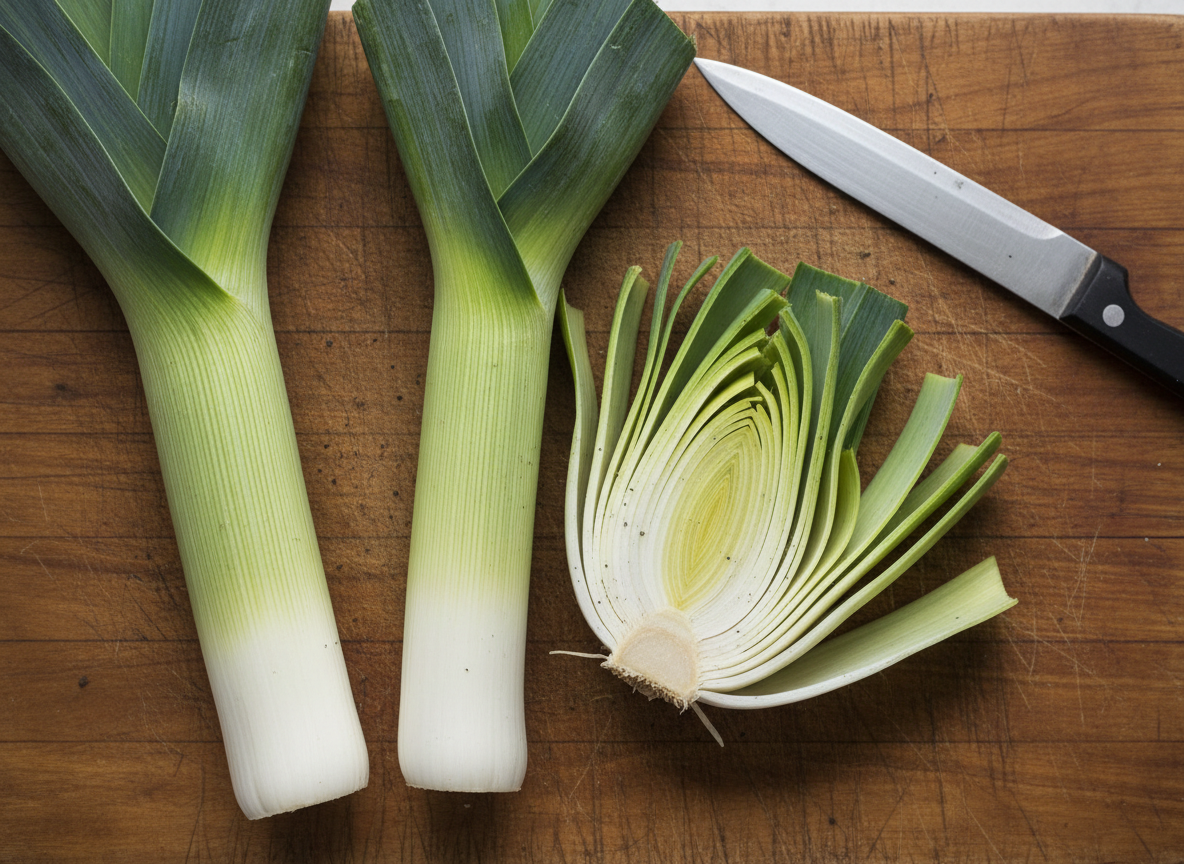
To clean leeks thoroughly, trim away the roots and tough damaged leaves, split the white and pale-green stalk lengthwise, then open and rinse each layer under cool running water. Leeks often trap soil inside the tightly nested leaves. A quick rinse of the outside cannot reliably remove it.

Why leeks hide sand even when they look clean
Leeks form a stack of overlapping leaf sheaths. As the plant grows, soil can wash or become trapped between those sheaths. The grit often appears close to where the white portion becomes light green. You may not notice it until you slice the vegetable, and biting into sand can spoil a soft casserole.
The South Dakota State University Extension cleaning instructions recommend cutting lengthwise and rinsing between layers; Iowa State University Extension also emphasizes separating the layers.
Step-by-step: how to wash whole leeks
- Trim: Remove the root tuft, damaged outside leaves and any fibrous, tough dark-green top you will not be cooking.
- Split: Use a stable cutting board and slice the stalk lengthwise into two long halves. Keep your fingers out of the knife path.
- Fan: Gently spread each sheath without tearing everything apart.
- Rinse: Run cool water between the layers while rubbing or brushing away visible dirt.
- Check: Examine the base and the change from white to green; repeat washing if grit remains.
- Dry: Shake off the water and pat dry before chopping, especially if you plan to sauté.

Alternative method for chopped leeks
For chopped leeks destined for a casserole, slice the trimmed stalk into rings or half-moons, drop the pieces into a large bowl of cold water and gently swish them apart. Let the pieces float while sediment sinks, then lift the leeks out with a slotted spoon or your hands. Do not dump the dirty bowl water back over the pieces. Repeat with fresh water if you still see grit. Dry thoroughly before cooking.
This bowl technique is handy when the recipe calls for small, softened leek pieces rather than long sections. It is less appropriate if you need the leek halves intact for roasting or presentation.
Why drying matters in garlic-leek bread casserole
A casserole made with cubes of bread, softened leeks, roasted garlic and a binding liquid needs controlled moisture. Wet leeks can add more water than expected and make the base soggy. After washing, blot the leeks, sauté them until tender and allow excess liquid to evaporate before mixing them with the bread.
If you want a mellow garlic component rather than raw sharp garlic, see how to roast garlic before assembling your dish. The peeled cooked cloves can be mashed into a little butter or oil and mixed evenly with the softened leeks.
Which parts of a leek can you eat?
The white and pale-green sections are generally tender and well suited to casseroles. Dark-green leaves can be quite tough but may be cleaned and used for flavored stock, then strained out. Remove any badly wilted, yellowed or slimy areas. These are not scallions: a leek’s broad overlapping leaves create many more hiding places for soil.
Frequently asked questions
Do I need to wash pre-sliced leeks? Follow the package instructions. Fresh cut leeks not labeled ready-to-eat should still be checked and washed.
Can I wash leeks the day before baking? Yes. Drain and dry them well, refrigerate promptly in a clean covered container and cook them when needed.
Is soaking leeks alone enough? Not always. Separate and agitate the layers, then lift the pieces away from the sediment.
Why does my casserole still taste gritty? Recheck overlapping leaves and your chopping board or colander; dirt sometimes transfers back from the sink or the dirty washing water.
Leave a Reply