
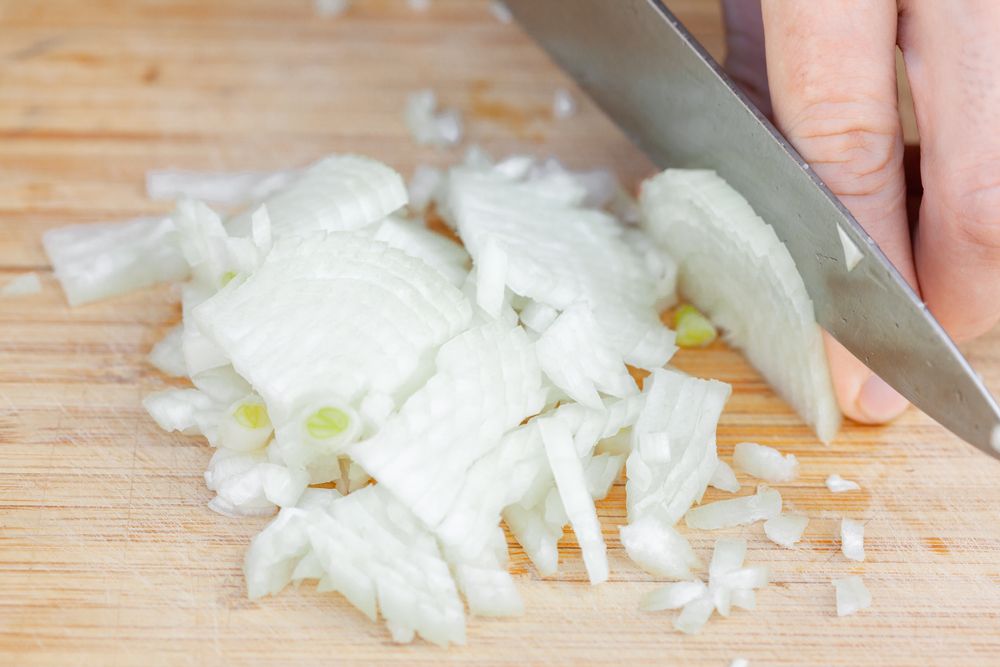
Carbon-steel kitchen knives can stain and rust faster than stainless-steel blades. Hand-wash promptly, dry completely and store so moisture cannot remain against the edge.

A simple after-cooking routine
- Rinse and wash the blade carefully with mild soap and a soft sponge, keeping the sharp edge pointed away.
- Dry both blade faces immediately with a clean towel using controlled motions away from the edge.
- Check the handle junction for trapped water.
- Store in a dry sheath, block or protected rack rather than loose in a damp sink.
- If storing for a prolonged period, follow the maker’s advice for food-safe protective oil.
Why this approach helps
Carbon steel forms a patina over time; an even dark patina is not necessarily harmful rust. Bright orange or rough rust should be cleaned according to the knife’s care instructions.

What to avoid
Never put carbon-steel knives loose in a dishwasher or leave them soaking overnight. Avoid abrasive cleaners that can damage the finish or handle.
Frequently asked questions
Should you worry about a blue-gray patina?
A smooth patina can be normal. Distinguish it from flaky orange rust and consult the knife maker if uncertain.
For more detail, read the related Wondelique guide.
Leave a Reply