
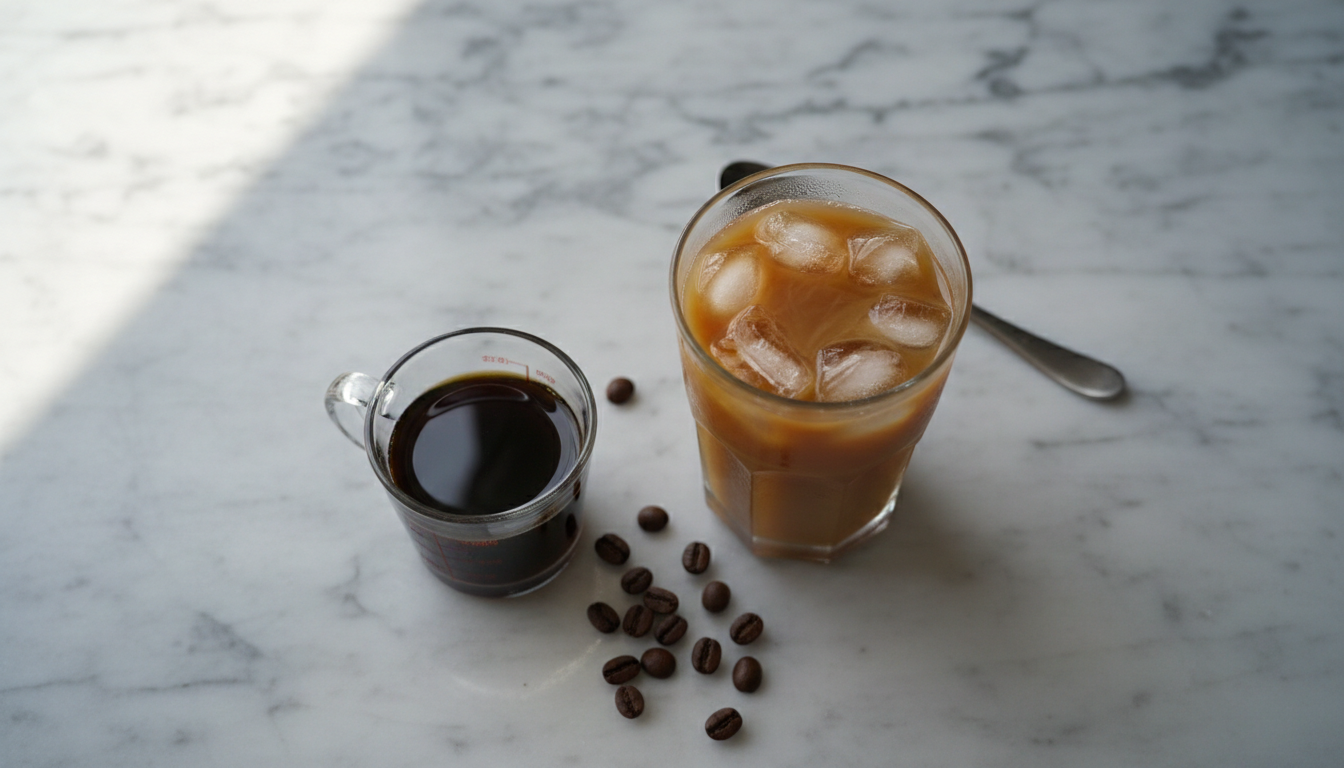
There is no single caffeine amount for all cold brew coffee. The milligrams in a serving depend on how much coffee went into the brew, how effectively caffeine was extracted, how much concentrate is poured, whether it is diluted, and the actual serving volume. A large glass of cold brew can contain substantially more caffeine than a small hot coffee—but it does not always.

Four factors that change caffeine per cup
- Coffee amount: using more grams of coffee to make a batch can raise total extractable caffeine.
- Bean and roast characteristics: caffeine content varies by coffee type, bean mass and preparation; darker color alone is not a dependable caffeine measure.
- Steep and grind: time, temperature and grind size affect extraction, though caffeine does not simply rise in a straight line forever.
- Concentrate and dilution: adding water changes caffeine concentration per ounce but does not remove the caffeine already in the concentrate.
What dilution actually changes
Imagine you have four fluid ounces of concentrate containing an unknown quantity of caffeine. If you add four ounces of water, you now have eight ounces of beverage but the same total caffeine as the original four ounces. If you drink all eight ounces, you consume all the concentrate’s caffeine. If you split the diluted drink into two equal glasses, each receives half.

How to compare two cold-brew drinks
- Read the product’s published caffeine amount, preferably in milligrams per serving.
- Check the serving size. An 8-ounce cup and a 16-ounce café drink are not interchangeable.
- Confirm whether the bottle is concentrated or intended to be drunk as sold.
- For homemade batches, treat any online ‘mg per cup’ estimate as a guess unless the exact recipe has been measured.
- If you are monitoring caffeine, log the number of actual servings rather than the volume of ice in the cup.
Is cold brew stronger than regular coffee?
It depends on what ‘stronger’ means. A concentrate can have a high caffeine concentration, yet a diluted serving may have less caffeine than a large hot brew. Cold brew can also taste smoother without being low in caffeine. Flavor intensity and caffeine milligrams are not reliable substitutes for one another.
For the brewing side, see our concentrate versus ready-to-drink guide and Mason jar cold brew method.
How much caffeine is considered too much?
For most healthy adults, the U.S. Food and Drug Administration cites 400 milligrams per day as an amount not generally associated with negative effects. This is not a target, and sensitivity varies with health, medications and individual factors. Pregnancy, certain conditions and children require different considerations; seek personalized professional advice if relevant.
Frequently asked questions
Does adding milk lower caffeine?
It lowers caffeine per fluid ounce if the drink becomes larger, but it does not reduce the total caffeine you drink if you finish the entire glass.
Is iced coffee the same as cold brew?
No. Iced coffee is usually hot-brewed then chilled; cold brew extracts at lower temperature over longer time. Either may be strong or weak depending on the recipe.
Does a smoother taste mean less caffeine?
No. Bitterness and acidity do not allow reliable prediction of caffeine content.
Is decaf cold brew caffeine-free?
Decaffeinated coffee can still contain small amounts of caffeine. Our decaf cold brew guide explains preparation differences.
Leave a Reply