
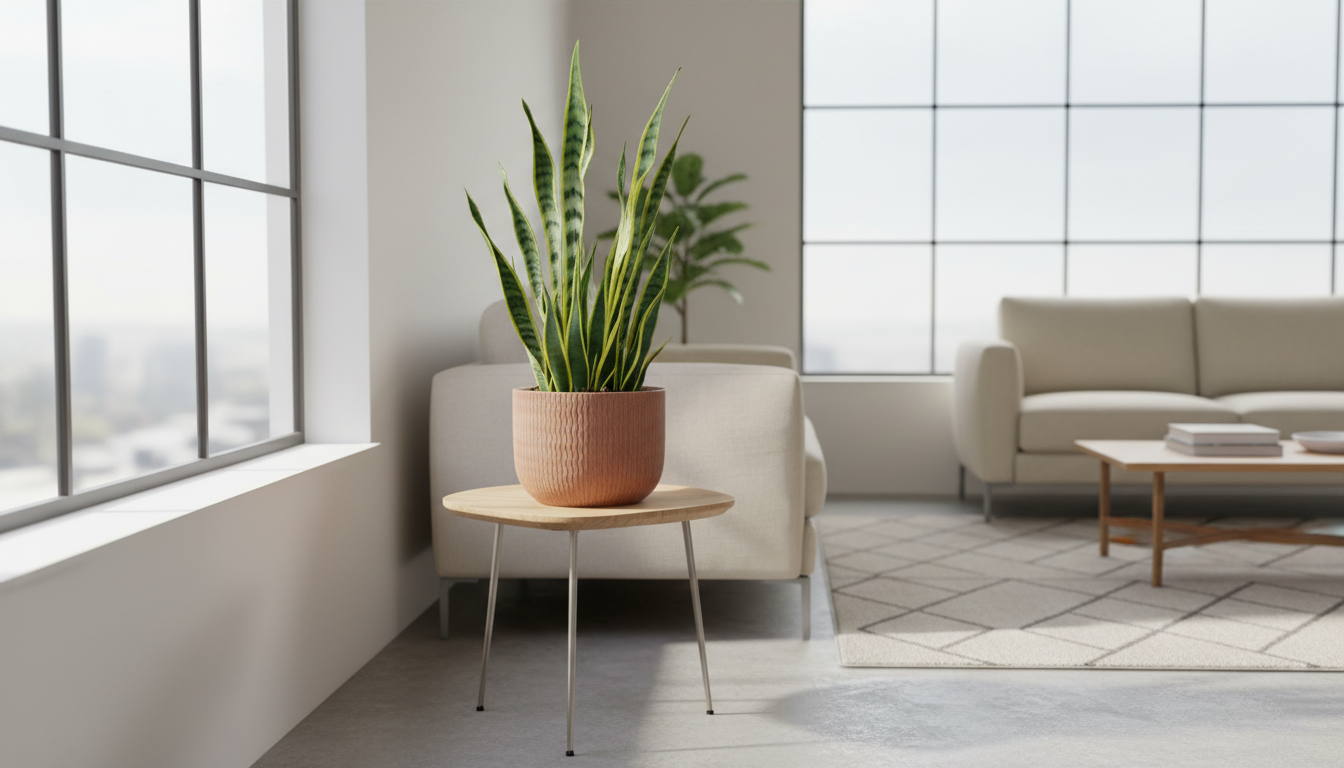
There is no single correct number of feet from a window for a snake plant. Snake plants tolerate lower light than many houseplants, but they still need usable light to grow. A position several feet from a bright unobstructed window can work; a much closer spot behind a heavy curtain may be darker.

Use the room, not the tape measure
Window direction, glass size, nearby buildings, blinds and seasonal daylight all change the light a plant receives. For example, a plant four feet from a broad east-facing window may see useful indirect light, while the same plant four feet from a tiny shaded window may see very little. Walls and dark corners also block light even within the same room.
The University of Nebraska–Lincoln Extension houseplant guide includes snake plants among species suited to low, indirect indoor light. That does not mean a completely lightless room can sustain them indefinitely.
Three quick checks before deciding where to put it
- Look during the day. At the plant’s position, can you comfortably see the leaves and read ordinary print without turning on a lamp? This is only a rough check, but a dark corner is an obvious warning.
- Notice obstruction. A plant set around a corner from the window may receive dramatically less daylight than one in the open line of sight.
- Watch new growth for several weeks. Strong upright new leaves are encouraging. Very slow growth, pale new leaves or a plant leaning toward light can point to insufficient light, though other care problems can also contribute.

Should a snake plant be in direct sun?
Snake plants can handle some gentle sun after acclimation, but abrupt exposure to strong hot sunlight may scorch foliage that grew in shade. Move a plant gradually into brighter conditions instead of putting it immediately in a full afternoon sunbeam. If the leaves bleach or develop crispy patches, reconsider its location.
Water less when the light is low
Low light often means lower water use and slower drying. Let the potting mix dry appropriately and ensure the pot drains freely. Leaving roots in wet soil is a far more common problem than missing a day of watering. Avoid rigid weekly watering schedules, particularly in winter.
What if the room has no windows?
Artificial light can support growth if it is bright enough, close enough and used on a consistent schedule. Ordinary room lighting may be insufficient if the plant is far from the fixture. See whether a snake plant can live without windows and when to use a grow light.
Frequently asked questions
Can it live ten feet from a window?
Sometimes, especially in a bright, open room with large unobstructed windows, but not reliably in every room. Evaluate the light reaching that exact spot rather than assuming distance alone is decisive.
Will the plant stay alive if it doesn’t grow?
Survival and active healthy growth are different. A snake plant may remain outwardly green for a while in inadequate light while using stored reserves. A long-term placement should offer enough light for sustainable new growth.
Does yellowing mean the plant needs sun?
Not necessarily. Overwatering, poor drainage, old leaf aging and pests can also cause yellowing. Check soil moisture and plant health before moving it into stronger light.
Leave a Reply