
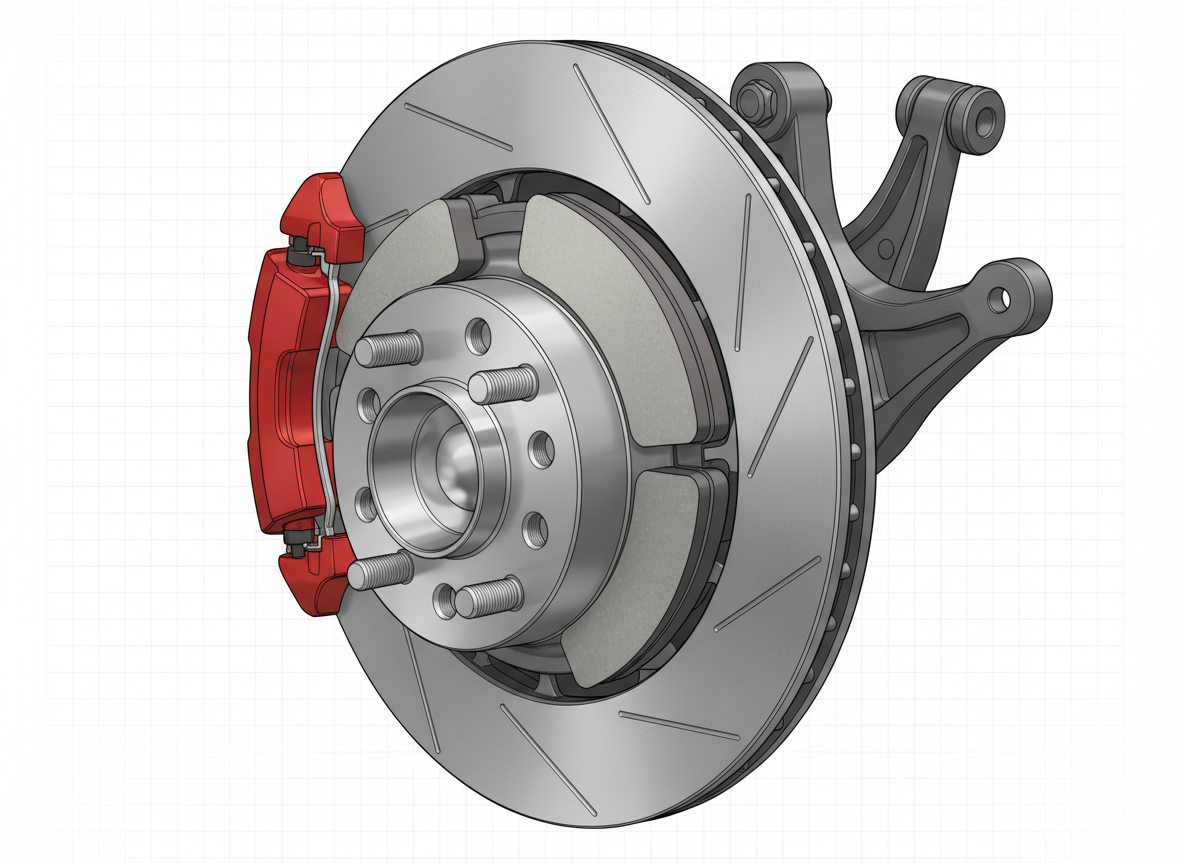
Disc brakes slow a moving car when a caliper squeezes brake pads against a spinning rotor. Friction converts some of the vehicle’s motion into heat; tires must still grip the road for the car to decelerate safely.
What happens when you press the brake pedal?
In a typical hydraulic disc-brake system, pedal force operates a master cylinder, increasing hydraulic pressure in brake lines. The wheel’s caliper pushes friction-material pads against both sides of a rotating metal disc, called the rotor. The resulting resisting torque slows the wheel. Vehicle systems vary, and regenerative braking in electric vehicles can also help slow the car.

Where does the car’s motion go?
Motion-related kinetic energy is transformed mainly into thermal energy at friction surfaces during conventional braking. Repeated heavy braking can make rotors and pads extremely hot. That heat must dissipate; overheating can reduce braking performance, which is one reason brakes are designed with cooling and appropriate friction materials.

Why tire grip is equally important
Brakes slow wheel rotation, but the tire contact patches supply the forces that actually slow the vehicle relative to the road. On ice or a wet low-grip surface, a wheel can lock before a car stops efficiently. Antilock braking systems help manage wheel slip, but they cannot create road grip that is not there.
How to recognize a problem without guessing at repairs
Grinding, a soft pedal, pulling to one side or a warning light needs proper evaluation. A brief squeak is not by itself proof of a specific failure. Avoid touching brakes immediately after driving; they may be hot. Brake inspection and repair are safety-critical work, so use a qualified technician rather than relying only on a picture or article.
Frequently asked questions
Is friction always bad?
No. Braking needs controlled friction. Engineers also reduce unnecessary friction elsewhere in a car to save energy.
Are disc brakes the same as drum brakes?
No. Disc systems squeeze pads against a rotor; drum systems press shoes against the inner surface of a drum.
Related reading: Rolling resistance versus sliding friction.
Leave a Reply