
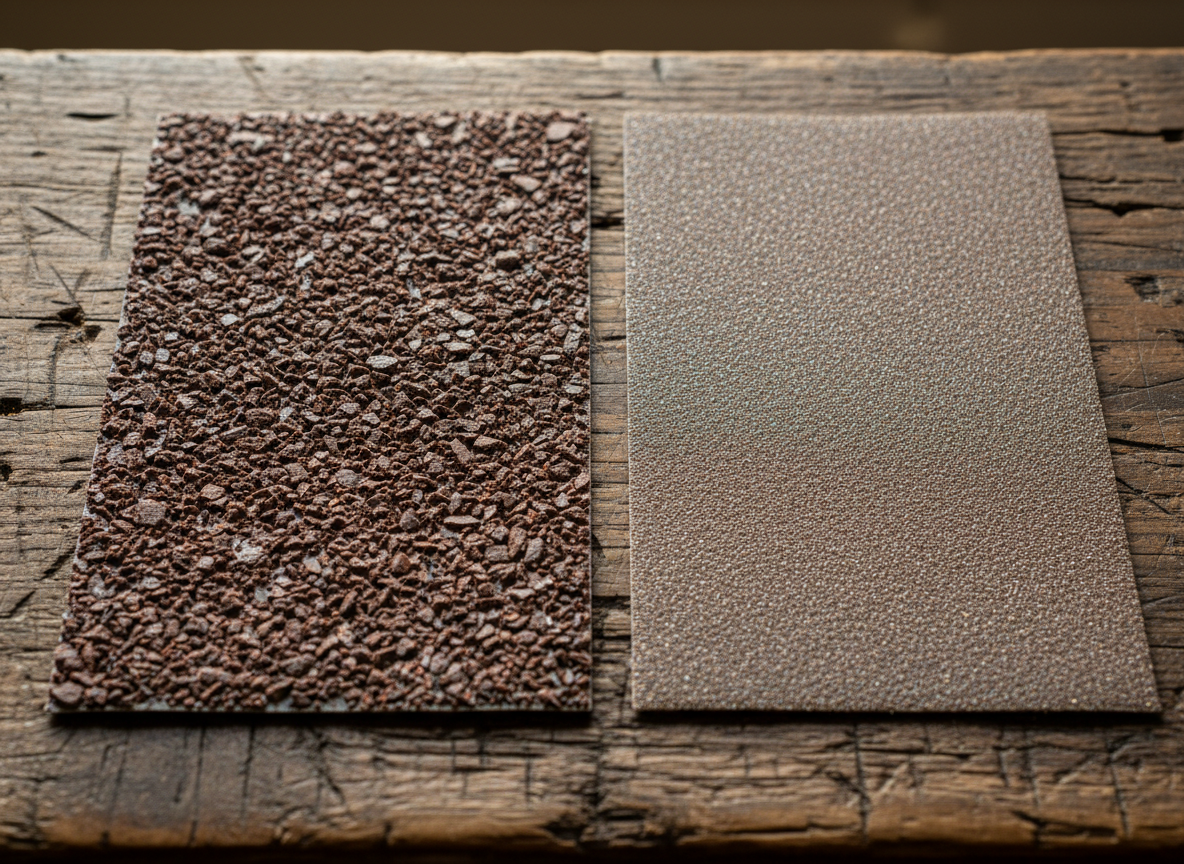
Sandpaper grit describes the size of its abrasive particles, not a guaranteed amount of friction. Coarse paper has larger cutting grains that remove material quickly; fine paper has smaller grains that leave a smoother finish. When you rub either sheet on wood, friction resists the motion while the grains scrape away tiny bits of material. A higher grit number generally means a finer abrasive in the same rating system.
What do coarse and fine sandpaper actually do?
Each abrasive particle presses against the surface like a small cutting edge. Coarse paper can cut more deeply and remove rough spots quickly. Fine paper makes shallower scratches and is better for refining a surface after the heavy work is complete. Exact grit scales and performance depend on the abrasive standard, material and pressure. Compare products within the same labeled grit system.

Does rougher sandpaper always create more friction?
No. Friction depends on the pairing of surfaces, normal force, contact conditions, moisture and deformation. A coarse abrasive may catch more strongly on one material but glide differently across another. Sanding force also includes the cutting work needed to remove material, so it is not a pure measurement of a surface’s sliding friction coefficient.
How to choose grit for a woodworking project
Start with the least aggressive grit that removes the defects or old finish you need to address. Work through progressively finer grades instead of skipping abruptly to very fine paper; this helps remove the scratches left by the earlier step. Follow the wood grain when appropriate, use light even pressure and clean away sanding dust between passes. For painted finishes or delicate veneers, check the product’s recommendations before choosing a coarse abrasive.
A simple friction comparison you can try
Place equally sized pieces of coarse and fine sandpaper face-up on a stable table. With the same small wooden block and the same weight on top, slowly pull the block across each sheet using a spring scale. Repeat several times. You may see a difference, but the result shows how that particular block and paper interact—not a universal law that coarse grit always has the greater coefficient of friction. Avoid breathing sanding dust; use appropriate ventilation and dust protection when doing actual woodworking.
Frequently asked questions
Is 80-grit paper rougher than 220-grit?
Generally yes, within a given grit-rating system. Lower numbers commonly indicate larger abrasive grains and a rougher cut.
Does sanding always make a surface less slippery?
No. The answer depends on the materials, finish, moisture and how the surfaces contact each other. Smoother and rougher are not perfect substitutes for measuring friction.
Why should I work through several grits?
Each progressively finer abrasive removes or reduces scratches from the previous, coarser stage, usually producing a more consistent final surface.
For another everyday example, see why sneakers squeak on smooth floors.
Leave a Reply