
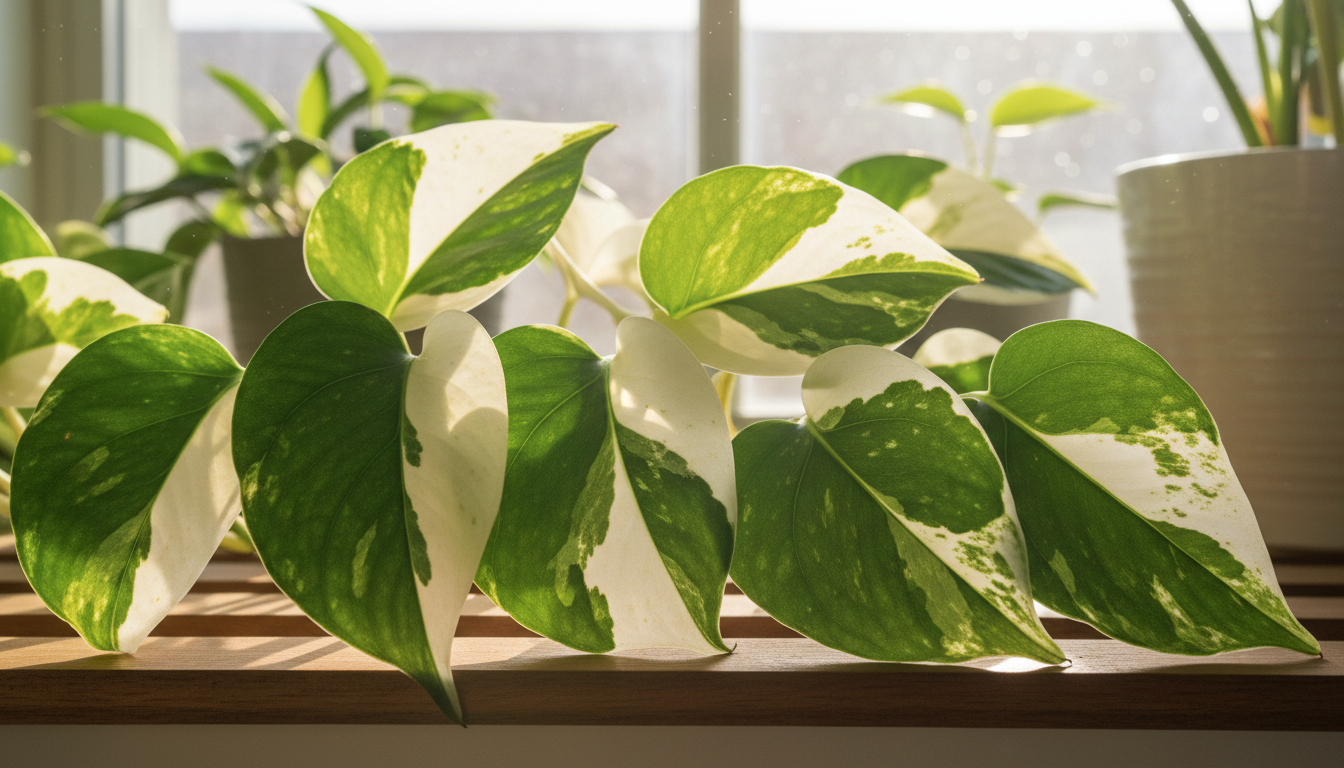
Pure white portions of a variegated leaf generally perform little or no photosynthesis because they contain little or no chlorophyll. Chlorophyll is the green pigment that captures light energy. Green portions of the same leaf can still make sugars, and the plant can distribute those sugars to other tissues. Not every pale patch is completely chlorophyll-free, however, so appearance alone does not measure its exact photosynthetic activity.

What gives variegated leaves their pattern?
Variegation means different areas of a leaf have different colors. Some patterns result from cells with different chlorophyll content; others involve additional pigments, leaf anatomy, environmental effects or, occasionally, disease. A healthy plant with stable cream-and-green patterns is different from an ordinary green leaf turning yellow because of stress.
The greener a living tissue is, the more visibly chlorophyll it often contains—but the relationship is not exact. Some leaf colors hide green chlorophyll beneath red or purple pigments.
What is happening inside the leaf?
Most photosynthesis in a typical green leaf takes place in chloroplasts, specialized structures containing chlorophyll. In a white variegated sector that lacks functional green chloroplasts, that sector contributes much less to capturing sunlight. The leaf’s veins and surrounding green tissue still connect the whole leaf to the plant, allowing sugars and water to move.

Does more white mean a plant grows slower?
Often, a plant with extensive white tissue has less total green surface available to capture light than a similarly sized fully green plant. That can mean slower growth, especially under dim conditions, but species, leaf area, lighting and the rest of the plant matter. A leaf that is partly white is not automatically unhealthy.
How should you care for a variegated houseplant?
- Use bright, suitable light: many common variegated houseplants do well in bright indirect light. A species’ own needs matter more than a blanket rule.
- Avoid harsh sun without acclimation: white sections may be more susceptible to scorching in direct midday sun.
- Watch the new growth: a sudden change from marbled foliage to all-green leaves can reflect the plant’s natural reversion, changing light or its growth pattern.
- Distinguish variegation from damage: new yellow patches, crisp brown margins or leaf collapse are not necessarily normal variegation. Check light, watering and pests.
Frequently asked questions
Can a completely white leaf survive?
A fully white leaf may stay alive while supported by the rest of a plant, but it generally cannot make enough energy on its own without functional chlorophyll. Completely white growth is often less vigorous.
Does a white leaf make oxygen?
If it lacks functional photosynthesis, its own photosynthetic oxygen production is minimal. The green parts of the plant can still release oxygen during photosynthesis. Like living plant cells generally, white tissue also respires.
Can variegated leaves turn green again?
New growth on some variegated plants can become greener or even entirely green. Already formed white tissue does not reliably convert to green just because you move a pot.
Source
The Mississippi State University Extension Service explains that white patches on variegated leaves can indicate a lack of chlorophyll.
Leave a Reply