
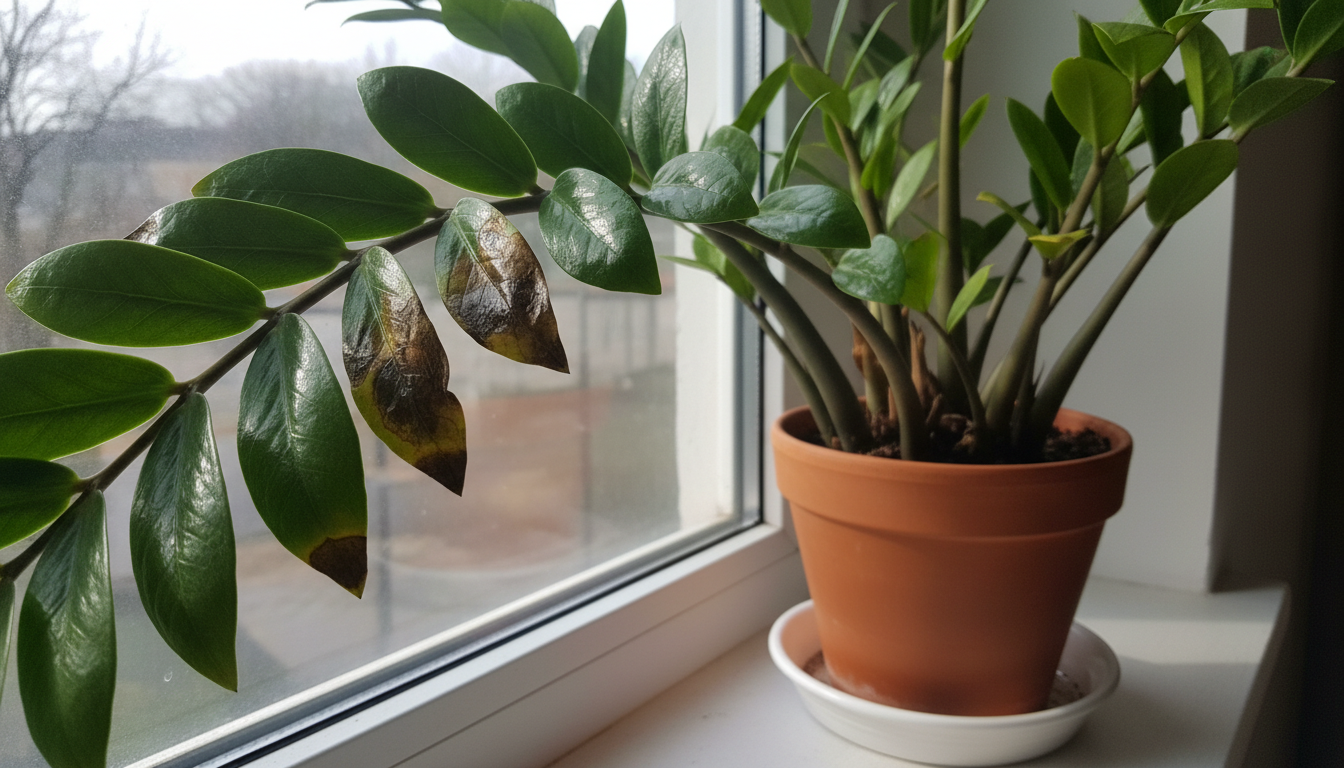
A ZZ plant can sometimes recover from cold damage if its underground rhizomes and roots are still alive. Brown or collapsed leaves rarely return to normal, but healthy storage structures may produce fresh stems over time. Recovery depends on how cold it got, how long it stayed cold, and whether the roots were damaged.

How cold is too cold for a ZZ plant?
The ZZ plant (Zamioculcas zamiifolia) is a tropical houseplant, not a frost-hardy perennial. University of Florida IFAS notes that growth can be reduced and chilling injury may appear below about 50°F (10°C), and freezing temperatures are not tolerated. Clemson Extension recommends keeping plants above 60°F (about 16°C) indoors. Exact injury depends on exposure, not just the lowest thermometer reading.
Signs your plant was chilled or frozen
- Leaflets develop darker, translucent, water-soaked-looking or brown patches after a cold night.
- Previously upright leaves soften, droop or collapse; stems may become mushy after a severe freeze.
- The foliage becomes discolored after a sudden drop in temperature, even before a hard freeze.
- If the soil remains very wet and the rhizomes become mushy or foul-smelling, consider root or rhizome rot as another possible cause.
What to do in the first 48 hours
- Move it to a stable indoor position. Keep away from drafty windows, exterior doors, heating vents and intense direct sun.
- Do not force a recovery with extra fertilizer. A stressed plant is not ready for rapid growth.
- Check the potting mix. Avoid watering merely because the leaves droop. ZZ plants store water, and cold wet soil increases the risk of rot.
- Observe before cutting everything. Damaged tissue may become more obvious over several days; green, firm stems can be left in place.
When should you prune the damaged leaves?
Once you can distinguish clearly dead, brown or mushy stalks from firm green growth, use clean pruning shears to remove only the dead parts near the base. Do not pull vigorously on the remaining stems or disturb healthy rhizomes. If extensive foliage has collapsed, the plant may need many weeks or longer to produce replacement growth.

Check the underground rhizomes if the entire top dies
ZZ plants grow from thick underground rhizomes that store water and support new shoots. If you suspect rot, carefully unpot the plant and examine the roots and rhizomes. Firm structures with no foul smell offer a better prognosis than black, soft, disintegrating tissue. Repot into a clean, well-drained mix only when necessary, and avoid leaving the pot standing in water.
How do you prevent damage next winter?
Bring outdoor ZZ plants inside well before chilly nights. Keep the plant away from cold window glass and doors. Bright indirect light and well-draining soil help support healthy recovery, but neither can reverse tissue already killed by freezing.
Frequently asked questions
Will brown leaves become green again?
No. Severely cold-damaged brown leaf tissue generally cannot repair itself. New healthy shoots, if they emerge, are the better indication of recovery.
Should I water a drooping ZZ plant immediately?
Not necessarily. Drooping can follow temperature injury or rot, not just drought. Check soil moisture and rhizome firmness before watering.
Sources
UF/IFAS Extension ZZ plant temperature and watering guidance; Clemson Extension ZZ plant care; UC IPM’s overview of chilling injury.
Leave a Reply