
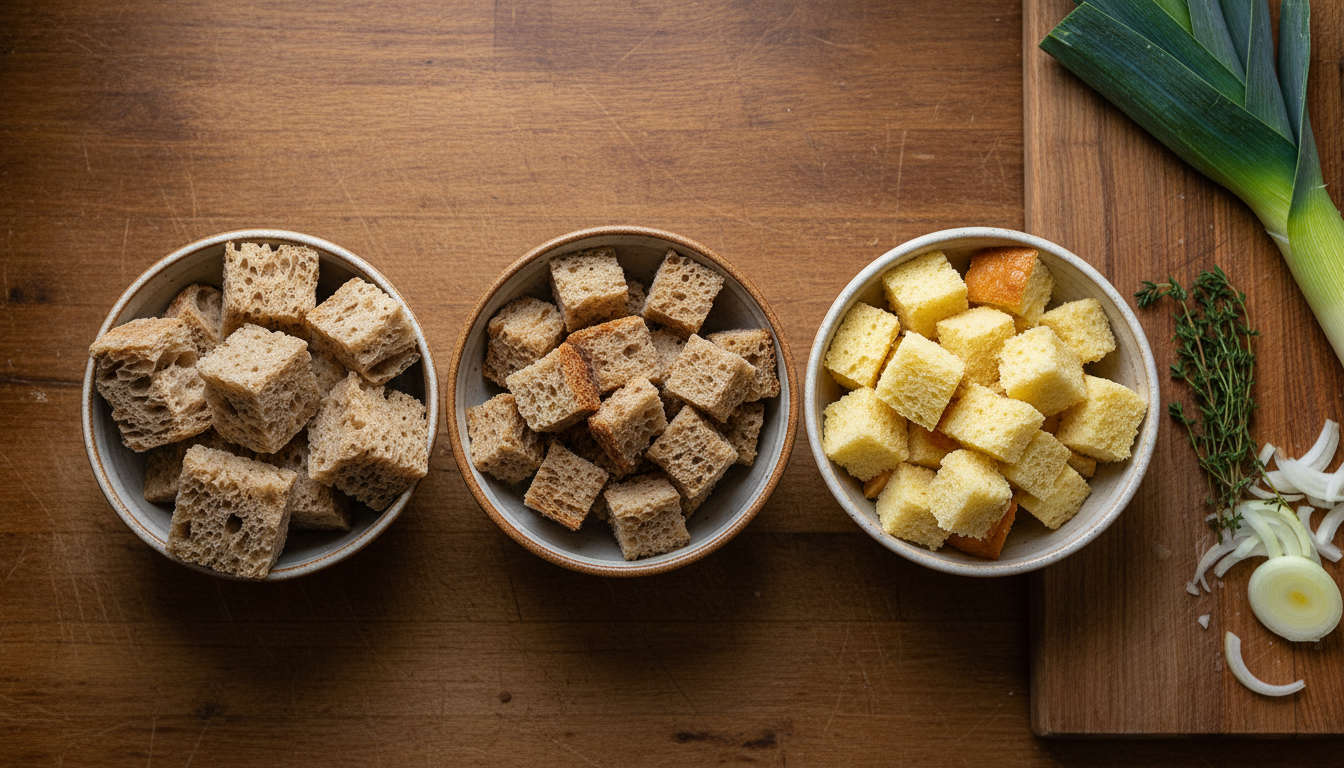
A crusty, sturdy loaf—such as sourdough or country-style bread—is usually the best choice for garlic and leek bread casserole. It absorbs a savory custard without immediately dissolving. Slightly stale or lightly dried cubes are easier to soak evenly than fresh, very soft sandwich bread.

Which breads hold their shape?
- Sourdough: a chewy, open crumb and firm crust give a distinct tangy flavor; an excellent all-purpose choice.
- Rustic country loaf: balanced flavor with enough body to absorb liquid without collapsing.
- Baguette: firm and chewy, but its smaller cubes and thick crust can result in a more textured casserole; let it soak longer if dry.
- Brioche or challah: tender and rich, suited to softer bread-pudding-like results, but less ideal if you want clearly defined cubes.
- Plain sandwich bread: convenient but often very soft and quick to turn mushy; dry it well and use less liquid initially.
- Gluten-free bread: possible, but varies enormously by brand and starch formula; toast a small test batch and assess absorption before adding the full custard.
How much bread should you use?
For a 9-by-13-inch baking dish, a useful starting amount is roughly 8–10 cups of bite-size cubes, depending on the loaf and the ratio of leeks to custard. Volume varies with cube size and how densely you measure; the finished dish should look moist, not like bread submerged in a soup of liquid.
How to prepare bread cubes
- Cut the loaf into approximately 1-inch cubes so the center has time to moisten but retains structure.
- If the bread is very fresh, arrange cubes in a single layer on a baking sheet and dry briefly in a low oven. Watch closely; the aim is dry edges, not dark toast.
- Cook and soften the leeks before combining them with the bread, since raw leeks can release more moisture while baking.
- Mix gently with roasted garlic, seasonings and the custard, then let the cubes absorb liquid for about 10–20 minutes before baking.

Prevent a wet or gummy center
The most common causes are overly soft bread, too much liquid, undercooked leeks or a dish that is too deep for the baking time. Use a broad baking dish, pre-cook watery ingredients, and check the center before taking the casserole out. A food thermometer is more dependable than looking only at the browned top.
For a casserole made with raw eggs, verify the correct safe internal temperature and cool leftovers promptly. The FDA safe food handling chart specifies 165°F for casseroles, and USDA guidance distinguishes some egg dishes at 160°F; use the applicable guidance for the actual recipe and ingredients.
Can you swap the bread in an existing recipe?
Yes, but adjust gradually. A soft enriched loaf may need a little less custard or a shorter soak; a chewy baguette may require longer absorption. If the recipe specifies a particular weight of bread, preserve that weight rather than swapping cup-for-cup, because different loaves pack differently.
Frequently asked questions
Is fresh sourdough okay?
Yes. Dry its cubes slightly if you want defined pieces. Learn when to toast bread before a leek casserole.
Can I use leftover rolls?
Yes, especially rolls with enough body to hold together. Very soft dinner rolls produce a softer texture, while crusty rolls stay more distinct.
Should I remove the crust?
Usually no. A moderate amount of crust improves texture; remove very hard or thick crusts only if you want a softer bite.
Where is the full recipe?
Use our garlic and leek bread casserole recipe as a foundation, then pick the loaf style that suits the texture you want.
Leave a Reply