
Honey is mostly the colony’s carbohydrate-rich fuel; bee bread is stored, processed flower pollen that supplies proteins, fats and other nutrients. Honeybees keep both because growing larvae and adult workers have different nutritional needs. The two foods may sit close together in the same honeycomb, but they come from different parts of flowers.
How to recognize bee bread in a honeycomb
Bee bread typically appears as compacted yellow, orange, tan or darker material inside cells. Colors vary with the plants providing the pollen. Stored honey is usually glossy or syrupy before it is covered with a thin wax cap. A single comb may show pollen, brood and nectar together; not every dark cell contains bee bread.
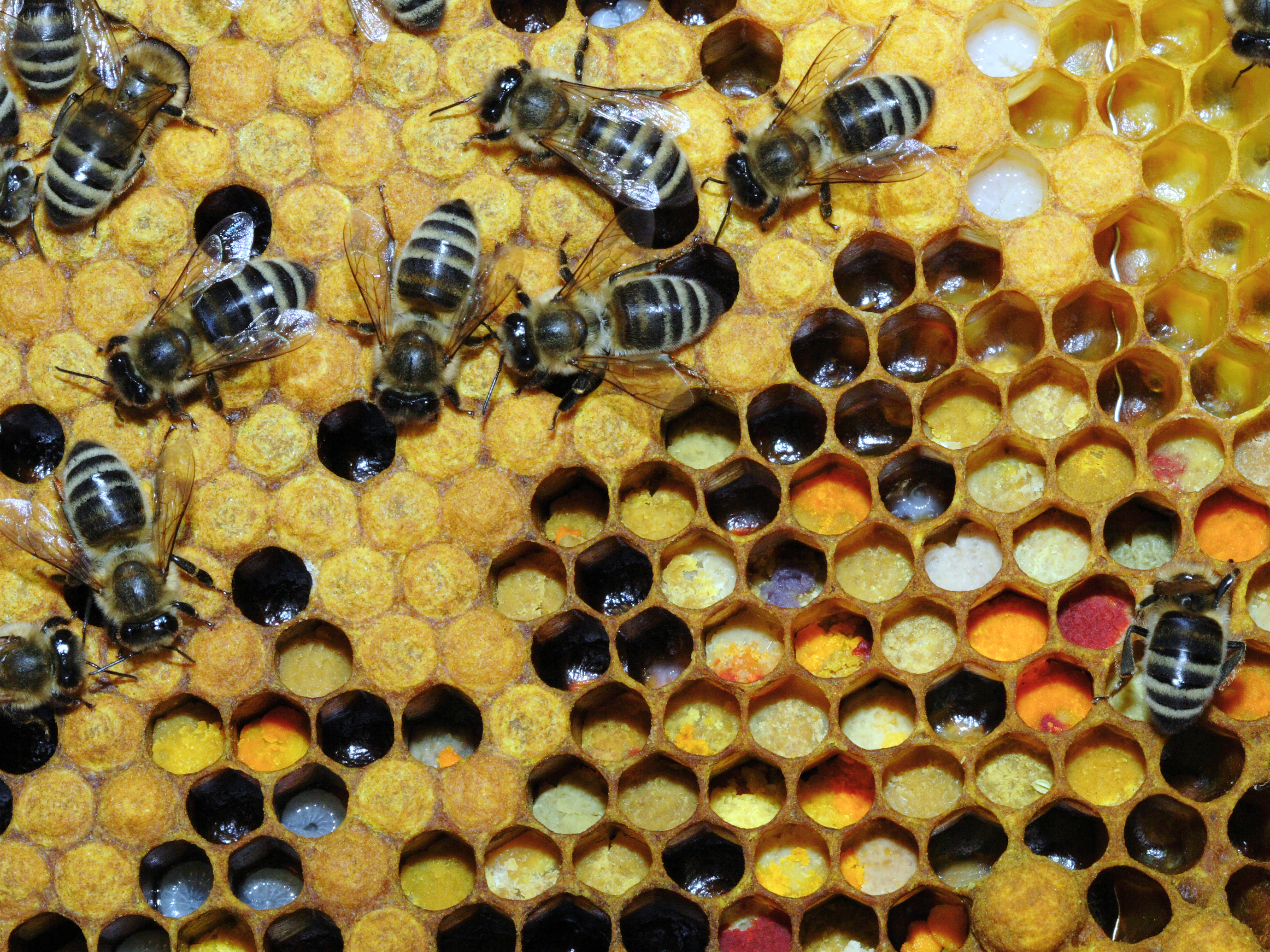
How does pollen become bee bread?
Foragers carry pollen back to the hive in compact pellets on their hind legs. Other workers place the pollen in wax cells, pack it down and add nectar or honey and glandular secretions. The stored material changes over time as moisture and microorganisms interact with it. Scientists study these microbial processes; bee bread should not be described as a single, universally predictable kind of fermentation.
This is different from honey production. Bees collect nectar, transfer it between workers and cells, and reduce its moisture as it becomes concentrated honey. Read whether honey is made from nectar or pollen for the distinction.
What does each food do for the colony?
- Honey: readily available sugar-rich food that helps power flight, hive work and survival during periods with little forage.
- Bee bread: a dense source of pollen-derived protein and lipids important to the nutrition of nurse bees and brood-rearing.
- Water: still needed for drinking, temperature regulation and food preparation; neither stored food replaces it.
Young larvae receive glandular food produced by nurse bees, whose diets depend on nutrients from pollen. A healthy colony needs varied and sufficient forage, not just a frame full of capped honey.
Why is pollen stored close to the brood?
Nurse bees work around developing larvae and need access to protein-rich stores. Pollen near brood can be convenient, while honey is often stored across and above the brood nest. However, the pattern is not a perfect map: conditions, colony size and the shape of the hive all affect how cells are used.
Frequently asked questions
Does bee bread taste like honey?
Not usually. Bee bread is pollen-based and has a different composition and texture. It should not be marketed or identified as ordinary honey.
Do bees make honey out of bee bread?
No. Honey comes primarily from nectar or, in some circumstances, honeydew. Bee bread is processed stored pollen.
Is every colored honeycomb cell bee bread?
No. Brood, nectar, pollen and reflections can make cells look different. Identifying their contents requires more than color alone.
For deeper research, consult Penn State Extension’s beekeeping resources and the photographed specimen’s description.
Leave a Reply