
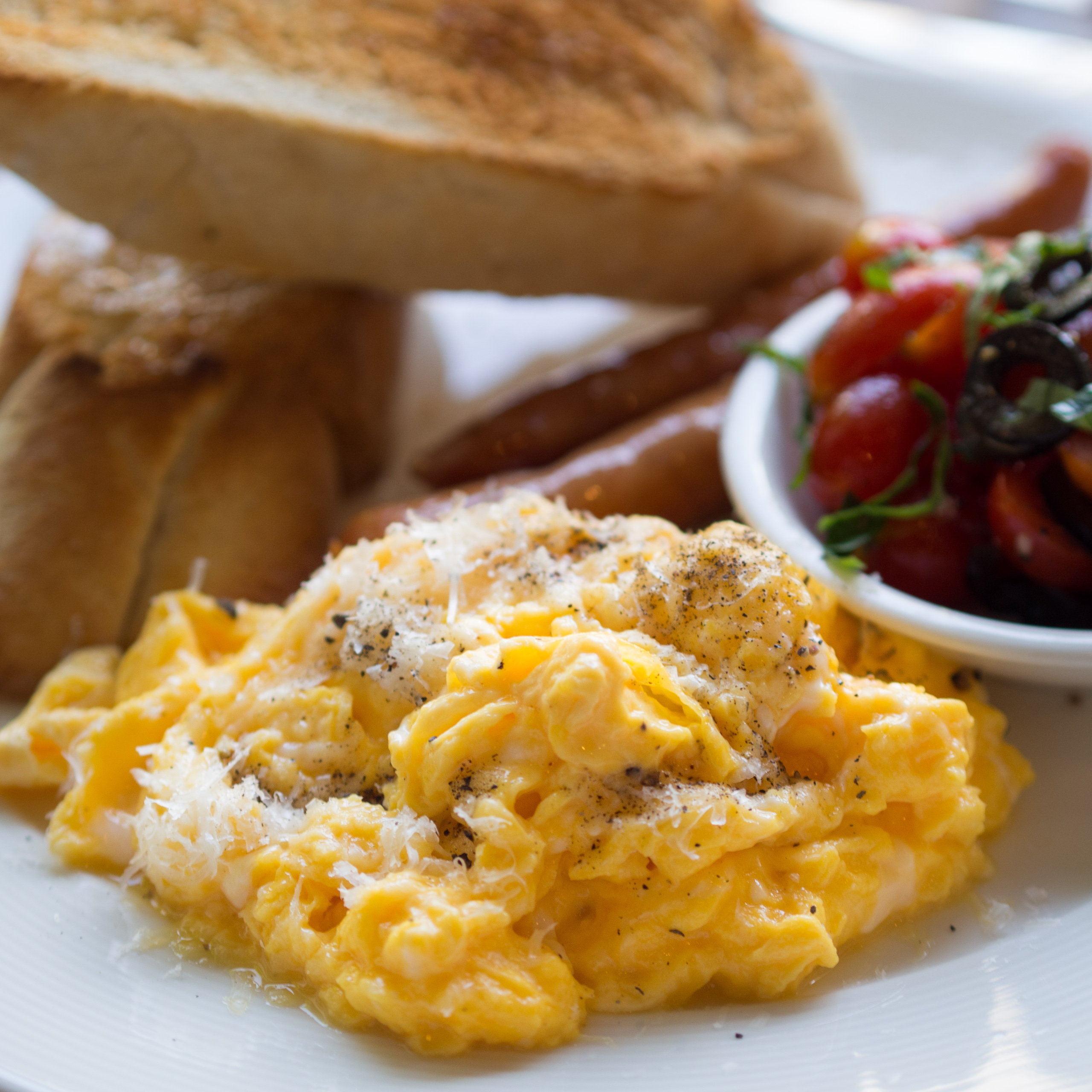
To make scrambled eggs, beat the eggs until evenly mixed, pour them into a lightly buttered pan over moderate heat, then gently fold the setting eggs until fully cooked. Serve immediately. The biggest improvement is usually timing: have the toast, plates and toppings ready before the eggs go in.


This guide makes two breakfast portions from four eggs. It includes a smaller-batch chart, a clear cooking sequence and practical fixes for dry, watery or uneven results. The credited photos illustrate ingredients, preparation and serving ideas; they are not photographs of a Wondelique recipe test.
Ingredients and equipment
For two servings, gather 4 large eggs, 2 teaspoons butter, a small pinch of salt and freshly ground pepper. Milk is optional: start with 1 tablespoon for the entire batch if you like adding it. You can make excellent eggs without it. Have a bowl, fork or hand whisk, flexible heat-safe spatula and a roughly 10-inch nonstick skillet ready.


| Breakfast portions | Large eggs | Butter |
|---|---|---|
| 1 | 2 | 1 teaspoon |
| 2 | 4 | 2 teaspoons |
| 3 | 6 | 1 tablespoon |
Use a smaller skillet for two eggs so the mixture does not spread into a paper-thin layer. For six eggs, use a wider pan or cook in two batches if your skillet feels crowded. Do not multiply the cooking time mechanically: pan width, burner output and starting temperature all change it.
1. Mix the eggs before heating the pan


Crack the eggs into a bowl and remove any shell fragments. Add a little salt, then beat until the yolks and whites are combined. Look for an even yellow mixture rather than long clear strands. If using milk, mix it in now. Set the bowl beside the stove and put your serving plates within reach.
2. Melt the butter gently


Warm the skillet over medium-low to medium heat and add the butter. Tilt the pan to coat the cooking surface. It should melt and lightly foam without turning dark. If it browns rapidly or the pan smokes, take the skillet off the burner and let it cool before starting again. A quiet, controlled pan gives you more time to manage the eggs.
3. Pour, pause briefly and fold


Pour in the beaten eggs. As a thin layer begins to set against the pan, draw the spatula across the bottom and fold the cooked egg inward. Tilt the skillet gently so the uncooked mixture reaches the cleared surface. Continue sweeping the bottom and edges as the eggs set, adjusting the heat downward if they are cooking faster than you can fold.
For larger curds, use broad, slower folds and give the mixture brief moments to set between movements. More frequent stirring breaks the curds into smaller pieces. There is no need to beat the eggs rapidly once they are in the pan. The American Egg Board’s stovetop guide demonstrates the basic lift-and-fold approach.
4. Check doneness and plate immediately


Allow roughly 3–5 minutes of cooking for a small batch as a planning estimate, but use the condition of the eggs rather than a stopwatch. The finished curds should hold together, with no loose raw egg remaining. Transfer them to plates as soon as they are fully cooked. Leaving them in the hot skillet while you finish the rest of breakfast keeps applying heat.
The FDA advises cooking scrambled eggs until firm, not runny. Its temperature guidance for egg dishes is 160°F / 71°C. Do not use a deliberately undercooked center as your shortcut to tenderness.
Why did my scrambled eggs turn dry or watery?
Dry or rubbery: reduce the heat next time and plate promptly once cooked. Start the toast first. If the eggs are already overcooked, a little salsa or a spoonful of cooked vegetables can make the serving more pleasant, but it will not reverse the texture.
Liquid on the plate: first distinguish uncooked egg from water released by vegetables or other additions. Never serve a pool of raw egg. Cook mushrooms, spinach and tomatoes separately, drain excess liquid and fold them into the finished scramble. Avoid adding a large splash of milk when a small amount—or none—is enough.
White streaks or uneven pieces: mix more thoroughly in the bowl and sweep the whole pan during cooking. Brown edges: lower the heat and watch for butter darkening before the eggs are added. A pan that is too hot leaves very little room for correction.
Cheese, vegetables and serving ideas


For cheesy eggs, scatter a small handful of finely grated cheese over the curds near the end and fold it through. Use cooked, drained vegetables and warmed, fully cooked meat as additions. Keep the first attempt simple: it is easier to learn the pan’s behavior with plain eggs than with a skillet full of cold fillings.
Serve on toast, alongside fruit, or with oven-cooked bacon. Put the bacon in first so the eggs can be the last thing cooked. Our coffee guide can help you finish the breakfast without juggling everything at once.
Storage and reheating
Refrigerate leftovers promptly in a shallow covered container at 40°F / 4°C or below. FDA guidance allows cooked egg dishes for 3–4 days refrigerated; reheat to 165°F / 74°C. Discard eggs left out longer than two hours, or one hour above 90°F / 32°C. Freshly cooked eggs usually give a better texture than reheated ones.
Quick answers
Do scrambled eggs need milk? No. Eggs, a little cooking fat and seasoning are enough. Milk is an optional variation rather than a requirement.
Can I use oil instead of butter? Yes. Use a modest amount of neutral cooking oil to coat the pan. For dairy-free eggs, omit milk and cheese too.
Can I make them ahead for guests? Prepare the plates, sides and cooked additions ahead, then scramble shortly before serving. For a larger group, several manageable batches are easier to control than one overcrowded skillet.
Sources: American Egg Board: stovetop scrambled eggs; FDA: egg safety, storage and reheating. Photography credits and license links appear under each image.
Leave a Reply