
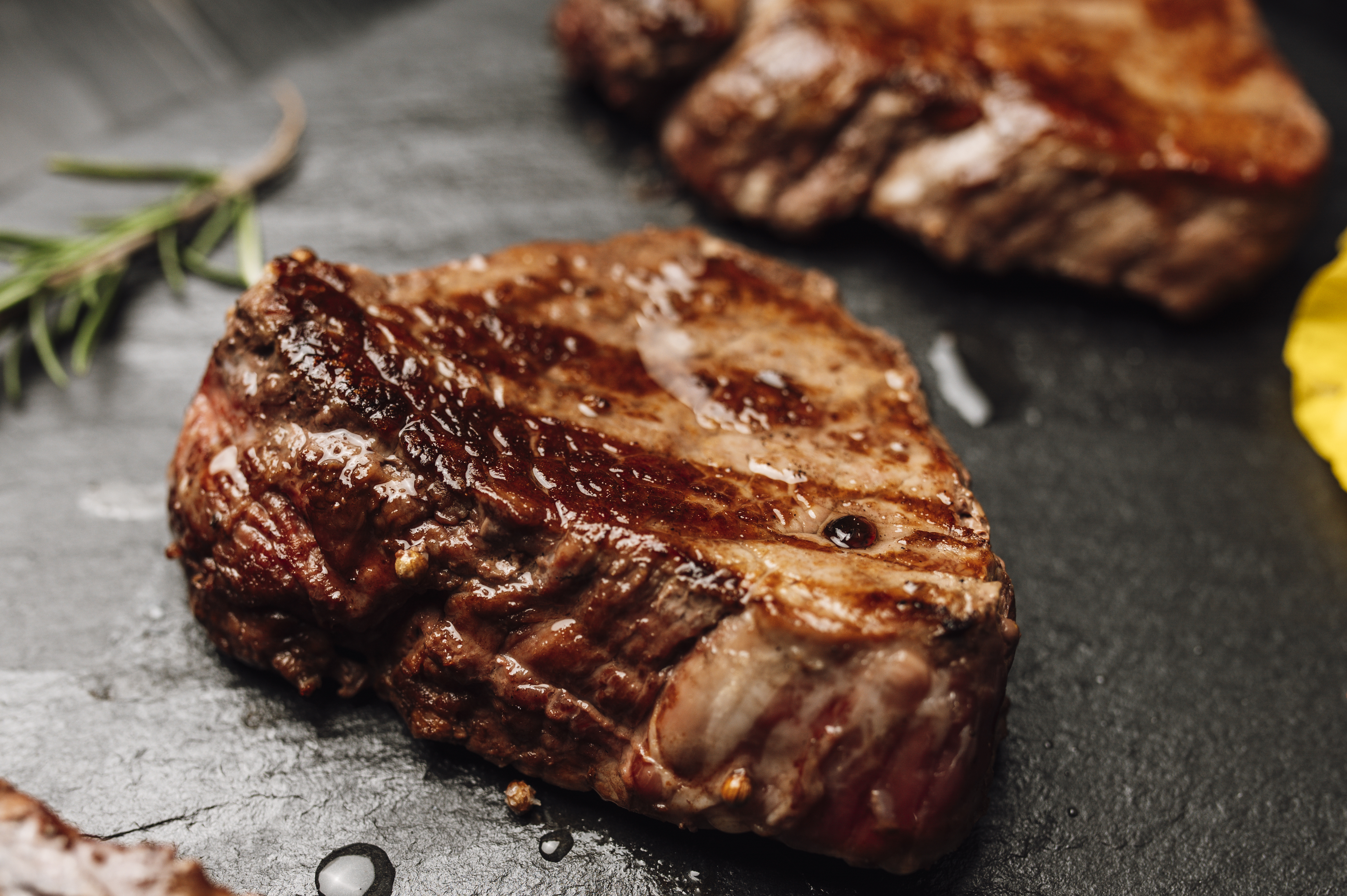
A good steak needs three things: a dry surface, serious heat for browning, and an accurate temperature check. The cut matters less than controlling those three variables. This guide gives you practical methods for a skillet, grill, oven and air fryer without relying on guesswork.


The short answer
Choose a steak at least one inch thick. Pat it very dry, salt it, heat a heavy skillet until hot, add a high-heat oil and sear for 3–5 minutes per side. Check the thickest part with an instant-read thermometer. Under USDA guidance, whole beef steaks should reach 145°F and rest for at least three minutes.
Move the steak to a plate or rack to rest. Do not leave it in the hot skillet, where it continues to cook rapidly. Slice against the grain for a more tender bite.
Safe steak temperature chart
The USDA minimum for whole beef steaks is 145°F followed by a three-minute rest. Some restaurant doneness labels use lower temperatures, but those are below USDA safety guidance. The chart below starts at the federal minimum.
| Final center temperature | Typical appearance | Texture |
|---|---|---|
| 145°F + 3-minute rest | Pink center | Juicy, springy |
| 150–155°F | Thin band of pink | Firmer |
| 160°F+ | Little or no pink | Well done, firm |


Approximate steak cooking times
| Thickness | Skillet or grill | Best approach |
|---|---|---|
| ½–¾ inch | 2–3 min per side | Fast sear; check early |
| 1 inch | 3–5 min per side | Direct heat |
| 1½ inches | 3–4 min per side, then lower/indirect heat | Sear and finish gently |
| 2 inches | Reverse sear recommended | Low oven, then very hot sear |
Before cooking: dry, salt and choose the right oil
- Dry the surface: Press every side with paper towels. Moisture must evaporate before browning begins.
- Salt ahead: Salt at least 40 minutes—or up to a day—in advance and refrigerate uncovered. If you cannot wait, salt immediately before cooking.
- Add pepper thoughtfully: Pepper can scorch in an extremely hot pan. Add it before cooking for a toasted flavor or after searing for a fresher one.
- Use high-heat oil: Avocado, refined canola or grapeseed oil handles a hot sear better than butter. Add butter near the end for flavor.


Method 1: cast-iron skillet steak
- Pat the steak dry and season. Turn on the range hood and open a window if needed.
- Heat a cast-iron or heavy stainless-steel skillet over medium-high until very hot.
- Add a thin film of high-heat oil, then lay the steak in away from you.
- Sear without moving for 3–5 minutes. Flip and sear the second side.
- During the final minute, lower the heat and add butter, crushed garlic and thyme. Tilt the pan and spoon foaming butter over the steak.
- Check the center from the side. At 145°F, transfer to a plate and rest at least three minutes.


Sear the fatty edge for 30–60 seconds with tongs if it is thick. Do not crowd the pan. Two steaks may cool a small skillet enough to steam instead of sear.
Method 2: grilled steak
Build a two-zone grill: one side hot for searing and one side cooler for finishing. Clean and oil the grates. Sear a one-inch steak over direct heat for about 3–5 minutes per side. If the crust is ready before the center reaches 145°F, move it to indirect heat, close the lid and finish gently.
Flip with tongs instead of piercing with a fork. The steak should release more easily once a crust forms. Flare-ups can taste bitter, so move the meat temporarily when dripping fat ignites.


Method 3: reverse-seared thick steak
- Heat the oven to 250°F. Set a wire rack over a rimmed sheet pan.
- Dry and season a steak at least 1½ inches thick. Place it on the rack.
- Bake until the center approaches your target; for USDA-safe steak, continue until it reaches 145°F.
- Pat the surface dry again. Heat a skillet until extremely hot with a thin film of oil.
- Sear 45–60 seconds per side and briefly sear the edges. Rest at least three minutes.
Reverse searing warms a thick steak evenly before the final crust forms. Because it is already hot when it reaches the skillet, the finishing sear must be quick.
Method 4: air-fryer steak
Preheat the air fryer to 400°F. Pat the steak dry, brush lightly with oil and season. Cook a one-inch steak for roughly 8–12 minutes, turning halfway, and begin checking early. Continue until the center reaches 145°F, then rest at least three minutes. Air-fryer power and basket size vary, so temperature—not the timer—decides when it is done.
Why resting matters
Resting allows the center temperature to equalize and gives the meat’s juices time to settle. The USDA specifies at least three minutes after a whole steak reaches 145°F. Rest on a warm plate or rack; tent loosely only if the room is cold, because a tight foil cover softens the crust.


How to slice steak
Look for the direction of the long muscle fibers and cut across them, not parallel to them. This matters most for flank, skirt, hanger and flat-iron steaks. Use a sharp knife and cut clean slices rather than sawing. Ribeye and strip steak can be served whole or sliced across their shorter grain.
Common steak mistakes
- Wet surface: The steak steams before it browns.
- Pan not hot enough: A gray exterior develops instead of a crust.
- Butter added too early: Milk solids burn before the steak is done.
- Checking by touch alone: Firmness varies by cut and thickness.
- Cutting immediately: Juices run across the board and the center loses moisture.
- Slicing with the grain: Long fibers make even a properly cooked steak feel chewy.


What to serve with steak
Pair steak with asparagus, a baked potato, salad, mushrooms or fluffy quinoa. A quick pan sauce can be made by pouring off excess fat, deglazing with broth, wine or water, scraping the browned bits and finishing with cold butter.
Storing and reheating leftover steak
Refrigerate cooked steak within two hours in a shallow airtight container and use within three to four days. Reheat gently in a covered skillet over low heat with a spoonful of broth, or in a 275°F oven until warmed. Thin slices also work cold in salads and sandwiches.
Frequently asked questions
Should steak be at room temperature before cooking?
It is not necessary to leave steak out for a long time. Patting it dry, salting properly and using enough heat have a much larger effect. Keep raw beef refrigerated until close to cooking time.
How often should you flip steak?
One flip gives each face uninterrupted browning, while repeated flipping can cook the interior evenly. Either can work if the pan stays hot. The important point is not moving the steak before a crust forms.
Can you cook steak from frozen?
Yes, but it is easier to cook evenly after thawing overnight in the refrigerator. If cooking from frozen, sear both sides, then finish in a moderate oven and verify 145°F in the center with a thermometer.
Leave a Reply