
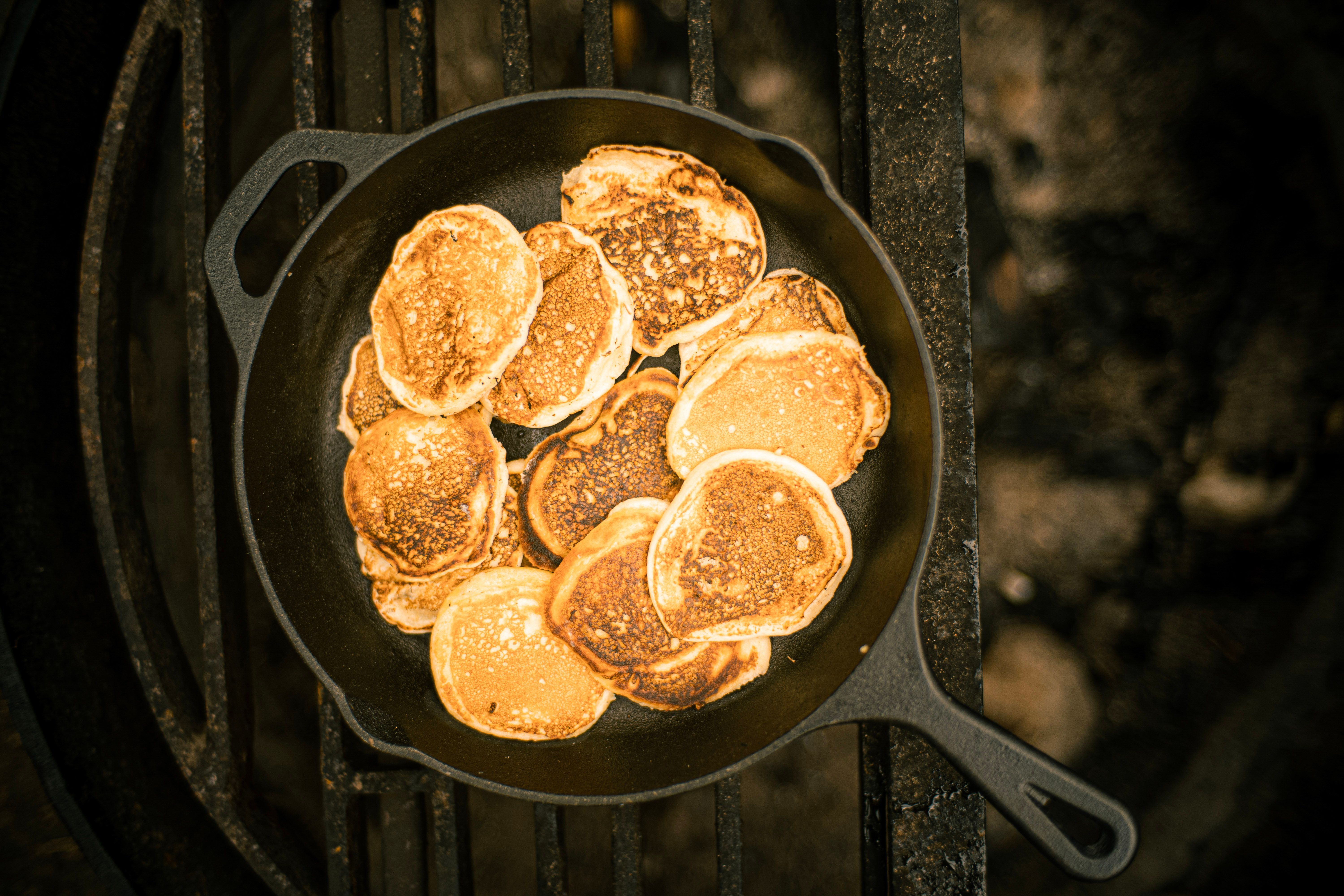
The short answer: Whisk the dry ingredients in one bowl and the wet ingredients in another, combine them gently, then cook measured portions on a lightly greased griddle at about 350°F (177°C). Stop mixing while a few small lumps remain, wait until bubbles rise and the edges look set, and flip each pancake only once.

A reliable homemade pancake recipe
This everyday formula makes about twelve medium pancakes. It follows the proportions in King Arthur Baking’s tested “Simply Perfect Pancakes,” with a practical home-kitchen method. Use a scale for the flour if you have one; too much flour is a common reason pancakes turn dry and heavy. Milk controls the batter’s flow, eggs add structure and richness, and baking powder creates the carbon dioxide bubbles that lift the cakes.
Pancake formula
1½ cups (180 g) all-purpose flour
2 tablespoons sugar
2 teaspoons baking powder
¾ teaspoon salt
2 large eggs
1¼ cups (295 mL) milk
3 tablespoons (42 g) melted butter or neutral oil

1. Mix the batter without making it tough
Whisk the flour, sugar, baking powder and salt until the leavener is evenly distributed. In a second bowl, beat the eggs, milk and melted butter. Pour wet into dry and fold with a whisk or spatula just until no large pockets of dry flour remain. A few pea-size lumps are desirable: vigorous mixing develops gluten, which can make pancakes chewy instead of tender. Let the batter rest for 5 to 15 minutes while the griddle heats so the flour hydrates and the baking powder begins forming bubbles.

2. Heat and grease the pan correctly
Preheat an electric griddle to 350°F, or set a heavy skillet over medium heat for several minutes. A drop of water should skitter briefly rather than vanish instantly. Brush on a thin film of butter or neutral oil; a puddle fries the edges and can cause patchy browning. If the first pancake becomes dark before its center sets, lower the heat and wait a minute. If it remains pale after two minutes, raise the heat slightly. The first pancake is your temperature test, not a failure.
Heat target: 350°F = 177°C

3. Portion, watch the bubbles and flip once
Pour about ¼ cup (60 mL) of batter for a 4-inch pancake, leaving room between rounds. Cook until bubbles appear across the surface, some bubbles stay open, and the outer edge changes from glossy to matte—usually about two minutes. Slide a thin spatula underneath and turn the pancake in one confident motion. Cook the second side for roughly one minute, until golden and springy. Repeated flipping presses out steam, disturbs the delicate crumb and rarely improves color.

How to fix pancake batter before cooking the whole batch
The batter should pour in a thick ribbon and spread slowly on its own. If it sits like dough, stir in milk one tablespoon at a time. If it runs like cream and produces paper-thin pancakes, fold in flour one tablespoon at a time, then rest it for five minutes. For dense pancakes, first check that the baking powder is fresh and that the batter was not beaten smooth. For burnt outsides with raw centers, reduce the heat rather than making smaller pancakes; steady moderate heat gives the center time to set.

Flavor variations that keep the basic method intact
Stir vanilla, cinnamon or finely grated lemon zest into the wet ingredients. Sprinkle blueberries or chocolate chips onto each pancake only after the batter reaches the griddle; this distributes add-ins evenly and prevents them from sinking or scorching in the bowl. For banana pancakes, replace no more than about one-quarter of the milk with mashed ripe banana, then adjust with a spoonful of milk if the batter becomes too thick. Keep the additions modest so the batter still has enough structure to rise.

Keep pancakes warm, store leftovers safely and reheat well
For a crowd, place cooked pancakes in a single layer on a wire rack set over a sheet pan in a 200°F (93°C) oven; the rack prevents trapped steam from making the bottoms soggy. Cool leftovers promptly, refrigerate them in a sealed container for up to three or four days, or freeze separated by parchment. Reheat in a toaster for crisp edges or cover and microwave in short bursts for softness. Because the batter contains raw egg, USDA guidance says to cook it immediately or refrigerate it and cook within 24 hours rather than leaving it at room temperature.
Pancake questions, answered
Why are my pancakes flat?
Old baking powder, overmixed batter, or a griddle that is not hot enough are the most likely causes. Replace baking powder that no longer fizzes vigorously in hot water, fold only until combined, and fully preheat the pan.
Can I make pancakes without buttermilk?
Yes. This recipe uses regular milk and baking powder, so it does not need buttermilk’s acidity. If a different recipe relies on baking soda, do not swap out its acidic ingredient without rebalancing the leavener.
Should pancake batter be smooth?
No. It should be evenly moistened but slightly lumpy. A perfectly smooth batter is often overmixed and can produce rubbery pancakes.
More breakfast help from Wondelique
- How to make oatmeal that is creamy, not gluey
- How long to boil eggs for every kind of yolk
- How to clean a cast-iron skillet without ruining it
Leave a Reply